
Spotify just flipped a switch for 100 million Americans. Premium subscribers in the US and Canada can now watch music videos without leaving the app.
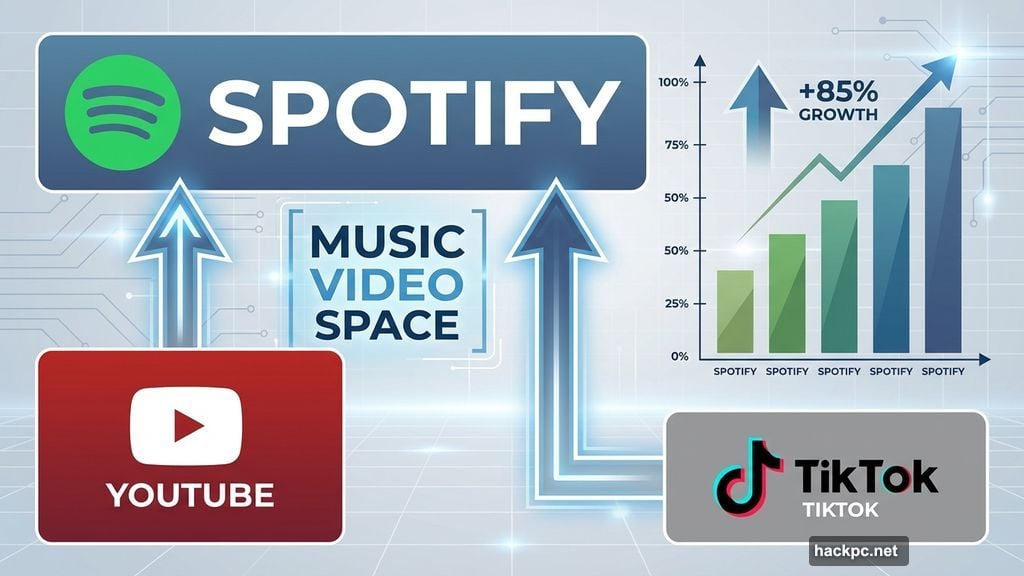
The feature quietly launched in other countries last year. But this marks Spotify’s first major push into visual content on home turf. Plus, it challenges YouTube’s long-standing dominance in the music video space.
Let’s explore what this actually means for your listening experience.
Switch Between Audio and Video Instantly
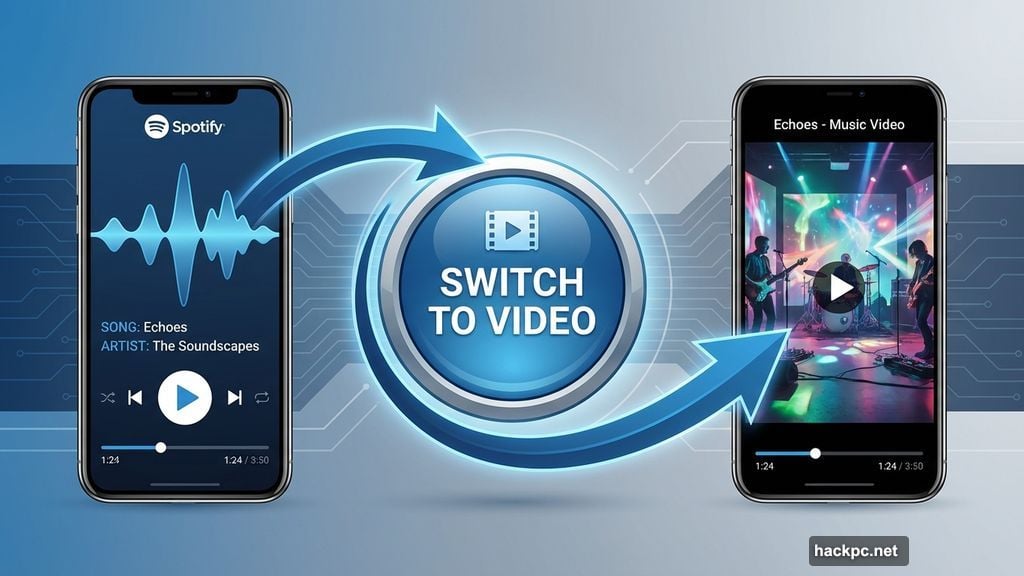
The core feature feels remarkably simple. You’re listening to a song. A “Switch to video” button appears. Tap it, and the music video starts exactly where the audio left off.
No interruption. No rebuffering. The transition happens seamlessly.
Then, when you want audio-only again, tap “Switch to audio.” The video disappears, but your song keeps playing from the same moment. It’s the kind of smooth integration that makes you wonder why this took so long.
The feature works across iOS, Android, desktop, and TV apps. So you can start a video on your phone during commute, then continue on your smart TV at home. Your progress syncs automatically.
Limited Artist Selection Right Now
Here’s the catch. Only specific artists support music videos currently.
Spotify launched with names like Ariana Grande, Olivia Dean, Babymonster, Addison Rae, and Tyler Childers. That’s a diverse roster. But it’s nowhere near comprehensive coverage.
Moreover, not every song from these artists includes video. The feature appears selectively based on what content Spotify secured licensing for. So your favorite track might not have video support even if the artist generally does.
This mirrors how Spotify rolled out lyrics years ago. Limited at first, then gradually expanding. Expect the video catalog to grow over time as more artists and labels sign on.
Related Videos Replace Lyrics Section
When you enable video mode, something interesting happens. The usual “Lyrics” section disappears. In its place, you get “Related Music Videos.”
This creates a browsing experience similar to YouTube or TikTok. But crucially, it only shows artist-created content. No user uploads. No covers. No reaction videos.
For listeners, this means curated discovery. You might stumble onto new artists through their official videos. For Spotify, it means keeping users engaged without sending them to YouTube.
However, some users prefer lyrics while watching videos. The inability to view both simultaneously feels like an odd limitation. Hopefully Spotify addresses this in future updates.
Premium-Only Restriction Limits Reach
Free Spotify users are locked out entirely. Music videos require a Premium subscription, which costs $12 monthly in the US.
This makes sense from Spotify’s perspective. Video streaming consumes more bandwidth and storage than audio. Plus, video licensing costs more than audio-only rights.
But it creates a two-tier experience. Free users already tolerate ads and shuffle-only playback. Now they miss out on visual content too. That might push some toward paid subscriptions. Or it might push them toward YouTube, where music videos remain free with ads.
The Premium requirement also means Spotify can’t compete directly with TikTok for casual music video browsing. TikTok’s entire platform is free with ads. Spotify’s video feature targets paying customers who already spend most listening time in the app.
Late Entry Into Crowded Video Space
YouTube has dominated music videos for nearly two decades. TikTok exploded in recent years as the go-to platform for music discovery. Apple Music added music videos years ago.
So Spotify arrives fashionably late to this party.
What took so long? Licensing complexity. Music videos involve multiple rightsholders – the label, the artist, the video production company, sometimes sync rights for underlying compositions. Negotiating all those deals across thousands of artists takes time and money.
Spotify also historically focused on audio streaming as its core competency. Video adds technical complexity – higher bandwidth requirements, more storage infrastructure, different encoding pipelines. Building that capability while maintaining audio quality standards isn’t trivial.
Video Changes Spotify’s Identity
For years, Spotify positioned itself as the definitive audio platform. Podcasts fit that identity. Audiobooks stretched it slightly. But video represents a fundamental shift.
This move suggests Spotify recognizes that younger users expect visual content everywhere. TikTok trained an entire generation to consume music alongside video. Spotify risks becoming irrelevant to Gen Z if it stays audio-only.
However, video integration risks diluting Spotify’s focus. YouTube already does music videos better. TikTok already dominates short-form music content. Spotify entering both spaces simultaneously means competing on multiple fronts against established giants.
The smart play might be leaning into what Spotify does uniquely well – personalized audio recommendations and algorithmic playlists. Video feels like chasing trends rather than innovating.
Testing Before Full Rollout
Spotify calls this a “beta” feature. That’s code for “we’re still figuring this out.”
Beta status gives Spotify flexibility to change how music videos work based on user feedback. Maybe they’ll add lyrics back. Maybe they’ll expand artist selection faster. Maybe they’ll introduce new discovery features.
It also manages expectations. Bugs, missing features, and limited content all get excused because beta. Users tend to forgive beta product flaws more readily than production releases.
For now, music videos remain experimental. Spotify can always scale back or pivot if engagement disappoints. Or they can double down if videos boost subscriber retention and time spent in app.
What This Means for Artists
Musicians now face another content creation demand. High-quality music videos cost thousands or tens of thousands to produce. Emerging artists might struggle to compete with major label budgets.
However, Spotify’s platform could democratize video distribution. Getting a music video onto Spotify requires less gatekeeping than traditional video channels. Independent artists might reach new audiences without needing major label backing.
Plus, Spotify’s algorithm could surface videos based on listening patterns rather than view counts. An artist with dedicated listeners but low YouTube views might finally get discovered through Spotify’s recommendation engine.
Still, this adds pressure. Artists already juggle recording, touring, social media, and now another video platform. The music industry’s content treadmill spins faster every year.
Competing for Screen Time
Spotify videos compete directly with YouTube for one scarce resource: your attention.
YouTube Music combined audio streaming with Google’s video infrastructure. Apple Music integrated videos alongside Spatial Audio and lossless quality. Tidal offers high-resolution video for audiophiles.
Spotify’s advantage lies in its recommendation algorithm and social features. If music videos integrate smoothly into Daily Mixes and Discover Weekly, that creates compelling reasons to stay inside Spotify’s ecosystem.
But video fundamentally changes how people use Spotify. Audio streams in the background while you work or exercise. Video demands active attention. That shifts Spotify from companion to destination, competing with YouTube, Netflix, and TikTok for active viewing time.
Can Spotify win that fight? Unclear. But they’re betting billions that video integration matters for the platform’s future.
Music videos arriving in the US represents Spotify’s latest evolution. Whether users embrace video or ignore it entirely will determine if this beta becomes permanent. For now, Premium subscribers gain one more reason to stay subscribed. Everyone else watches this experiment from the sidelines.




Comments (0)