
Music streaming has quietly become one of the best deals in tech. For about $11 to $13 a month, you get access to over 100 million songs, lossless audio quality, podcasts, and in some cases, audiobooks too. That’s genuinely remarkable value.
But with so many solid options out there, picking the right service isn’t as simple as it used to be. Each platform brings something different to the table. So whether you’re an audiophile chasing the best possible sound or just someone who wants music to play in the background, there’s a streaming service built exactly for you.
I’ve tested all the major platforms and broken down everything that matters — price, sound quality, catalog depth, and the extra features that actually make a difference day to day.
Spotify Still Leads the Pack
Spotify remains the best all-around music streaming service in 2026, and it’s not particularly close.
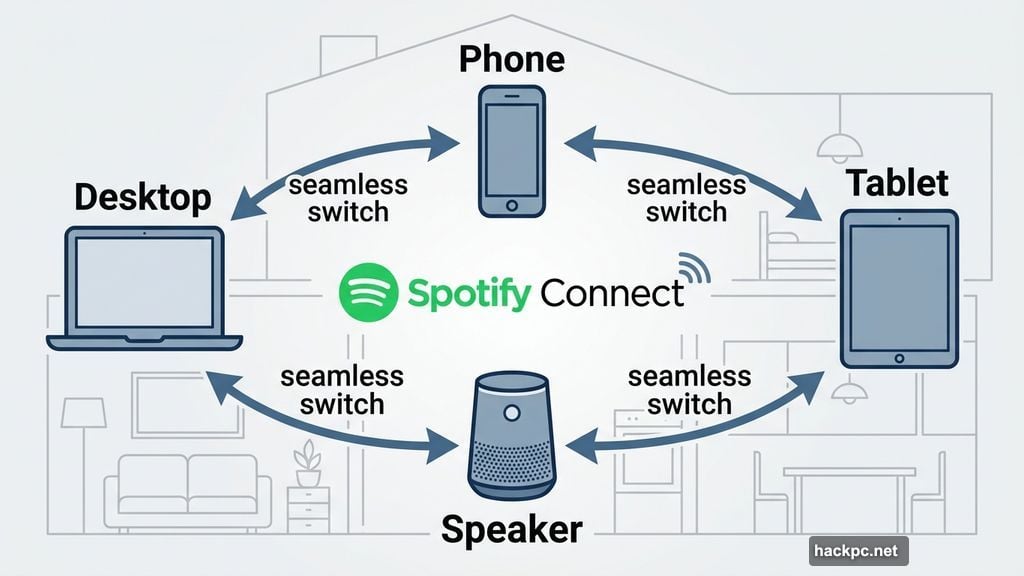
The big news? After years of promises, Spotify finally rolled out lossless audio on Premium at no extra charge. That alone removes one of the last meaningful reasons to switch to a competitor. Plus, Spotify Connect makes it incredibly easy to jump between speakers, phones, and computers without skipping a beat.
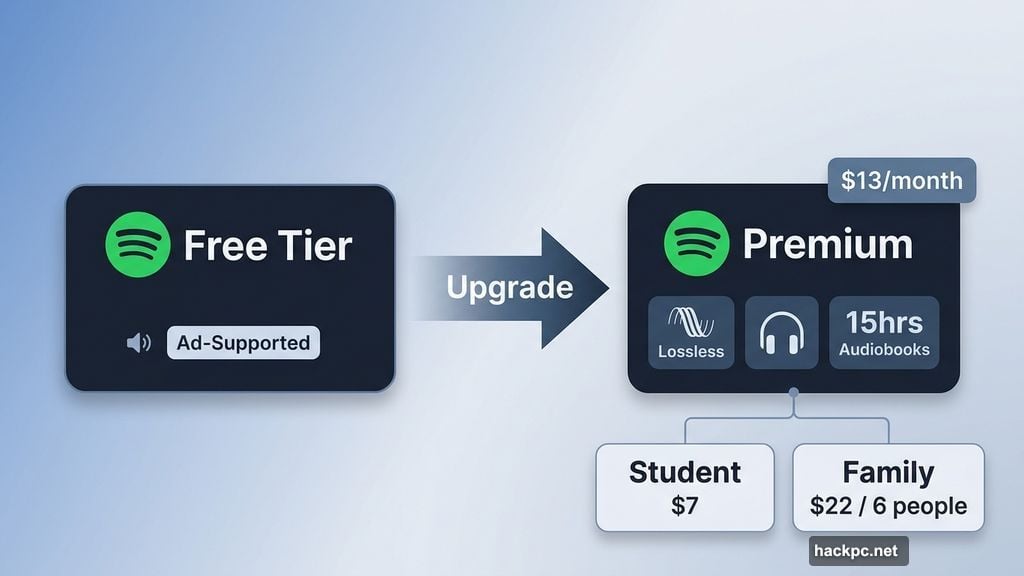
The platform costs $13 a month for an individual plan in the US, with a student rate of $7. A family plan covers up to six people for $22 a month. The free tier remains the best ad-supported option available — you can genuinely listen on demand without spending a cent or entering a credit card number.
Beyond the music itself, Spotify bundles 15 hours of audiobook listening per month and keeps its podcast library deeply integrated. The new Page Match feature is a nice touch, letting you swap between reading and listening to the same audiobook right where you left off. Spotify Wrapped, the year-end stats summary, has become a cultural moment in its own right — and now you can check your listening stats any time, not just in December.
The downsides are real but manageable. Ads on the free tier can feel repetitive. Podcast integration sits a bit awkwardly alongside the music experience. And honestly, you’re bundled into paying for audiobook access whether you want it or not.
Still, for most people on most devices? Spotify wins.
Apple Music Is Two Dollars Cheaper and Sounds Better
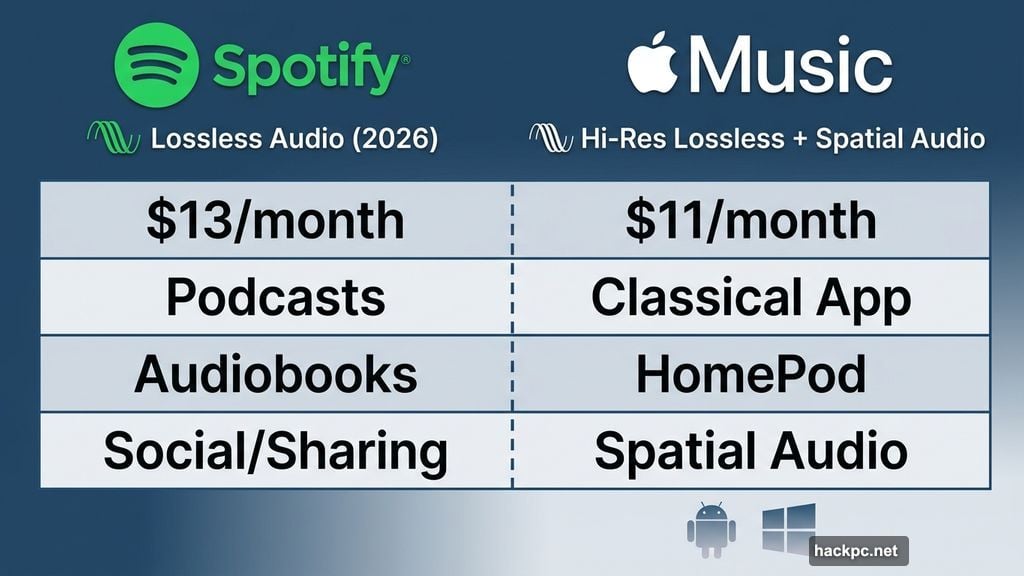
Here’s something worth knowing: Apple Music costs $11 a month, offers hi-res lossless audio, spatial audio on hundreds of thousands of albums, and includes the excellent Apple Music Classical app — all for less than Spotify charges.
So why isn’t Apple Music the top pick? Mostly because it isn’t as fun to use.
The interface feels functional but a little bland. It lacks Spotify’s community features, playlist sharing tools, and the broader social ecosystem that makes Spotify feel alive. Apple Music is also a tighter fit for iPhone and HomePod users — it works on Android and Windows, but the experience feels most natural inside Apple’s world.
That said, if audio quality is your priority and you live inside the Apple ecosystem, this is genuinely excellent value. The 90-day free trial is also the most generous on this list, giving you three full months to decide if it clicks for you.
Tidal: Hi-Res Audio for Everyone at $11
Tidal quietly made some smart moves recently. The service dropped its free tier but also killed its pricey $20 Hi-Fi Plus plan, replacing it with a single $11 tier that includes hi-res audio for every subscriber.
That’s a solid deal. Tidal’s library sits at roughly 110 million tracks, and the platform is actively replacing its proprietary MQA files with hi-res FLAC — a format that works with far more hardware. Dolby Atmos mixes, concert livestreams, and detailed artist profiles round out a service that clearly cares about the listening experience.
The app isn’t quite as polished as Spotify or Apple Music, and the catalog, while deep, isn’t quite as exhaustive for mainstream listening. But for audiophiles and urban music fans especially, Tidal delivers real quality at a reasonable price.
Amazon Music Unlimited: Best Value If You’re Already a Prime Member
Amazon Prime members pay $12 a month for Music Unlimited — slightly less than Spotify — and get a surprisingly capable service in return.
Hi-res audio and Dolby Atmos mixes are included at no extra cost, and the interface has genuinely improved with playlists, genres, and podcasts all accessible from the main screen. Lyrics pop up automatically on the now-playing screen, which is a small touch that plenty of people love. The service also includes one audiobook title per month.
The main gap is feel. Artist profiles lack biographies, giving the experience a slightly hollow quality compared to Spotify or Tidal. And Amazon dropped its music locker feature back in 2018, which is a loss for anyone who built up a personal digital music collection.
Non-Prime members pay $13 a month, which makes it harder to justify over Spotify or Apple Music. But for Prime subscribers, it’s a genuinely strong deal.
Qobuz: The Best Choice for Serious Audiophiles Who Buy Music
Qobuz occupies a specific but valuable niche. It’s the only major streaming service that pairs a proper hi-res streaming catalog with an actual hi-res download store — and uniquely, you don’t need a specialized hardware decoder to access 24-bit audio.
The Studio Premier plan runs $13 a month or $130 a year. The Sublime Plus plan costs $180 annually and adds discounts on music purchases. Students can access Qobuz for just $5 a month, which is one of the best deals in streaming for that demographic.
In 2025, Qobuz added Qobuz Connect, letting users stream directly to compatible hi-fi equipment — similar to what Spotify Connect and Tidal already offer. The app is clean and well-designed, and the catalog of more obscure artists has improved significantly. The one notable gap: no spatial audio support.
If you buy albums, care deeply about sound quality, and don’t mind paying a little more for the privilege, Qobuz earns its spot on this list.
YouTube Music: Best for Android Users and Existing Libraries
YouTube Music at $11 a month makes the most sense if you’re deep in Google’s ecosystem or already subscribe to YouTube Premium at $14 a month — the latter includes Music at no extra charge.
The platform carries over 100 million tracks and retains the music locker system from its predecessor Google Play Music, meaning you can still upload personal MP3 collections and blend them with the streaming catalog. Radio stations are well-curated and the playlist-from-YouTube-clips feature is genuinely unique.
The audio quality tops out at 256Kbps AAC, which is noticeably lower than competitors on paper. Most people won’t hear the difference on earbuds or phone speakers, but if you’re listening on a proper home audio setup, it matters.
Deezer: 120 Million Tracks and the Easiest Library Migration
Deezer has been quietly operating in the US since 2016 and deserves more credit than it typically gets. The catalog stands at 120 million tracks — the largest claimed number on this list. Hi-res music is included in the Premium plan, which runs $12 a month, and the free mobile tier gives casual listeners a way in without spending anything.
The standout feature is library migration. Deezer was the first service to let users transfer their existing catalogs from competing platforms at no charge, using a tool called Tune My Music. If you’ve built up years of playlists on Spotify or Apple Music and want to try something new without losing everything, Deezer makes that transition genuinely painless.
The main challenge is differentiation. At $12 a month, Deezer competes directly with Spotify and Amazon Music Unlimited, both of which offer more compelling overall packages for most listeners.
What Actually Matters When You’re Choosing
Pricing is the obvious starting point. Most major services now fall between $11 and $13 a month for individual plans, with student discounts ranging from $5 to $7 and family plans running $17 to $22 for up to six people. That’s a meaningful narrowing compared to even a few years ago.
Sound quality has improved dramatically across the board. Lossless audio — which preserves every detail of the original recording — is now standard on Spotify, Apple Music, Tidal, Amazon Music Unlimited, and Qobuz. The difference is most noticeable through quality headphones or home audio equipment. On Bluetooth speakers or earbuds, most people honestly can’t tell the difference.
Spatial audio, which creates a three-dimensional sound experience, is available on Apple Music and Amazon Music Unlimited. Whether it actually sounds better is genuinely subjective — some people love it, others find it disorienting. You’ll need good headphones or a proper Dolby Atmos setup to hear what all the fuss is about.
If you buy digital music rather than just renting access through a subscription, your choices narrow significantly. Apple Music and YouTube Music both offer music lockers where you can store personal purchases alongside streaming content. Qobuz goes further with its download store. Amazon discontinued its music locker back in 2018.
The Right Service Depends on Who You Are
For most people, Spotify is the clear recommendation. It works everywhere, sounds great now that lossless is included, and offers features no competitor has quite matched — from AI-powered discovery to Spotify Connect’s seamless device switching.
Apple Music is the smart pick if you’re invested in Apple’s ecosystem and care about audio quality. Two dollars cheaper than Spotify, with better sound specs and a gentler free trial — it’s genuinely close.
Tidal and Qobuz are purpose-built for music lovers who want the best possible listening experience. Both deliver on that promise in different ways — Tidal with its Atmos mixes and concert content, Qobuz with its download store and clean hi-res playback.
YouTube Music makes sense if Android is your world or you already pay for YouTube Premium. Amazon Music Unlimited earns its place if you’re a Prime member looking for a discount on a capable service.
And if you just want the biggest possible catalog with easy library migration? Deezer is worth a serious look.
There has never been a bad time to pay for music streaming. Right now, it might be the best it’s ever been.



Comments (0)