
Picking the right proxy server feels overwhelming at first. There are millions of IP addresses to choose from, four different proxy types to understand, and pricing structures that could make your head spin.
But here’s the thing: after testing 16 proxy servers, two clear winners emerged. Oxylabs and Decodo stood far above the competition. And if budget is your top priority, Webshare offers a surprisingly solid alternative at a fraction of the price.
Let’s break down what actually matters when choosing a proxy service — and which one fits your specific needs.
Residential Proxy Pool Size Changes Everything
Before diving into individual picks, it helps to understand why pool size matters so much. A proxy pool is the total number of IP addresses a service has available. Bigger pools mean your web scraping requests are less likely to hit the same IP twice — and less likely to get flagged.
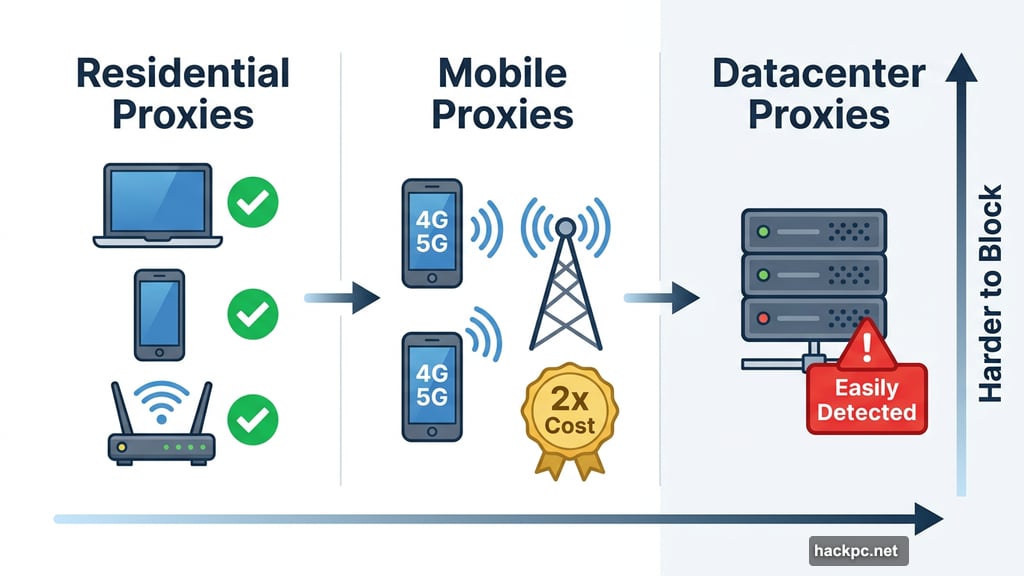
Residential proxies come from real devices owned by real people. Internet service providers (ISPs) assign these IP addresses, which makes them look completely legitimate to websites. That’s why they’re harder to block than datacenter proxies, which come from cloud servers that websites can easily identify and reject.
Mobile proxies take this a step further. They route through devices connected to wireless carriers, making them the toughest to detect. But you’ll pay nearly double compared to residential plans.
Oxylabs: Built for Businesses That Need Scale
![A data visualization showing Oxylabs’ global proxy network spanning 195 countries with 175 million residential IPs highlighted across a world map]
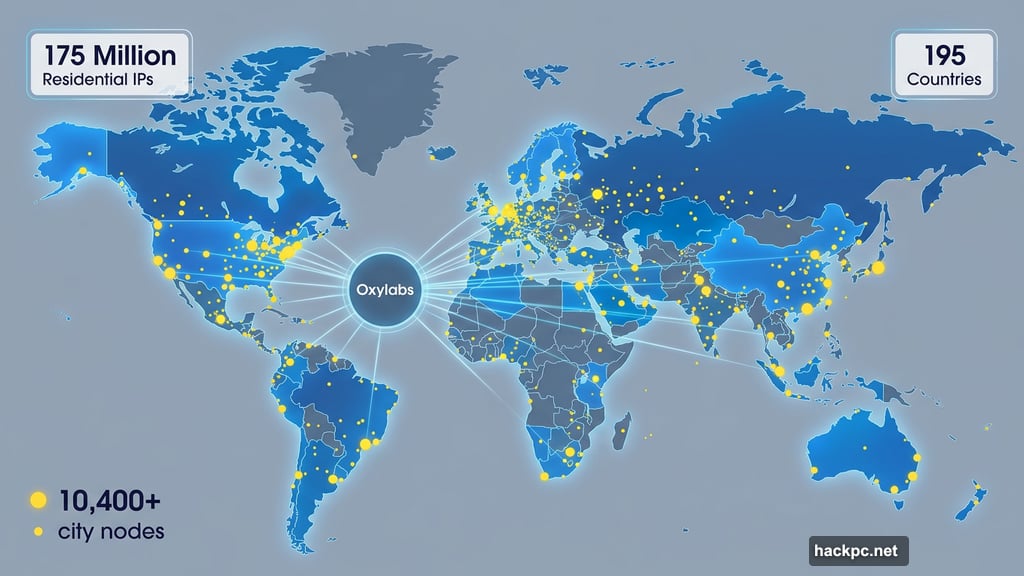
Oxylabs earned a 9.7/10 CNET score, and the numbers behind that rating are genuinely impressive. The service offers 175 million residential proxies spread across 195 countries and more than 10,400 cities. No other proxy provider comes close to that scale.
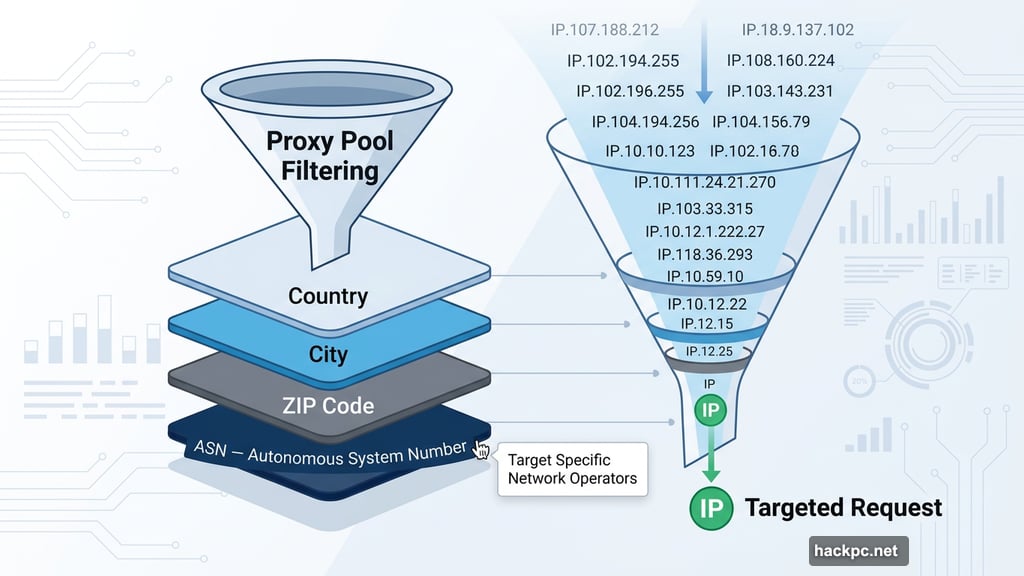
What sets Oxylabs apart beyond raw numbers is the targeting precision. You can filter by ZIP code, city, country, or even ASN (Autonomous System Number — essentially a way to target specific network operators). For enterprise-level data collection, that level of control is invaluable.
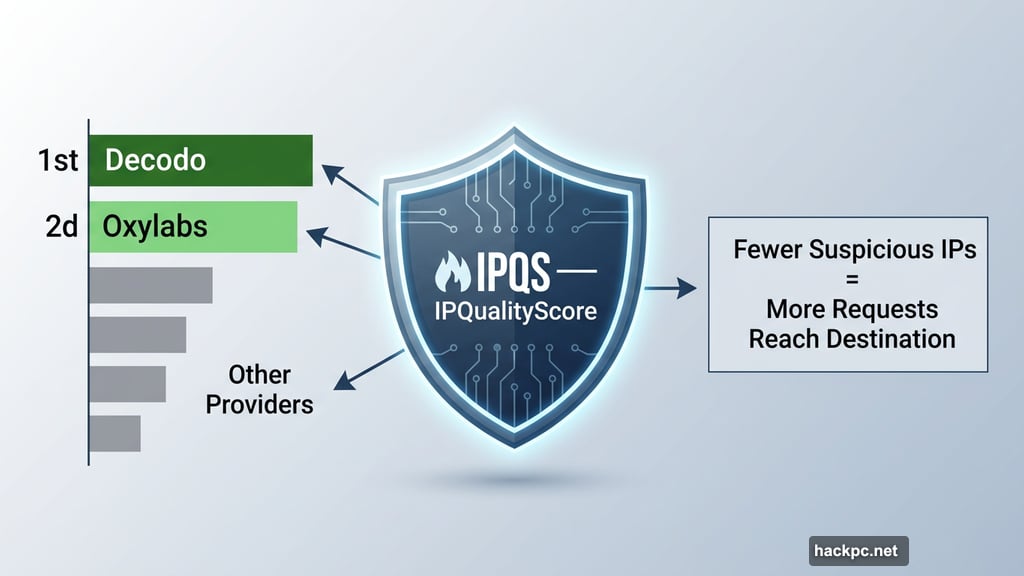
Oxylabs also scored among the best for IP quality. Using the IPQualityScore (IPQS) standard — an industry tool for fraud detection and risk analysis — Oxylabs’ residential pool came in just behind Decodo. Fewer suspicious IPs means more of your requests actually reach their destination.
Who Should Choose Oxylabs
Oxylabs is clearly built for developers and enterprise customers doing large-scale web scraping, ad verification, or market research. Within minutes of creating an account, a real representative reached out to discuss options. That kind of personal onboarding is rare in this space.
The platform has the largest collection of developer tools and third-party software integrations of any proxy server tested. If you’re already using scraping or analytics software, there’s a good chance Oxylabs connects directly to it.
New users should know the setup has a learning curve. The documentation isn’t as beginner-friendly as Decodo’s. But if you have some technical background, the depth of features quickly becomes an asset rather than a burden.
Oxylabs Pricing
Residential proxies start at $4 per GB on a pay-as-you-go basis. That price drops significantly in bulk — around $2 per GB at the 1,000GB monthly tier. For anything larger than that, you’ll need to contact the sales team directly.
Mobile proxies start at $5.40 per GB, which is on the expensive side even for bulk purchases. If mobile proxies are your primary need, Decodo offers a better deal.
Oxylabs recommends itself best for businesses using at least 100GB of data per month. Below that threshold, Decodo’s lower pay-as-you-go rates make more financial sense.
Decodo: The Friendliest Proxy Server for Smaller Teams
Decodo (formerly known as Smartproxy) earned a 9.5/10 CNET score, and it genuinely checked every box during testing. Best-in-class success rate, elite response times, an accessible interface, and the lowest pay-as-you-go residential pricing available at $3.50 per GB.
In Proxyway’s 2025 Market Research Report — which sent over 1.5 million requests to top proxy servers — Decodo and Oxylabs tied for the lowest average response times in their global pools. That means your requests don’t just succeed. They succeed fast.
Who Should Choose Decodo
Decodo is the best starting point for anyone new to proxy servers. The documentation walks through every step clearly, and the setup process is genuinely painless. The browser extension goes beyond basic functionality too — you can monitor usage, add websites to a bypass list, and toggle the proxy on or off without touching a settings menu.
Customer support also impressed during testing. The web chat connected to a helpful human quickly, without the AI chatbot purgatory that some competitors trap you in.
For businesses needing less than 100GB monthly, Decodo’s pricing is hard to beat. Mobile proxies are a particular standout — just $2.25 per GB for 500GB blocks, which undercuts nearly every competitor.
Where Decodo Falls Short
High-data plans get expensive fast. Once you move past buying data in small chunks, the price jumps to $6 per GB on residential plans. At the 1,000GB tier, you’re paying $3 per GB — higher than most competitors at that volume. If your monthly usage consistently exceeds 100GB, Oxylabs’ bulk pricing becomes more attractive.
Decodo also lacks city-level targeting for ISP and datacenter proxies, which could matter for projects requiring very specific geographic precision.
Webshare: The Budget Option That Holds Its Own
![Screenshot of Webshare’s clean dashboard interface showing proxy usage statistics and plan customization options]
Webshare doesn’t try to compete with Oxylabs or Decodo on features. It competes on price — and it wins that category by a wide margin.
Datacenter proxies start at just $0.03 per IP for 100 IPs. Residential proxies begin at $3.50 per GB and drop all the way to $1.50 per GB at the 1,000GB tier. And Webshare throws in 10 free shared datacenter IPs right out of the gate, which is a genuinely useful way to test whether the service can handle your workload.
The Trade-offs Are Real
Webshare’s 80 million residential IP pool trails both Oxylabs and Decodo. More importantly, the quality of those IPs is lower. Success rates with popular targets like Amazon, Google, and Instagram were still respectable with residential proxies. But datacenter proxies struggled with sophisticated anti-bot systems.
Response times are also slower across the board — a meaningful problem for any project that needs near real-time data.
Webshare also doesn’t offer mobile proxies at all, and there’s no city-level targeting. The interface is bare-bones, with limited developer tools and no meaningful third-party integrations.
When Webshare Makes Sense
If you’re targeting websites with lighter bot detection — or running high-volume scraping where some blocked requests are acceptable — Webshare’s prices let you run far more requests for the same budget. The residential proxies are ethically sourced, and the customer support surprised me during testing. A real person jumped into the chat within minutes when I asked for human help.
Webshare also offers a 30% discount for annual payments, which none of the other top picks provide.
How the Top Picks Compare
| Feature | Oxylabs | Decodo | Webshare |
|---|---|---|---|
| Residential pool | 175 million | 115 million | 80 million |
| Countries | 195+ | 195+ | 195 |
| Residential price (per GB) | $4.00 | $3.50 | $3.50 |
| Mobile price (per GB) | $5.40 | $3.50 | Not offered |
| City targeting | Yes | Yes | No |
| ASN targeting | Yes | Yes | No |
| Free trial | 3-7 days | 3 days | 10 free IPs |
| Annual discount | No | No | 30% off |
| CNET score | 9.7/10 | 9.5/10 | Not scored |
Proxy Type Rundown: Which One Do You Need?
Residential proxies are the most popular choice. They come from real devices, so websites treat them like regular traffic. Great for web scraping, ad verification, SEO monitoring, and sneaker copping.
Mobile proxies offer the highest-quality IPs and are hardest to block. Best for social media automation and app testing. Expect to pay roughly double compared to residential.
ISP proxies (sometimes called static residential proxies) sit between datacenter and residential quality. Faster and more reliable uptime, but easier to detect. Good for managing multiple e-commerce accounts.
Datacenter proxies are the cheapest and fastest option. But websites can identify them more easily since they come from cloud servers like AWS and Google Cloud. Best for large-scale scraping where some blocked requests are acceptable.
What About Free Proxy Servers?
Skip them entirely. During research, no free proxy server offered a clear explanation of how their IPs are sourced — a serious red flag. Beyond the ethical concerns, free proxies have known issues with stealing unencrypted data, and they’re slow and frequently blocked.
Every top pick in this guide offers either a free trial or free datacenter IPs. Those are far safer options if you want to test before spending anything.
The Bottom Line on Proxy Server Choices
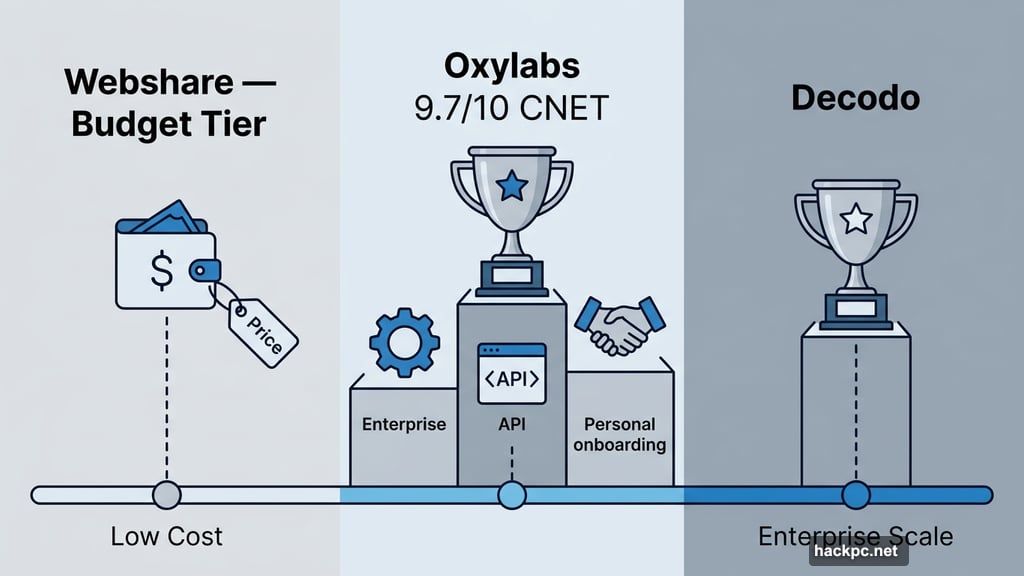
Oxylabs and Decodo are genuinely the two best proxy servers available right now. The choice between them mostly comes down to scale. If your project regularly burns through 100GB or more each month, Oxylabs’ bulk pricing and advanced developer tools justify the higher starting cost. For smaller projects or teams just getting started with residential proxies, Decodo’s beginner-friendly setup, elite performance scores, and lower pay-as-you-go pricing make it the smarter starting point.
Webshare earns its spot as the budget pick. The IPs aren’t as clean, and you’ll hit more blocks with certain targets. But if your use case tolerates some friction, the savings are substantial.
Whatever you choose, start with a trial before committing to a large data package. Test your actual targets, check success rates, and see how the interface feels. The best proxy server is the one that works for your specific project — not just the one with the most impressive numbers on paper.




Comments (0)