
That smug satisfaction after finishing the New York Times crossword? Absolutely addictive. And the crushing defeat when you can’t crack a single across clue? Equally unforgettable, just not in a good way.
Whether you’re stumbling on Wordle, blanking on Spelling Bee, or getting humbled by Connections, daily word puzzles have a way of making even sharp people feel suddenly very dumb. But here’s the thing: AI tools can actually help you get better at these games, not by cheating, but by helping you study smarter. Let’s walk through how.
Mining Puzzle Archives for Hidden Patterns
Every daily puzzle has a DNA. Certain word types, clue structures, and vocabulary patterns show up again and again. The problem is spotting them on your own takes forever, especially if you’re a casual player.
That’s where AI earns its keep. You can feed it real puzzle data and ask it to find the patterns you’d never notice solo.
Writer Rachel Kane tested this with Google’s Gemini. She pulled January’s filled-in New York Times Daily Mini Crossword answers from her NYT Games subscription, then uploaded the PDF to Gemini with a clear prompt asking the AI to review the puzzles for “commonalities and metrics” that might improve her solving skills.
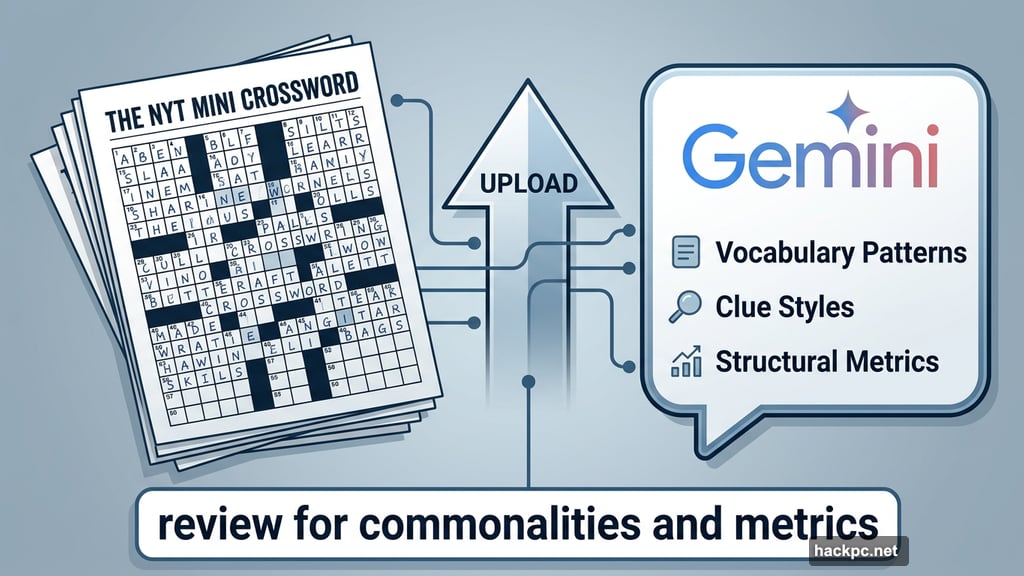
Gemini delivered a solid breakdown. It analyzed vocabulary choices, clue styles, and structural patterns across the entire month’s worth of puzzles. That kind of bird’s-eye view is genuinely hard to achieve on your own. Plus, it reveals the puzzle-making logic sitting just beneath the surface of every clue.
The prompt that worked: “If I provided you a PDF document which included the filled-in Mini Crossword puzzles from the NYTimes with the clues and answers, would you be able to review them for commonalities and metrics which might help me learn to be better at solving them in the future?”
Simple, direct, and effective.
Passive Learning With AI-Generated Audio
Not everyone has time to sit down and study crossword patterns like it’s a college exam. But most people do mundane tasks where their ears are free. Gardening, cooking, commuting, folding laundry.
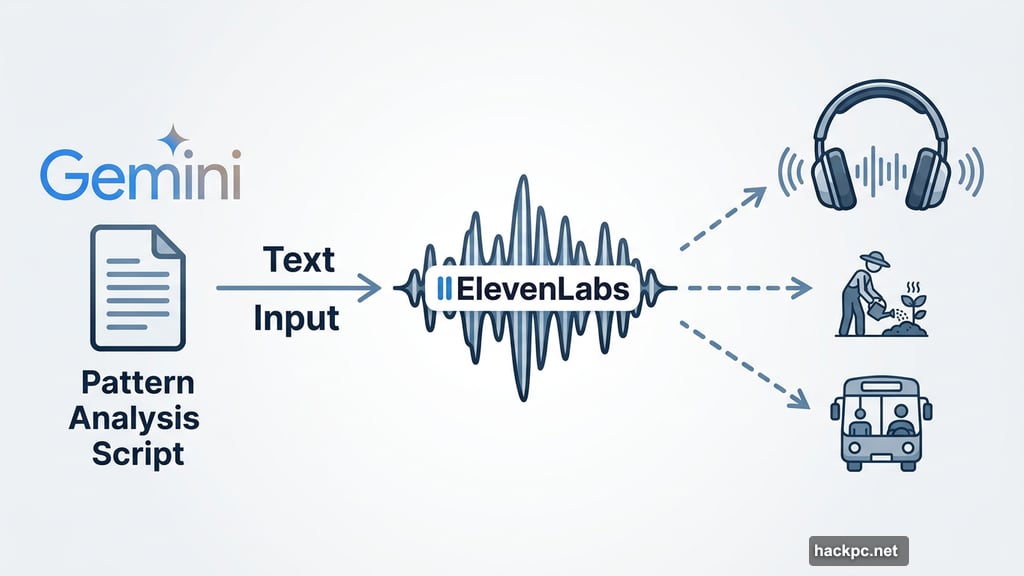
Here’s a clever trick: take the insights Gemini surfaces and turn them into an audio study session. Kane used Gemini’s analysis to write a script based on previous NYT crossword clues and explanations. Then she dropped that script into ElevenLabs, an AI text-to-speech tool, and generated a five-minute audio file to listen to during everyday activities.
The logic is solid. The more familiar a tricky word or clue style feels, the less intimidating it becomes when you actually face it in a puzzle. Your vocabulary expands quietly in the background, almost without effort.
ElevenLabs handles the text-to-speech conversion quickly and sounds remarkably natural. It’s a low-effort way to squeeze learning into moments you’d otherwise lose entirely.
Building Confidence With Easier AI-Made Puzzles
Sometimes you just need a win. If today’s Wordle crushed your spirit or the Spelling Bee left you staring blankly at six letters, having an easier version to play through can keep your momentum going.
Kane used Anthropic’s Claude to generate seven simplified versions of the NYT Mini Crossword, all tied to the same day’s theme. The result? Her confidence bounced back, her interest stayed sharp, and she kept practicing instead of rage-quitting for the day.
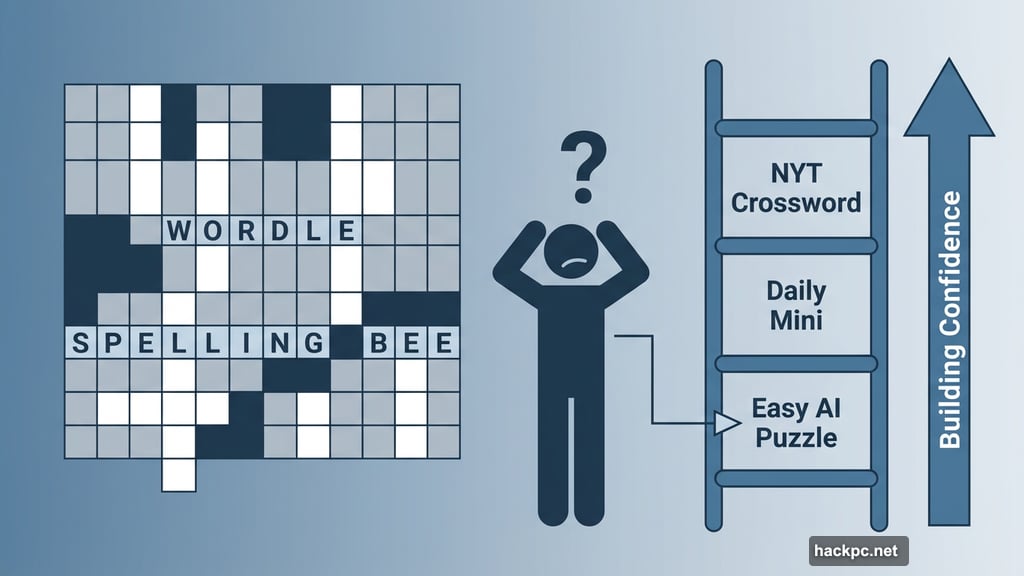
This is low-stakes AI use at its best. Claude builds puzzles that feel achievable while still working the same mental muscles. And you stay in the habit of solving daily, which matters more than any single score.
One important note: always double-check AI outputs. These tools can occasionally hallucinate clues or suggest strategies that don’t quite hold up. With puzzles, the stakes are low, so it’s a safe place to learn how AI thinks and where it sometimes goes sideways.
Making This Part of Your Daily Routine
The real secret isn’t any single AI trick. It’s consistency. Using these tools together builds a feedback loop that gradually sharpens your puzzle instincts.
Study patterns with Gemini. Absorb vocabulary passively through ElevenLabs audio. Rebuild confidence with Claude’s custom puzzles. Repeat over weeks, and the NYT crossword starts feeling less like a trap and more like a fun challenge you’re actually equipped for.
Word puzzles reward pattern recognition and vocabulary depth. AI gives you a fast track to developing both. And honestly, watching that yellow Wordle grid turn green after weeks of smart practice feels pretty spectacular.


Comments (0)