
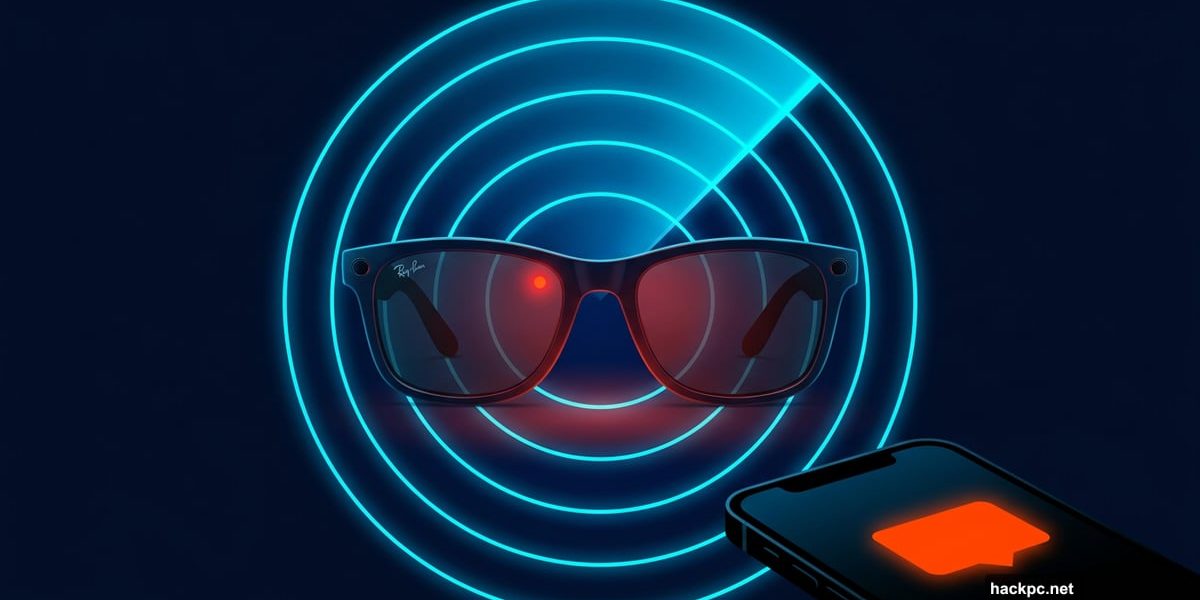
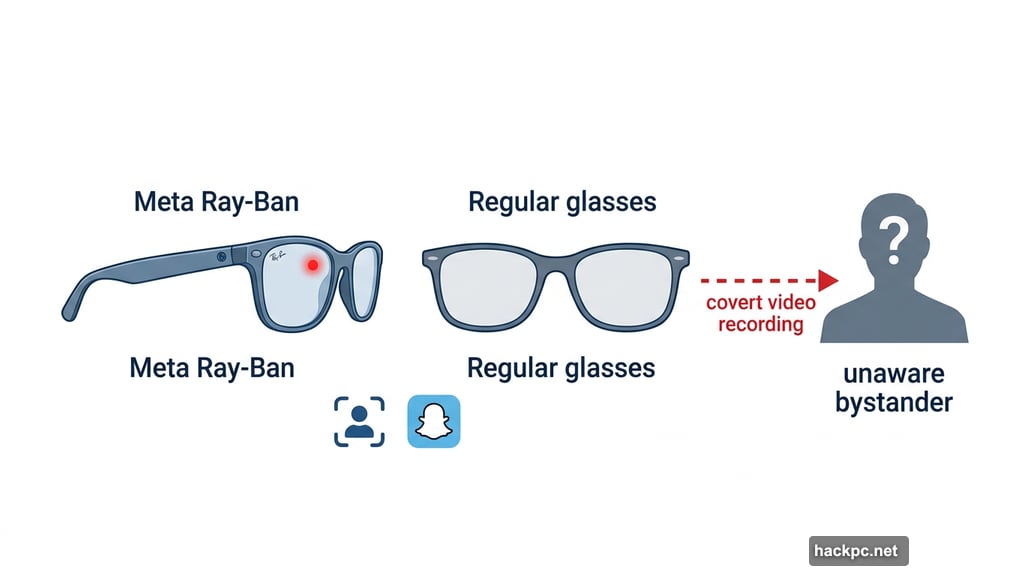
Smart glasses look just like regular eyewear. That’s the whole problem.
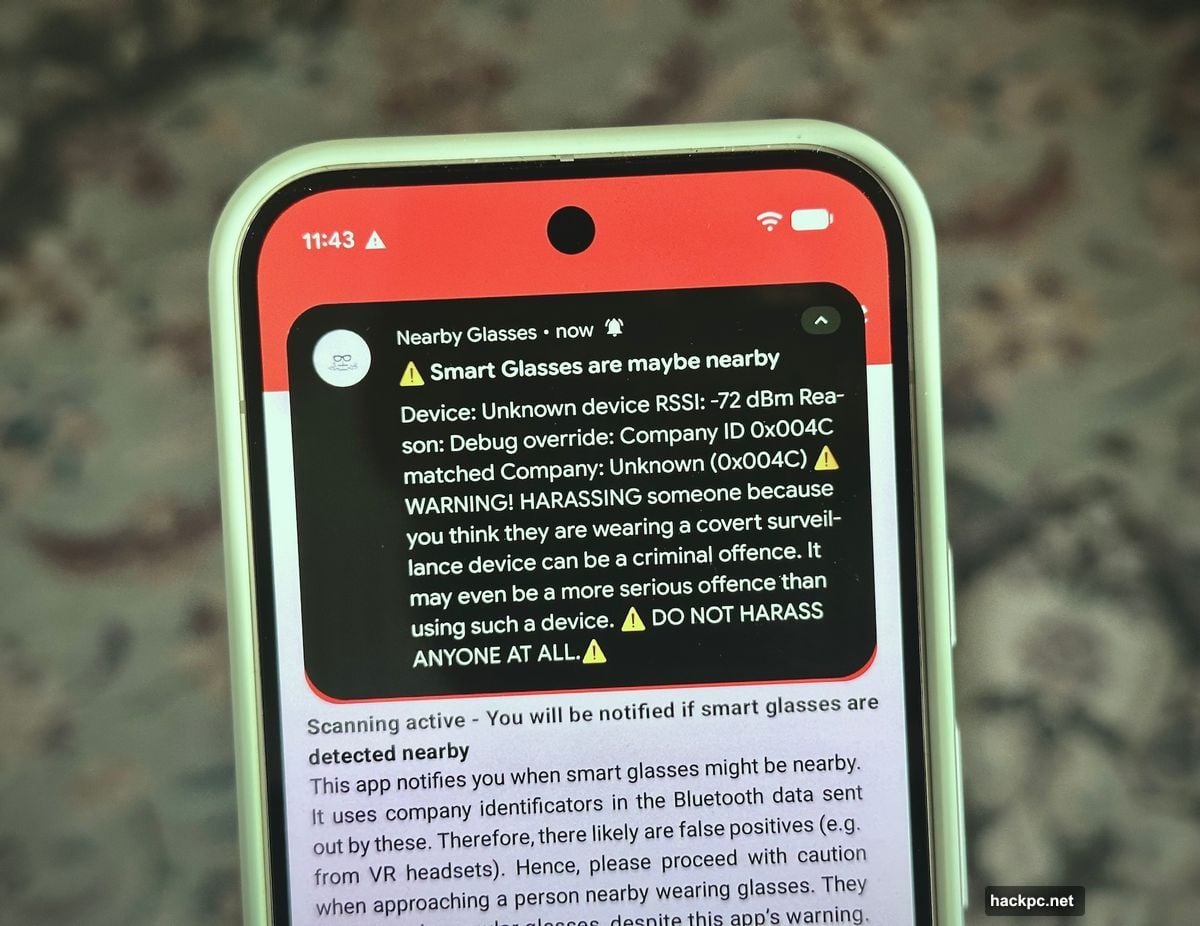
Devices like Meta’s Ray-Ban smart glasses can record video of everyone around them, and most people nearby have no idea it’s happening. But a new Android app called Nearby Glasses wants to change that. It alerts you when someone wearing smart glasses — or other always-on recording devices — gets close to you.
![A smartphone displaying the Nearby Glasses app interface with a Bluetooth detection alert, showing smart glasses surveillance detection technology in action]
Smart Glasses Are Getting Harder to Ignore
The app was built by developer Yves Jeanrenaud, who told 404 Media he was inspired partly by their reporting on wearable surveillance. The stories that pushed him over the edge were specific and disturbing. Meta’s Ray-Ban glasses have reportedly been used during immigration raids and to film and harass sex workers.
Jeanrenaud didn’t mince words about how he sees this technology. On the app’s project page, he called smart glasses an “intolerable intrusion, consent neglecting, horrible piece of tech.”
He also pointed to Meta’s decision to enable face recognition as a default feature in its glasses. That move, he said, opened “a huge floodgate for all kinds of privacy-invasive behaviour.”
How Nearby Glasses Actually Works
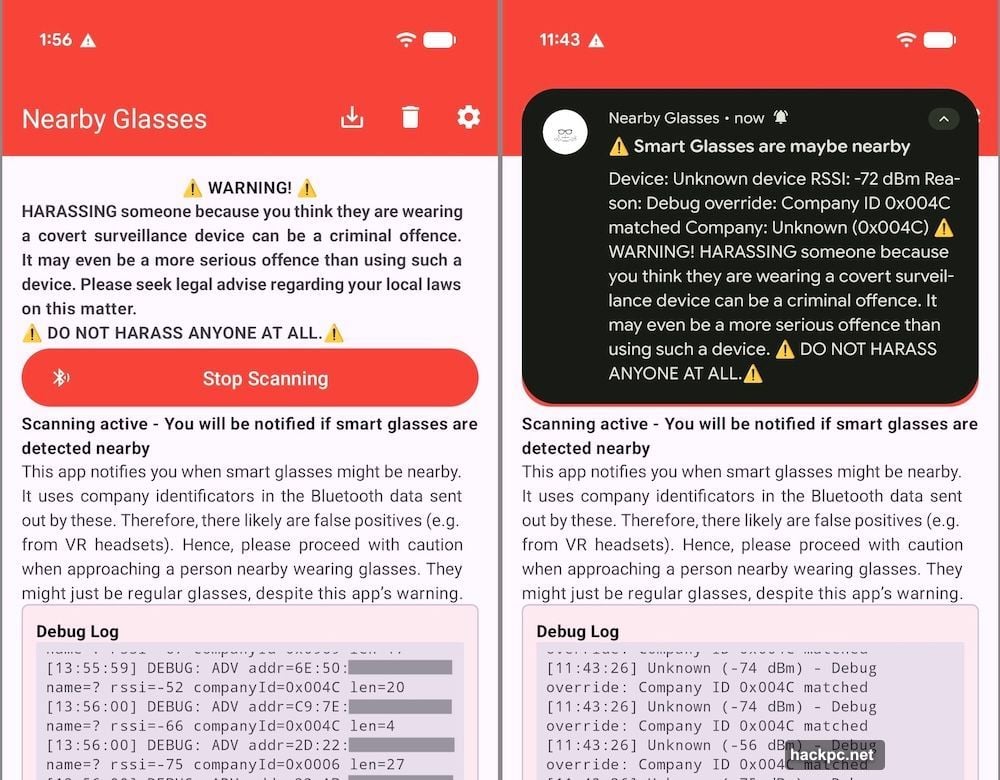
The app constantly scans for Bluetooth signals from nearby devices. Every Bluetooth-enabled gadget broadcasts a publicly assigned identifier that’s unique to its manufacturer. So when Nearby Glasses picks up a signal from a Meta or Snap device nearby, it fires off an alert.
It also lets you manually add your own Bluetooth identifiers. That means you can expand detection beyond just Meta and Snap hardware to catch a broader range of wearable surveillance gadgets.
Jeanrenaud does acknowledge one limitation worth knowing about. The app can produce false positives. For instance, it might detect a Meta VR headset and flag it as smart glasses, since both products come from the same manufacturer. That said, a VR headset strapped to someone’s face is a lot harder to miss than a slim pair of glasses.
![Close-up comparison of Meta Ray-Ban smart glasses next to regular eyewear, highlighting how similar they appear to standard frames]
Testing It Out in the Real World
TechCrunch’s Zack Whittaker loaded the app and walked through his neighborhood to test it. He found no smart glasses wearers nearby and received zero alerts during that walk.
But then he added Apple’s Bluetooth identifier (0x004C) to the detection list. His phone immediately lit up with alerts. Every Apple device nearby started triggering notifications, which showed the detection mechanism works exactly as designed.
It’s a clever little test. The sheer volume of Apple device alerts confirmed the scanning technology is functional and sensitive. Whether you get alerts in your daily life depends entirely on how many smart glasses wearers happen to be around you.
A Technical Fix for a Much Bigger Problem
Jeanrenaud is upfront about what this app can and can’t do. “Of course, it’s a technical solution to a social problem,” he said, adding that the problem “won’t go away anytime soon.” He described Nearby Glasses as “a desperate act of resistance, hoping it would help at least someone.”
The app currently runs on Android only. Jeanrenaud said there’s genuine demand for an iPhone version, but whether that happens depends on his available time.
Neither Meta nor Snap responded to TechCrunch’s requests for comment.
The resistance against always-recording wearables is clearly growing. And while one app can’t stop anyone from pointing a camera at you on the street, knowing someone nearby is wearing recording hardware is at least a start. Whether that knowledge changes your behavior — or pushes you to advocate for stronger consent laws — is worth thinking about.




Comments (0)