
TV manufacturers descended on CES 2026 with one mission: convince you that your television needs artificial intelligence. Spoiler alert: it probably doesn’t.
Walking the show floor in Las Vegas revealed an uncomfortable truth. While TV picture quality keeps improving, companies are desperately stuffing AI features into places they don’t belong. The result? Your screen gets hijacked by information you could easily look up on your phone.
The TV Industry Has a Sales Problem
Global TV shipments barely moved in 2025. In fact, they declined 0.6% year-over-year in Q3, according to Omdia. Supply chain chaos from Covid, tariff uncertainty, and economic fears have consumers thinking twice before dropping cash on big screens.
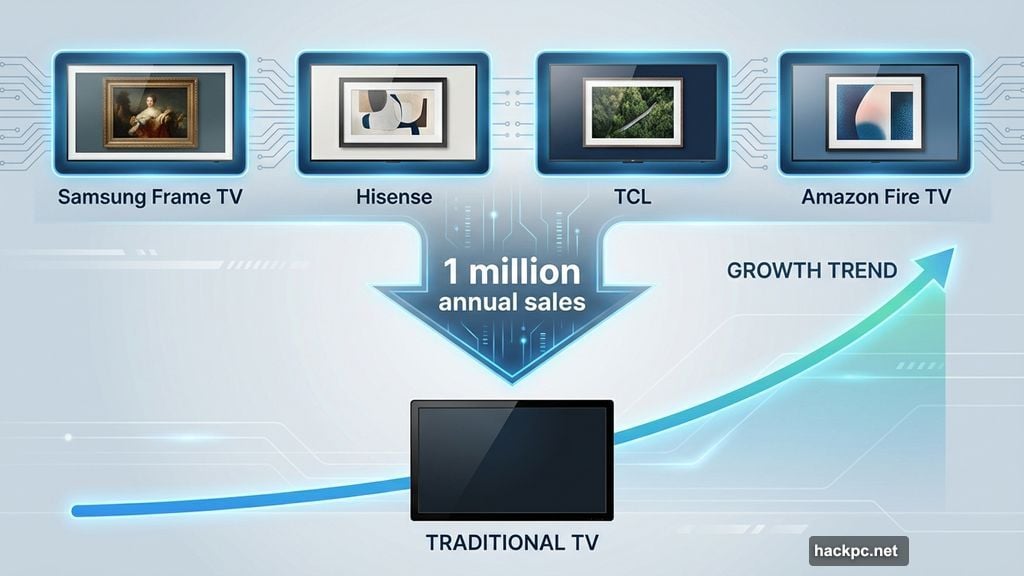
So manufacturers are copying what works. Samsung’s Frame TV crossed 1 million annual sales back in 2021 by disguising itself as wall art. Now everyone’s doing it. Hisense, TCL, and Amazon all launched art TVs this week.
“TVs are often big portions of the rooms they’re in,” explains Fire TV VP Aidan Marcuss. “These devices become part of the furniture.” That makes sense. Art mode when you’re not watching beats a black rectangle staring at you.
But the AI integrations? Those feel forced.

AI Features Nobody Needs on a 65-Inch Display
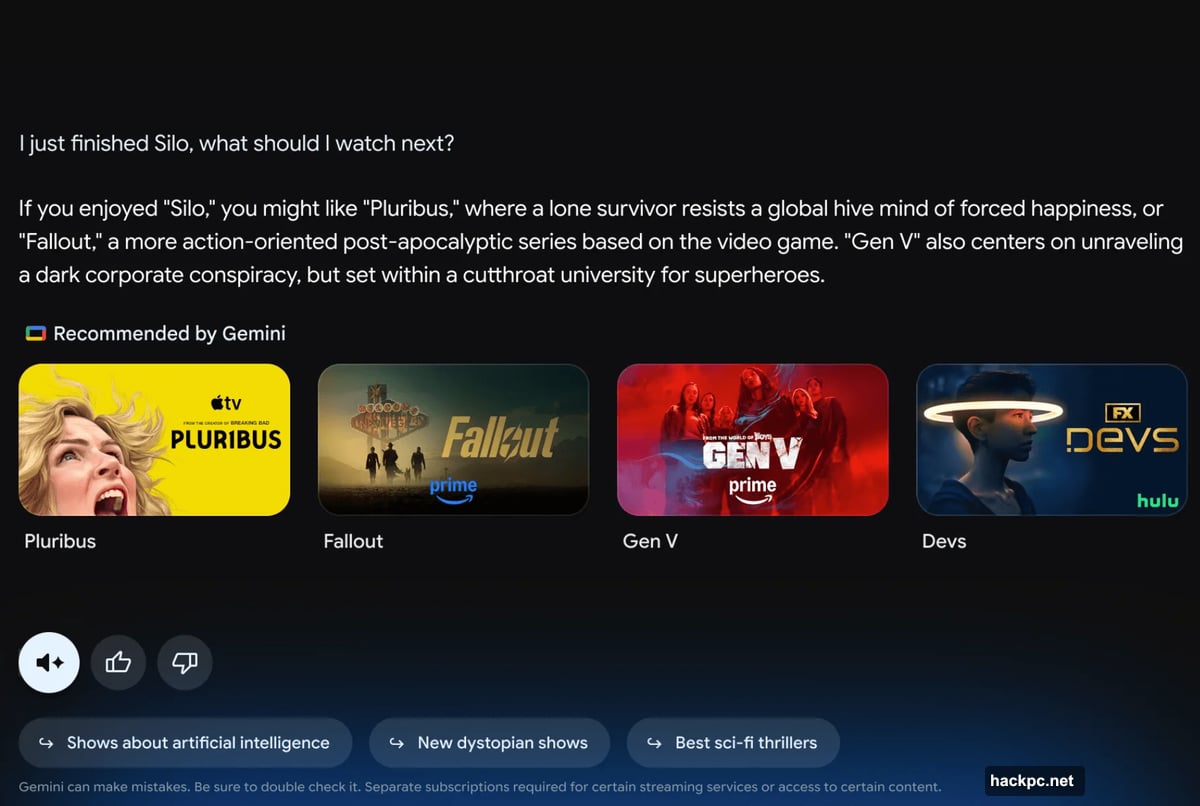
Google’s Gemini on TV now explains why you should watch shows. Ask it about Severance, and it patiently tells you the plot and themes. Samsung demonstrated asking your TV for recipes, which you then send to a kitchen display. Because apparently walking to the kitchen with your phone stopped being an option.
Hisense showed product recognition during shows. See a jacket you like? The TV generates a QR code so you can buy it from your phone. Amazon’s Alexa Plus lets you jump to specific scenes by describing them in Prime Video movies.
Then there’s Google’s generative AI integration. In one demo, someone fed Veo a photo of a woman on a beach and asked it to create a video. Two minutes of waiting later, we got eight awkward seconds of her coming to life.
Why would anyone do this on their TV? Google thinks there’s a use case. I’m not convinced.
Screen Real Estate Gets Hijacked
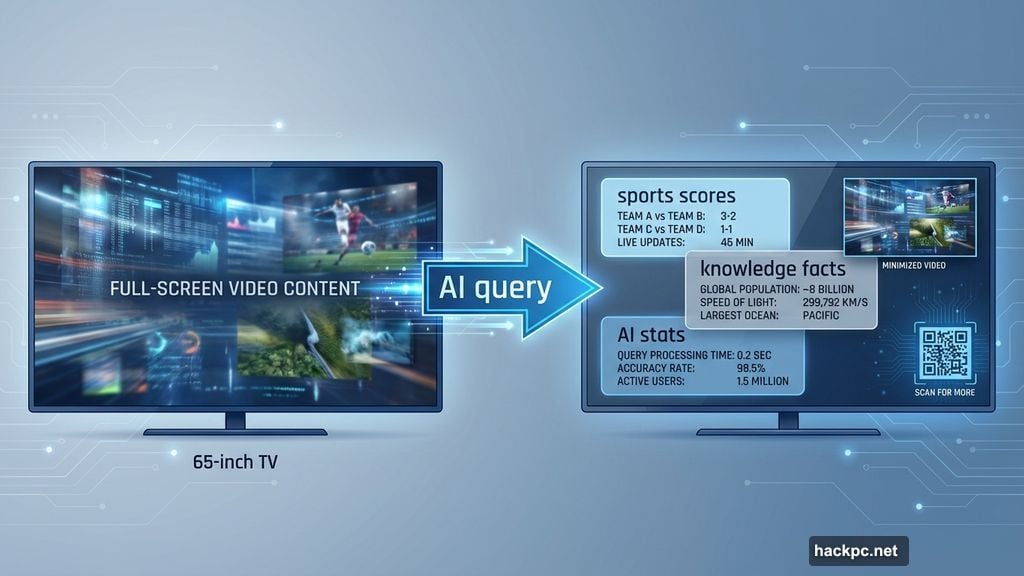
The biggest problem with these AI features shows up immediately. Ask your TV a question about what’s playing, and the video gets minimized. Sports scores, knowledge facts, and random information crowd the screen.
This looked terrible on 70-inch demo displays. Imagine it on a 50-inch TV in your living room. The video you’re trying to watch shrinks into a corner while AI stats take over.
Hisense built a prototype that displays stats for every player during soccer matches. It required so much space they created a special 21:9 aspect ratio TV just for the showcase. Here’s a wild idea: let people look that stuff up on their phones, like they’ve been doing for years.
Some AI Actually Helps
Not all AI integration misses the mark. Gemini lets you change display settings on supported TVs using voice commands. Samsung and others use AI to adjust sound on the fly based on what you’re watching.
These features work because they stay in the background. They enhance your viewing experience without demanding attention or stealing screen space. That’s how AI should function on TVs.
Amazon’s revamped Fire TV interface, launching next month, tries to simplify the streaming chaos. “We’ve been adding things in terms of capabilities,” Marcuss says. “Games, art, music. It’s hard to organize that.” The new UI aims to make sense of multiple streaming services without overwhelming users.
What People Actually Want From TVs
TCL sales and marketing exec Chris Hamdorf cuts through the noise with a simple observation: “Primarily, consumers are using their television to watch content. That’s still where the majority of the usage is.”
Translation? People buy TVs to watch TV. Not to generate AI videos from beach photos. Not to have recipes displayed in their living room. Not to have their screen hijacked by sports stats they could check on their phone.
The TV industry keeps searching for the next big feature that justifies higher prices and drives sales growth. Cloud gaming, smart home hubs, video chat cameras, even pet telehealth platforms – manufacturers keep throwing features at the wall hoping something sticks.
But consumers keep using their TVs for the same thing they always have: watching shows and movies.
The Real Use Case for TV AI
AI has a role in television. Voice control for settings makes sense. Sound optimization that adapts to what you’re watching adds value. Background processing that improves picture quality helps everyone.
The key? These features work invisibly. They enhance your experience without demanding attention or screen space. They don’t interrupt your show to display information you didn’t request.
TV makers should focus on that kind of AI integration. The stuff that makes TVs better at being TVs. Not the features that transform your screen into a cluttered dashboard of information better suited for smaller devices.
Your TV’s killer app in 2026 is the same as it was in 2006: playing video content you want to watch. AI should support that goal, not distract from it.




Comments (0)