

Nalden walked away from WeTransfer years ago. Now he’s building a competitor that fixes everything he thinks went wrong.
The frustration boiled over when creatives kept messaging him. They hated what WeTransfer became after Bending Spoons bought it last year. So Nalden decided to rebuild the file transfer service he originally envisioned back in 2009.
His new tool is called Boomerang. No login required. No AI features cluttering the interface. Just drag, drop, and send files.
Bending Spoons Killed the Original Vision
Nalden doesn’t hold back when talking about WeTransfer’s new owners. He watched the service he co-founded transform into something unrecognizable.
Bending Spoons laid off 75% of WeTransfer’s staff after acquiring it. Then they changed how transfer links work, confusing longtime users. Plus, the company got caught trying to use uploaded content for AI training without clear consent.
“Bending Spoons doesn’t really care about people,” Nalden told TechCrunch. He left WeTransfer in 2019, but he’s been watching updates “basically killing the product” ever since.

That’s harsh language from a founder. But it reflects how many WeTransfer users feel right now.
Simplicity Beats Features Every Time
Boomerang strips everything down to basics. Upload files without creating an account. That’s it.
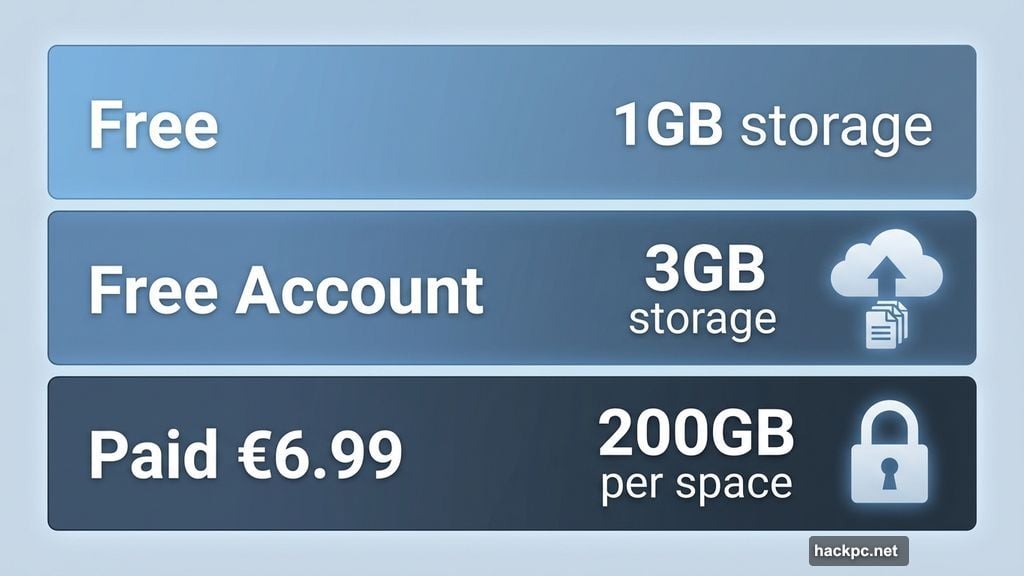
Free users get 1GB total storage with 1GB file size limits. Files expire after seven days. For casual sharing, that’s plenty.
Want more? Create a free account. Storage jumps to 3GB total with 3GB per file. You’ll also get upload history, the ability to modify files after sending, and custom emoji options.
The paid tier costs €6.99 monthly. That gets you 200GB per space, 500GB total storage, and 5GB per file. Plus password protection, 90-day expiration, custom covers, and unlimited user invitations.
Notice what’s missing? No confusing tiers. No artificial limits to push upgrades. Just three straightforward options.

No Ads, No Data Collection, No AI Gimmicks
Nalden is adamant about keeping Boomerang clean. No advertising. Minimal data collection. AI used for building the product, but not user-facing features.
“It’s like buying a hammer. You possibly don’t want to buy a fancy hammer, but a hammer that just works,” he explained.
That philosophy extends to design choices. Boomerang’s interface looks almost bare compared to modern web apps. Nalden thinks that’s refreshing in an era where companies add features to impress investors rather than help users.
He believes advertising complicates everything. Payment should be simple. Users either pay for what they need or use the free version. No tracking users across the web to sell ads.
Barebones By Design

The current Boomerang website won’t win design awards. But that’s intentional.
Nalden thinks too many products prioritize looking impressive over working well. Stripping away visual complexity forces focus on core functionality.
Other file transfer services keep adding collaboration tools, AI assistants, and integration options. Boomerang does none of that. Send files fast. That’s the entire value proposition.
A Mac app is coming soon. But there’s no talk of mobile apps, browser extensions, or ecosystem plays. Just the tools people actually need.
When Original Founders Strike Back
Watching your creation change after acquisition hurts. Especially when users reach out to complain.
Nalden could have stayed retired from the file transfer business. Instead, he’s competing against his own creation. That says something about how strongly he disagrees with WeTransfer’s current direction.
Boomerang faces tough odds. WeTransfer has massive name recognition and an established user base. But frustrated users want alternatives. Some will try Boomerang just because Nalden built it.
The question is whether simplicity alone can compete in 2025. Every other file service is adding features, AI, and integrations. Boomerang is doing the opposite.
The Real Test Starts Now
Boomerang launched this month. Early users will determine if the market wants simple file transfer or feature-packed platforms.
Nalden believes people are tired of complicated tools. He might be right. But he might also be fighting a losing battle against the industry’s relentless feature creep.
Either way, it’s refreshing to see a founder stick to principles rather than chase growth metrics. Boomerang won’t please venture capitalists. But it might please users fed up with WeTransfer’s changes.
Time will tell if simple beats sophisticated. For now, creatives have another option that feels like old WeTransfer used to.




Comments (0)