
If WhatsApp keeps cutting out where you live, the company now has a very specific suggestion: grab a VPN. And not just any VPN — WhatsApp is calling out two providers by name.
That’s a pretty bold move for a messaging app. So let’s talk about what’s going on, why these two VPNs made the list, and whether this advice actually helps people facing real internet restrictions.
WhatsApp’s Help Center Names Mullvad and Amnezia
WhatsApp quietly updated its Help Center with a page dedicated to connecting when your network isn’t cooperating. Buried in that page is a VPN section that specifically recommends two providers: Mullvad, based in Sweden, and Amnezia, based in Cyprus.
The page calls both “well-regarded providers.” It also points users toward the Electronic Frontier Foundation’s guide on choosing the right VPN for their situation.
WhatsApp representatives didn’t respond to comment requests before this article published. Neither did Mullvad or Amnezia. So we don’t have an official explanation for why these two made the cut.
But the endorsement is notable. WhatsApp doesn’t casually throw brand names around in its official documentation.
What a VPN Actually Does
Before diving deeper, it’s worth explaining what a VPN does — especially if you’ve never needed one.
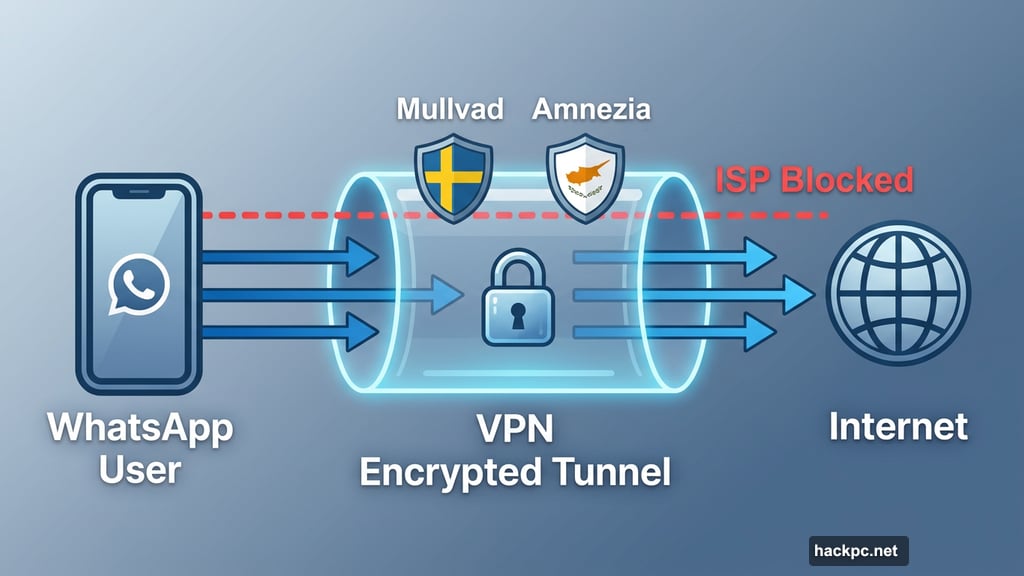
A virtual private network (VPN) is software that creates an encrypted “tunnel” between your device and the internet. Your traffic routes through a server in another location, which masks your real IP address and hides your browsing from your internet service provider.
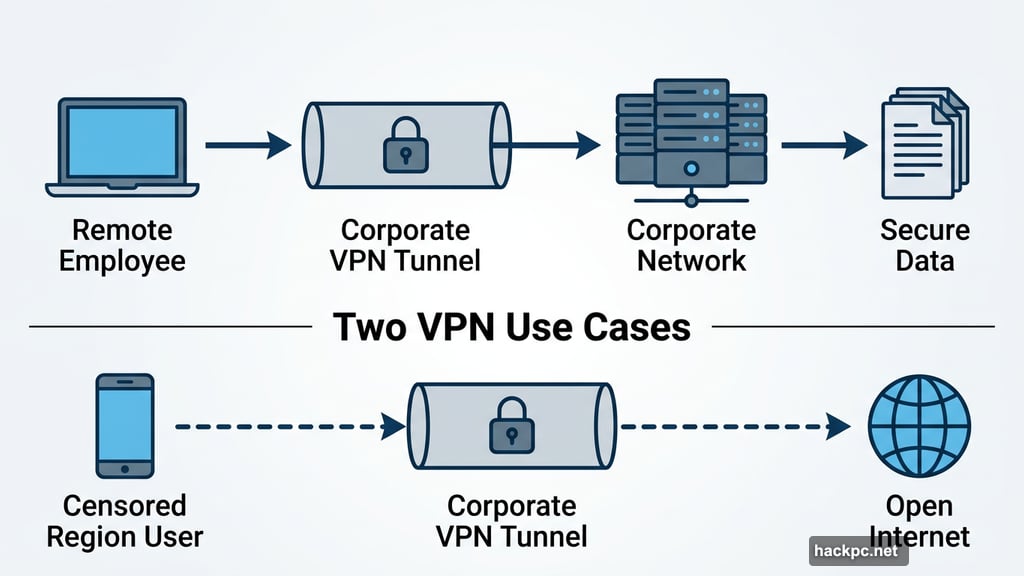
In practical terms, that means two things. First, it hides your physical location. Second, it lets you bypass firewalls and access websites or apps that are blocked in your region. That’s why people use VPNs to watch blacked-out sports streams or access content restricted to other countries.
For businesses, VPNs also let remote employees securely connect to corporate networks. But for people in heavily censored regions, a VPN can be something much more essential than a streaming workaround.
Global Internet Censorship Is Worse Than You Think
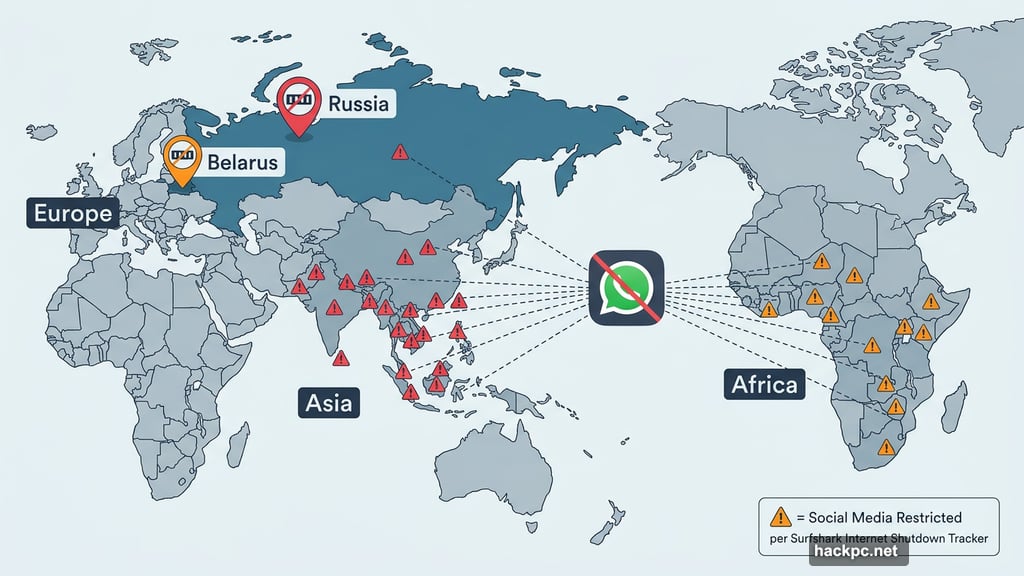
Here’s some sobering context. According to Surfshark’s Internet Shutdown Tracker, 17 Asian countries and 8 African countries currently restrict social media and messaging apps. Russia and Belarus top the list for internet censorship in Europe.
For people living under those restrictions, WhatsApp isn’t just a convenience. It’s a primary way to communicate with family, friends, and colleagues. Losing access isn’t a minor annoyance. It cuts people off.
That’s why WhatsApp pointing users toward specific VPN providers matters. It’s a concrete lifeline for millions of people who face real-world communication barriers every day.
Why Mullvad Specifically?
Mullvad has a strong reputation across the tech community. CNET’s own reviewer Attila Tomaschek praised it as excellent for the “privacy-first VPN user” and for anyone watching their budget. Engadget, Tom’s Guide, Wired, and VPNOverview all rate it highly too.
Mullvad launched in March 2009, built by Amagicom AB out of Gothenburg, Sweden. Its tagline sums up the philosophy well: “Privacy is for the people.”
One standout feature worth mentioning: Mullvad doesn’t require an email address or personal information to sign up. Instead, it issues you an account number. For someone living under a surveillance-heavy government, that detail isn’t just convenient — it could matter a great deal.
What Makes Amnezia Different
Amnezia takes a different approach. Rather than a traditional VPN service, it offers a self-hosted option that lets users set up their own VPNs by renting a virtual private server (VPS).
That gives users more control over their privacy infrastructure. Amnezia also includes features like split-tunneling, which lets you route only specific traffic through the VPN, and a kill switch that cuts your internet connection if the VPN drops unexpectedly.
The company’s mission statement reads: “We defend users’ right to privacy and help keep the internet free, no matter where in the world you are.” That aligns pretty directly with what WhatsApp is trying to help users accomplish.
VPNs Help, But They’re Not a Magic Fix
Here’s where it gets more nuanced. Thorin Klosowski, a security and privacy activist with the Electronic Frontier Foundation, offered a measured take when speaking with CNET.
“It really depends on the type of technology that’s being used for censorship and at what level,” Klosowski said. “VPNs can be useful for circumventing some region-based IP blocking, which may help some people in some locations access WhatsApp.”
But he also flagged an important limitation. Some governments actively block VPN access too. And WhatsApp’s own support for proxy servers hints at this reality — proxies exist precisely because VPNs don’t solve every censorship scenario.
So a VPN is a powerful tool. It’s just not an all-purpose solution. The effectiveness depends heavily on where you are and what specific blocking technology your government uses.
It’s also worth noting that CNET’s Tomaschek has written on this topic directly: complete online anonymity is a myth, regardless of what some VPN marketing materials claim. VPNs meaningfully improve your privacy. They don’t make you invisible.
Should You Try One?
If you’re living somewhere with unstable or restricted access to WhatsApp, yes — trying Mullvad or Amnezia is a reasonable first step. WhatsApp’s endorsement carries real weight, and both services have earned legitimate credibility from the broader tech community.
If you’re already using a different VPN and WhatsApp works fine for you, there’s no urgent reason to switch. The recommendation is most relevant for people actively hitting access walls.
And if you’re new to VPNs entirely, the Electronic Frontier Foundation’s guide — which WhatsApp links to in its Help Center — is a solid, jargon-free starting point for understanding what to look for before committing to any service.
The fact that WhatsApp named two specific providers publicly is itself meaningful. It signals that internet freedom tools are becoming mainstream enough that a Meta-owned app with billions of users is willing to advocate for them openly. That’s worth paying attention to.

Comments (0)