
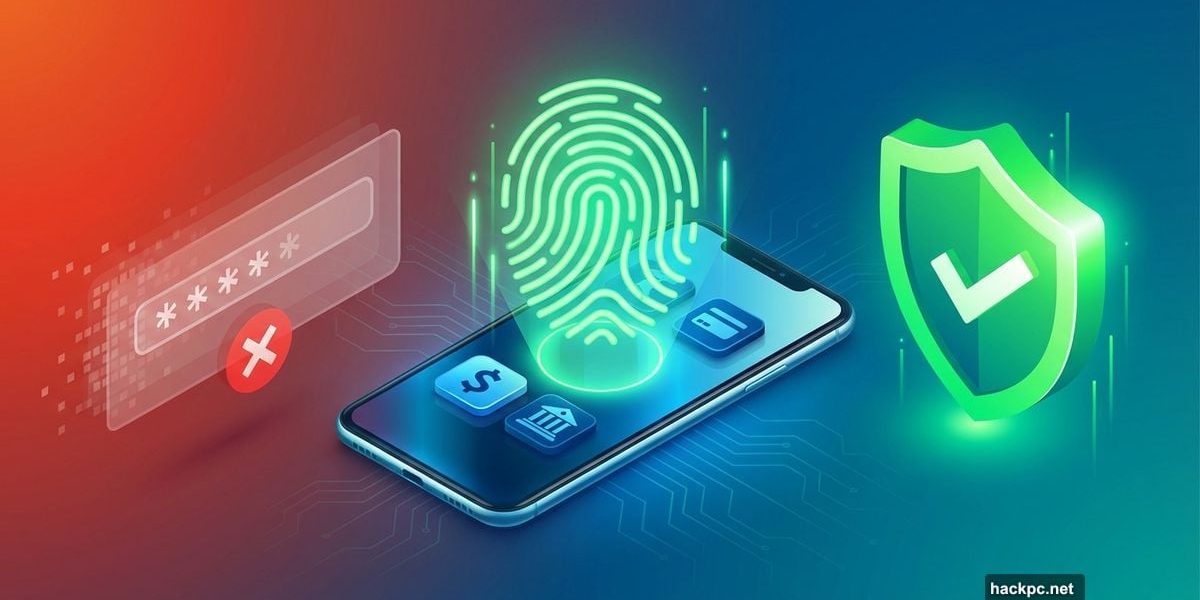
Passwords failed us decades ago. Yet most of us still rely on them to guard bank accounts, email and files that could ruin our lives if exposed.
Passkeys fix this mess. They can’t be phished, guessed or stolen in a breach. Plus, they’re already built into your phone, laptop and every major browser you use daily.
Before the new year hits, lock down the accounts that actually matter. This takes one weekend and stops most attacks cold.
Passkeys Work Without the Technical Headache
Forget the crypto jargon for a second. Here’s what actually happens when you use a passkey.
Your device creates two digital keys that need to match for login. One stays on your phone or laptop forever. The other sits on the service’s server but can’t unlock anything alone.
When you sign in, your device proves you’re you with Face ID, a fingerprint or a PIN. No typing passwords. No remembering complex strings of characters. The private key never leaves your device, so hackers stealing databases walk away empty-handed.
That’s it. The whole system works across iOS, Android, Windows, macOS and Chrome, Safari, Edge. Passkeys sync through Apple Passwords, Google Password Manager, Microsoft accounts and third-party managers like 1Password. So you can use them everywhere without extra setup.
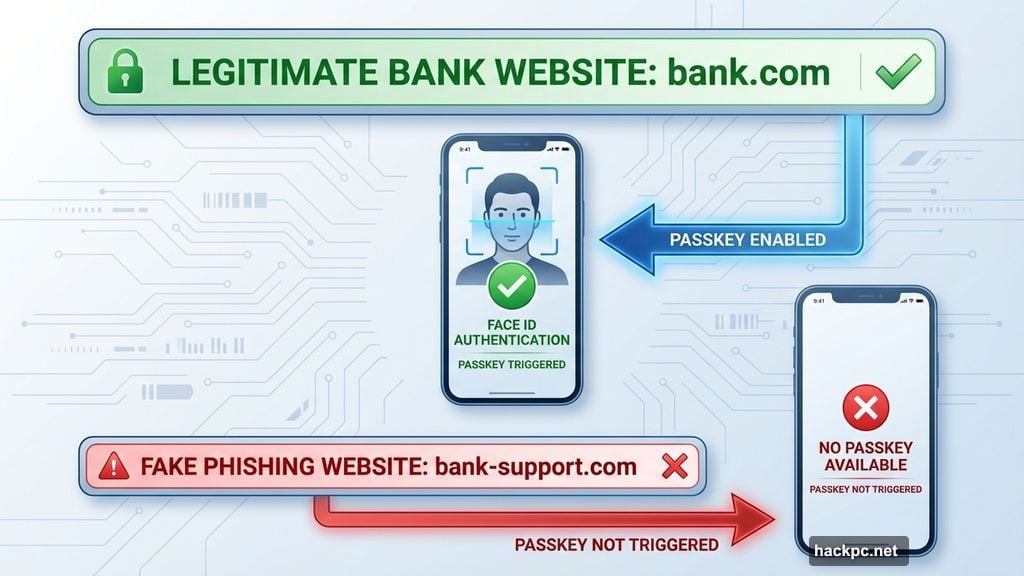
Moreover, passkeys stop phishing by design. A fake login page won’t trigger your device to offer the passkey. The cryptographic handshake only works on the legitimate site or app. Scammers get nothing.
Start With Money Accounts Before Anything Else
Your bank and investing apps deserve passkeys first. These accounts move real money, approve transfers and open doors to financial damage that takes months to fix.
Many financial institutions already support passkeys or FIDO-style authentication. They just don’t advertise it loudly. Mastercard and BankID systems proved financial services can shift to stronger authentication without confusing users.
Look in the security or sign-in settings of your banking app. Terms like “passkey,” “device-based sign-in” or “FIDO security key” point you to the right place. When prompted, create the passkey and approve it with your face, fingerprint or PIN.
Not every bank offers this yet. But most do. Check yours this weekend.
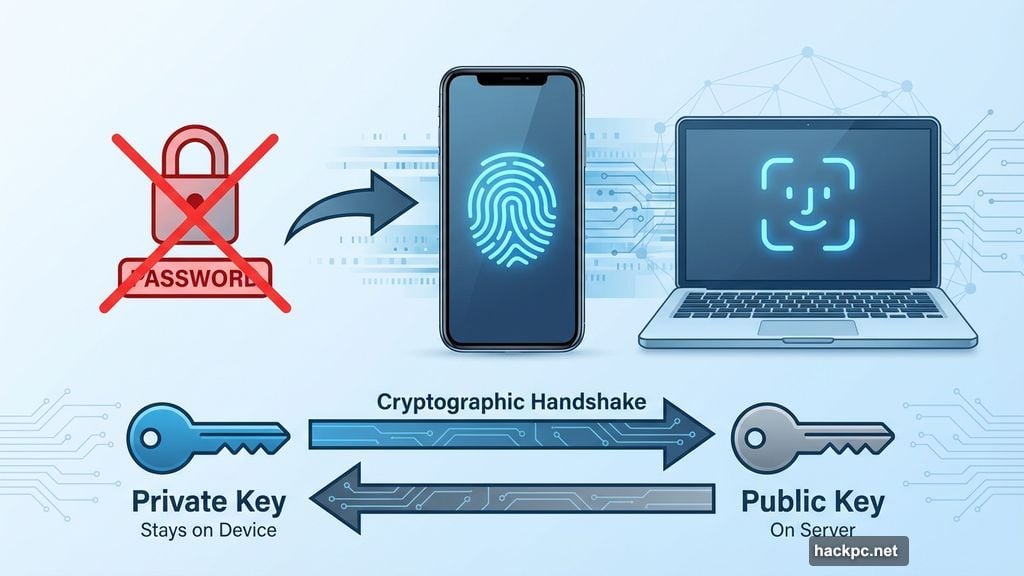
One warning: Local biometric sign-in isn’t the same thing. That just checks your face or fingerprint without using cryptographic key pairs. A passkey uses both. Biometric data unlocks the passkey, but the passkey itself handles the authentication.
Email and Big Platform Logins Come Next
Whoever cracks your main email can reset half your digital life. That goes double for your Apple, Google and Microsoft accounts. These are the master keys to everything else.
Google treats passkeys as the default now. Open your Google Account settings, select Security, then choose Passkeys and security keys. Walk through the setup. Done.
Microsoft is doing the same. The company stopped storing passwords in Authenticator and pushed people toward passkeys. Go to your Microsoft Account security page, select Security, then select Manage how I sign in. From there, choose Use a passkey and follow the steps.
Apple creates passkeys automatically now. When you visit a site that supports passkeys, you can enable them during sign-in or through account settings. They sync through the Passwords app without extra effort.
Focus on the email accounts tied to banking, tax filing and shopping first. Once those are locked down, hijacking the rest of your accounts becomes exponentially harder.
Cloud Storage Holds More Than You Think
Your Google Drive, OneDrive and iCloud accounts probably store scans of IDs, tax forms, contracts and personal photos. All of it becomes leverage if someone breaks in.
Treat these accounts like the sensitive vaults they are. Google Drive and OneDrive rely on your main Google or Microsoft account settings, so enabling passkeys there covers both. Apple handles iCloud the same way.
Here’s the catch: Passkeys only work if the device itself is secure. Turn on device encryption, set a screen lock and avoid leaving devices unlocked. A stolen laptop with no PIN defeats the whole system.
Think of it like locking your front door. The best lock in the world doesn’t help if you leave the door wide open.
Your Password Manager Needs a Passkey Too
Password managers store everything now. Not just passwords but passkeys, secure notes, credit cards and identity documents. If someone cracks your vault, they crack everything inside.
Locking the vault with a passkey is one of the smartest moves you can make. Managers like 1Password and Bitwarden already support passkey-based vault access. Enable it in the security settings and add a second device as backup.
The industry is also building credential exchange systems. Soon you’ll be able to move passkeys between services without starting over. That’s a huge step away from ecosystem lock-in.
While you’re in the vault, clean house. Delete old entries for accounts you don’t use anymore. Close accounts that still rely on weak authentication. Every dead account is a loose end waiting to be exploited.
Shopping and Subscription Apps Are Low-Hanging Fruit
eBay, Uber and Amazon all report higher login success rates and lower phishing risk after rolling out passkey support. When companies handling millions of sign-ins daily say it works, pay attention.
Shopping accounts store card numbers, saved addresses and order history. Payment apps hold even more. These shouldn’t rely on weak passwords when stronger options exist.
Ride share and food delivery apps store location history, home and work addresses, plus payment data. Many now offer passkey-based logins. Check their security settings and turn it on.
Here’s a simple strategy: Look at the five apps you use most on your phone. Open each one, check security settings and enable passkeys if available. That quick pass closes off a lot of easy entry points.
Ignore the Myths That Keep People Scared
A lot of anxiety around passkeys comes from outdated assumptions. Let’s clear up the biggest ones.
First, passkeys don’t live in plain text in the cloud. Syncing uses end-to-end encryption. The private key never leaves your device in readable form. Apple, Google and Microsoft can’t see it. What gets stored on their servers can’t be used to sign in anywhere.
Second, you’re not trapped in one ecosystem. FIDO is building credential exchange standards to let people move passkeys between providers. Third-party managers like 1Password and Bitwarden already support cross-platform passkey storage. The walls are coming down, not going up.
Third, losing your phone doesn’t mean losing your accounts. Passkeys require your biometric data or device PIN to work. They’re useless to anyone who picks up the device. Recovery falls back to the same methods you already use for Apple, Google or Microsoft accounts. Recovery codes, a second device or a trusted contact get you back in.
Finally, passkeys aren’t just for pure cloud setups. They run in mixed environments across cloud and on-premises systems. Microsoft and national security agencies treat them as phishing-resistant. This is production-level tech, not a pilot program.
Lock Down Your Accounts in One Weekend
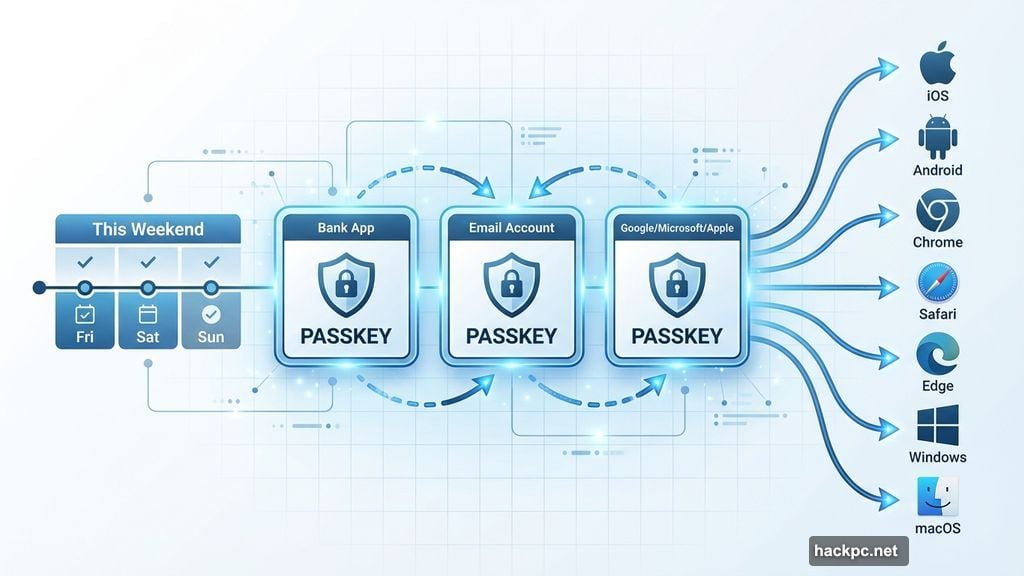
You don’t need a tech overhaul or a week off to move into passkeys. Follow a clear order and build enough backup paths so you never box yourself out.
Here’s the checklist that keeps the whole thing grounded and manageable.
Step 1: List your priority accounts
- Bank and investing accounts
- Primary email
- Apple, Google and Microsoft accounts
- Cloud storage and photo services
- Password manager
- Shopping, subscription, ride share and delivery apps
Step 2: Gather your accounts
Set aside one focused hour. Make a list of the accounts you actually use. Open each service and go straight to the security or sign-in settings page. Check the official documentation to see if passkeys are supported.
Step 3: Turn on passkeys wherever they live
Look for “passkey,” “security key” or “device-based sign-in.” Register your phone or computer when prompted. Add a second device if the service allows it. Phone and laptop or phone and hardware key both work.
Step 4: Keep a backup path
Leave one non-passkey recovery method active while you settle in. Use recovery codes, a second email or a trusted device. Check that you can still get into the account if one device disappears.
Step 5: Clean up old methods and accounts
Remove SMS-based two-factor authentication only after the provider confirms your account is fully covered. Delete any leftover sign-in methods. Close accounts you no longer need.
Run through this list once and you’ll have most high-risk accounts sitting behind stronger authentication. That’s a stable foundation for everything else.
Passwords had their run. They failed spectacularly. Passkeys fix the problem without making your life harder. Set them up this weekend and start the new year with one less thing to worry about.



Comments (0)