
Forget the fancy hardware. One startup just proved you don’t need a new gadget to record every conversation.
While CES 2026 drowns in AI pins, rings, and necklaces that promise to remember everything you say, Thine took a different approach. They built an iPhone app instead. Plus, it works with tech Apple already perfected.
Apple Solved the Hard Parts Already
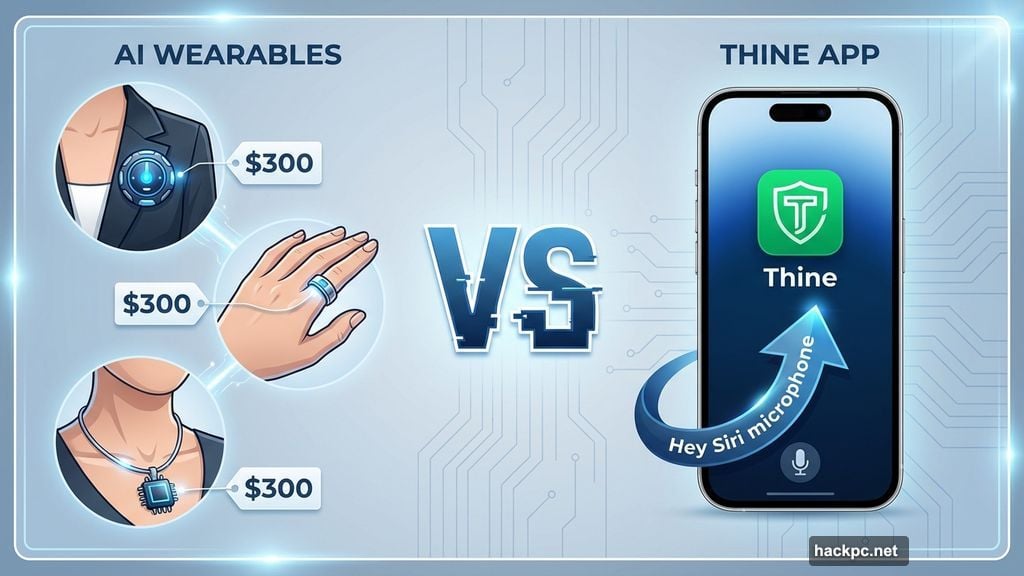
Pratyush Rai, Thine’s CEO, realized something obvious that others overlooked. Your iPhone already listens constantly for “Hey Siri.” That microphone already has excellent noise cancellation. So why rebuild what Apple spent years engineering?
“What we have realized is we should not try to solve a problem both from a hardware standpoint and a privacy standpoint that Apple has already solved for,” Rai explained.
Instead of designing new hardware, Thine taps into your phone’s existing always-on microphone. It captures and transcribes conversations automatically. Then their AI model trains on those transcripts so you can recall details later.
Think of it as Voice Memos that actually remembers what people said.
Two Weeks Later, It Recalled Our First Interview
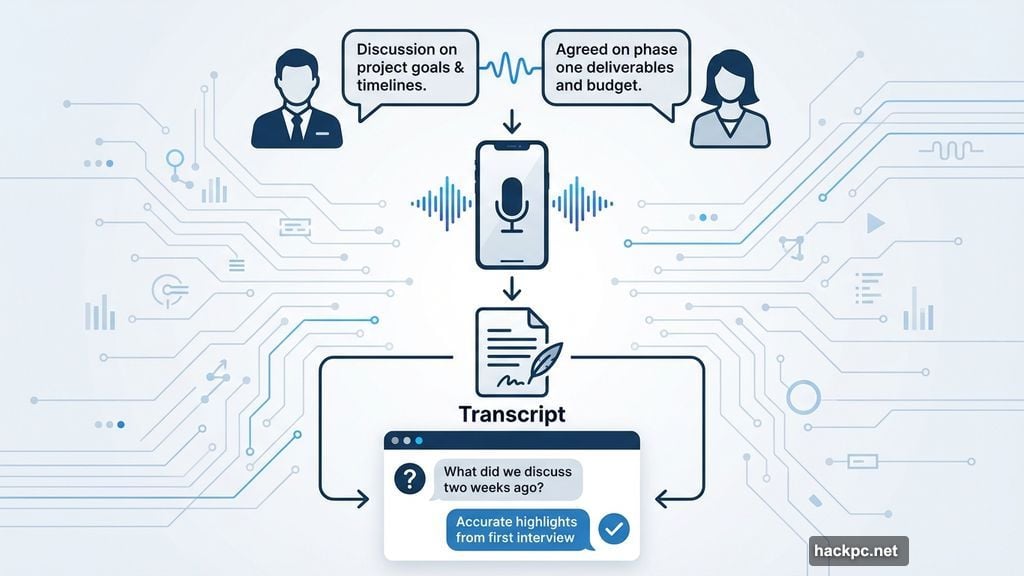
At CES, I watched Rai test the app’s memory. He asked Thine what we discussed in our first interview two weeks earlier. The app responded with accurate highlights from that conversation.
No fumbling through notes. No “I think you mentioned something about…” Just specific details pulled from actual transcripts.
However, the app doesn’t store audio recordings. Right now, it only provides AI-generated summaries. But that’s changing. Thine’s working on a version that delivers verbatim transcripts you can export to your own chatbot.
Why the shift? User feedback from competing AI notetaking devices. People wanted actual transcriptions, not just AI interpretations.
The Price Problem Nobody’s Solving
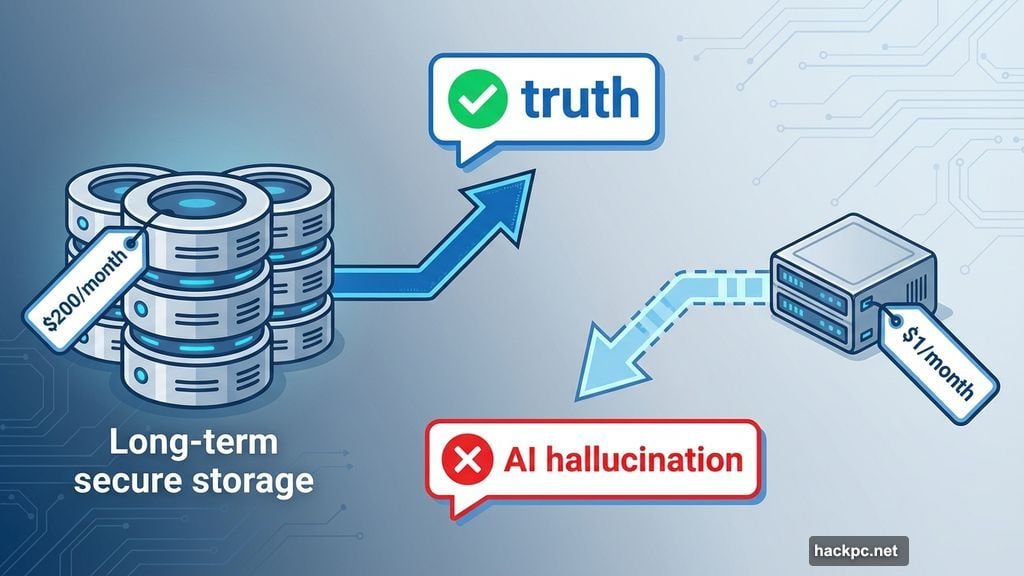
Here’s the catch. Thine costs $200 monthly right now. That’s steep even for the executives and tech founders Rai targets.
But he expects dramatic price drops as the technology scales. The transcript-only version should cost around $1 per month. So what drives the current high price? Long-term secure storage.
Keeping old conversations accessible to the AI model costs money. Yet that storage prevents AI hallucinations. When you’re trying to recall real conversations with actual people, you need truth, not the AI’s best guess at what probably happened.
“This is essential to reduce hallucinations,” Rai said. Without that conversation history, the AI fills gaps with fabricated details. That’s useless for remembering business discussions or personal conversations.
Building Connections Between Humans, Not With AI
Rai’s goal separates Thine from typical AI companions. He doesn’t want you forming relationships with the chatbot. He wants the app helping you connect better with real people.
Remember names. Recall specific details from past conversations. Follow up on topics someone mentioned weeks ago. These actions strengthen human relationships.
Most AI notetaking devices position themselves as virtual assistants or digital companions. Thine positions itself as memory augmentation. The difference matters.
One approach replaces human interaction. The other enhances it. Rai clearly chose the latter path.
The Hardware Race Might Be Pointless
CES showcases dozens of wearable AI devices this year. Pins that clip to your shirt. Necklaces that dangle near your chest. Rings that record everything your hands touch.
But Thine raises an uncomfortable question for those companies. If your phone already has the microphone, the noise cancellation, the always-on listening capability, and the processing power, why buy dedicated hardware?
Sure, a necklace sits closer to conversations. A pin might capture audio slightly better. Yet your phone already stays within a few feet of you constantly. Most people never leave home without it.
The real innovation isn’t hardware. It’s software that makes sense of everything that hardware captures.



Comments (0)