
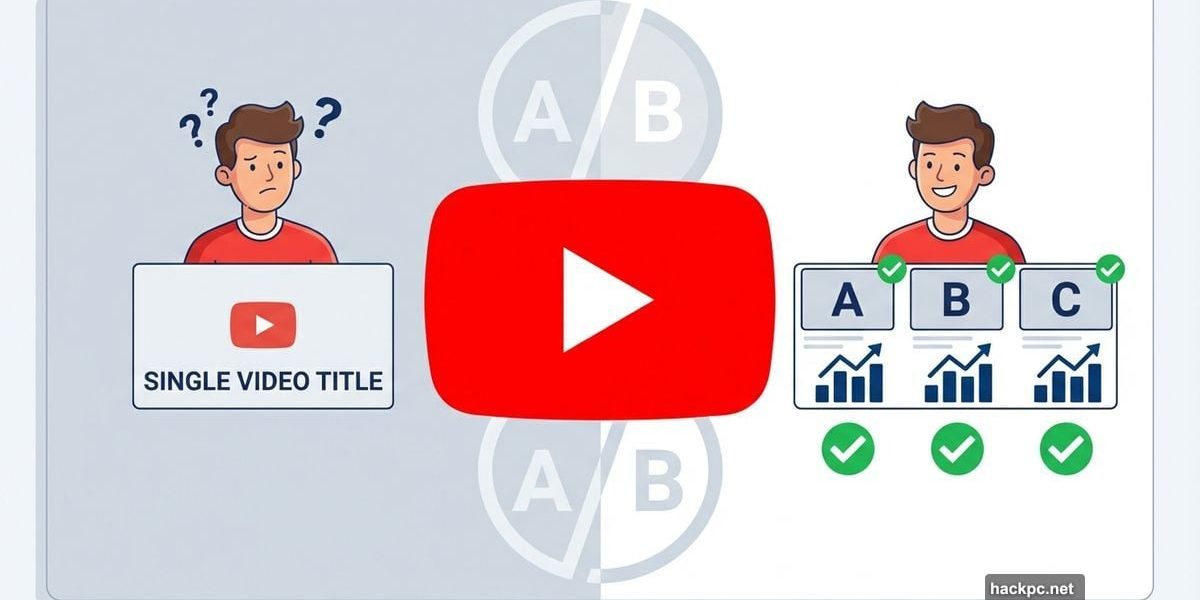
YouTube creators spent years agonizing over video titles. One word wrong and your content disappears. But now YouTube expanded a tool that removes the guesswork entirely.
The platform rolled out title A/B testing to all creators with advanced features. This builds on thumbnail testing that launched earlier. Now you can test both together and let data pick the winner.
How the New Testing Works
Upload up to three different titles for any video. YouTube automatically tests each one across different viewers for two weeks.
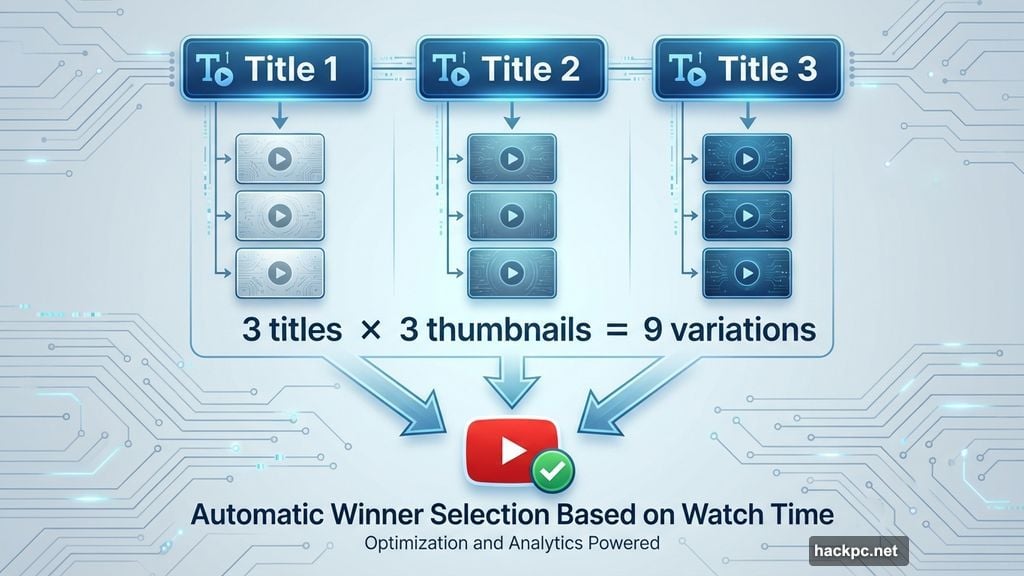
The platform measures watch time for each version. Whichever title drives the most engagement wins. Then YouTube applies that title automatically to your final video.
Here’s the kicker. You can test title and thumbnail combinations simultaneously. That means nine possible variations if you max out all options. YouTube handles the testing rotation behind the scenes.
What Gets Tested and What Doesn’t
The feature works on desktop through YouTube Studio. You can test public long-form videos, live stream archives, and podcast episodes.
But there are limits. Videos marked for mature audiences can’t be tested. Content tagged “Made for Kids” is excluded too. Plus, YouTube restricts tests to two weeks maximum.
If results come back inconclusive, YouTube defaults to your first uploaded combination. However, creators can ignore test results entirely and manually select their preferred title and thumbnail anyway.
Why This Matters for Content Strategy
Title optimization used to require external tools or manual tracking. Creators uploaded videos with their best guess, then watched analytics obsessively. Some even deleted and reuploaded videos with different titles just to compare performance.
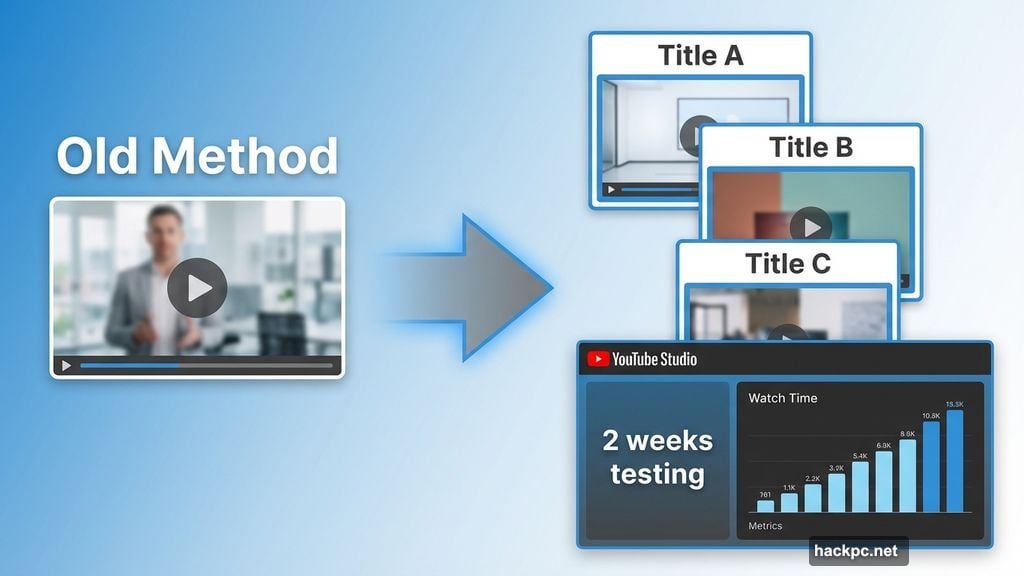
That workflow was brutal. It hurt watch time metrics and confused subscribers. Plus, it wasted hours of creator time on trial and error.
Now YouTube bakes testing directly into the platform. The system uses real viewer behavior instead of hunches. And it happens automatically without disrupting your upload schedule.
The Testing Catches One Big Thing
Watch time drives the algorithm. YouTube doesn’t test click-through rates alone. It measures sustained engagement after viewers click.
That’s crucial. A clickbait title might get initial clicks but tank watch time if content doesn’t deliver. YouTube’s test catches that disconnect. The winning title balances curiosity with accurate expectations.
This helps creators avoid the clickbait trap. You want viewers who stay, not just viewers who click and leave. The test optimizes for retention, which matters more for channel growth.
What This Means for Smaller Channels
YouTube opened this tool to all creators with advanced features. That threshold requires channels to verify their identity and have no active community guideline strikes.
Most creators hit that bar easily. So even smaller channels get access to testing that previously required expensive third-party tools or agency support.
This levels the playing field slightly. Data-driven optimization isn’t just for creators with big teams anymore. Anyone can test systematically instead of guessing blindly.
The Feature Still Has Limits
Two weeks feels short for some content. Evergreen videos might need longer testing windows to capture different audience segments. Seasonal content could miss its moment entirely while tests run.
Plus, three title variations might not be enough. Some creators want to test wildly different approaches. The current limit forces you to pick just three shots at finding the winner.
And YouTube only shows the test winner, not detailed performance data for losing options. That makes it harder to learn patterns about what works. You know which title won but not always why it won.
Testing Expands Beyond Thumbnails
YouTube launched thumbnail testing first in July. Only a small percentage of creators got access initially. Now title testing joins the mix with broader availability.
This signals YouTube’s commitment to creator tools. The platform faces stiff competition from TikTok and Instagram for creator attention. Better optimization tools help creators succeed, which keeps them on YouTube.
Expect more testing features eventually. Creators want to test video intros, chapter markers, and description formats too. If title and thumbnail testing prove valuable, YouTube will likely expand the system.
The Risk of Over-Optimization
Here’s my concern. Testing everything can lead to bland, algorithm-optimized content. Titles that perform best often follow predictable patterns. That could homogenize YouTube over time.
Plus, creators might obsess over testing instead of improving actual content quality. Great content with an okay title usually beats mediocre content with a perfect title. The tool is valuable but not a replacement for substance.
Still, for creators struggling to gain traction, this tool provides clear data instead of guesswork. That’s worth the risk of occasional over-optimization. Just remember the test measures what works now, not what builds long-term audience loyalty.
YouTube’s expansion of title testing gives creators a powerful advantage. No more agonizing over whether “How To” or “Easy Guide” performs better. Just test both and let watch time data decide. For a platform where tiny decisions make huge differences, that’s genuinely helpful.



Comments (0)