

Finding the perfect playlist just got easier. YouTube Music now lets Premium subscribers create custom playlists using simple text prompts powered by AI.
Google rolled out the feature this week to iOS and Android users. No web version yet. But the mobile experience works exactly how you’d hope: describe what you want to hear, and Gemini AI builds a playlist instantly.
How AI Playlists Actually Work
The creation process feels natural. You don’t need special commands or complicated syntax.
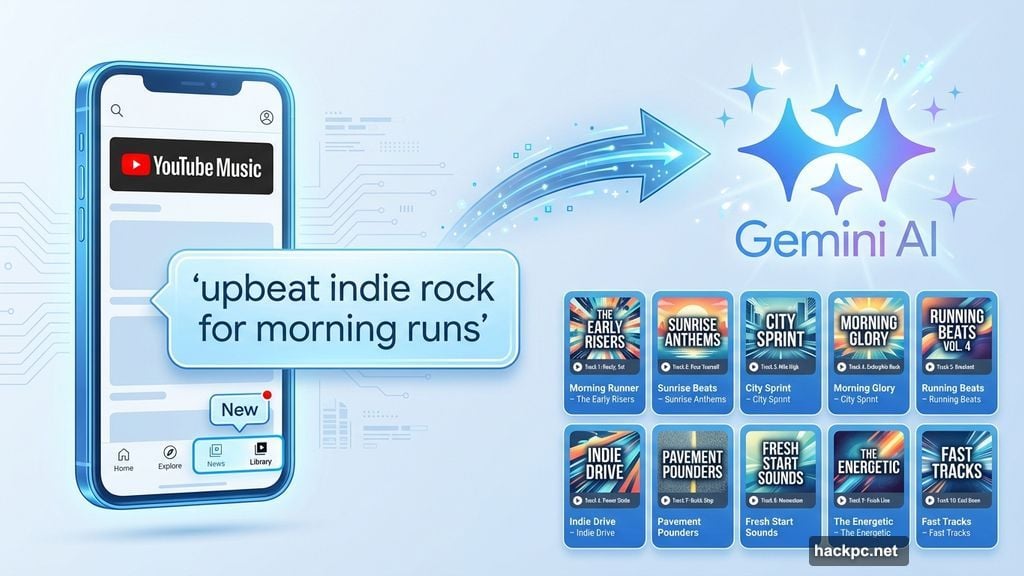
Open YouTube Music and tap the Library tab. Hit “New” and select “AI Playlist.” Then just type what you’re looking for. That’s it.
Want “upbeat indie rock for morning runs”? Type it. Need “lo-fi beats without vocals for studying”? Done. The AI pulls from YouTube Music’s massive catalog to match your request.
Plus, you can get specific. Name artists you want included. Describe the vibe you need. Mix genres together. The flexibility makes it genuinely useful for music discovery.
Spotify Did This First (But That’s Fine)
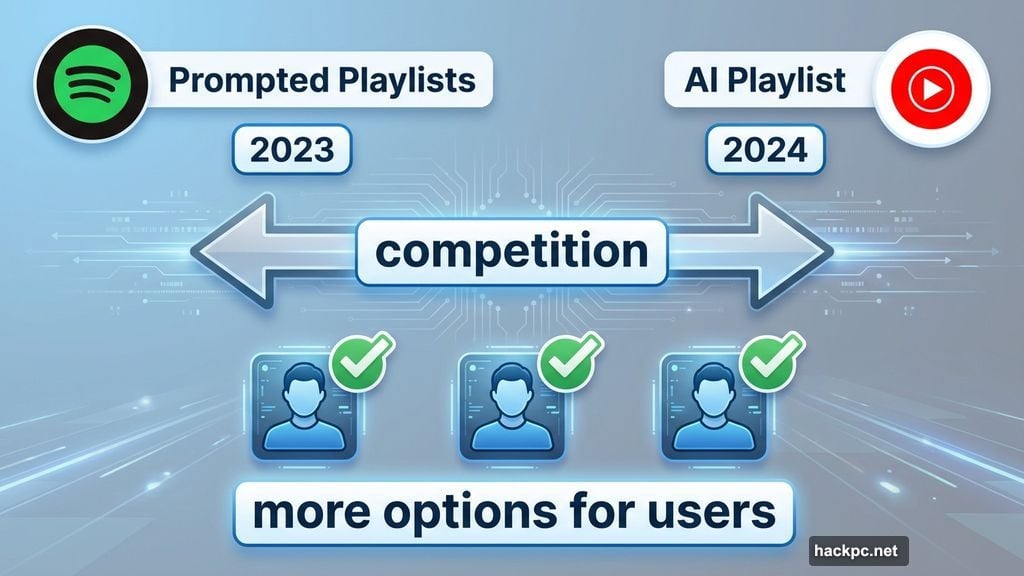
Spotify launched a similar feature called Prompted Playlists last year. So YouTube Music isn’t breaking new ground here.
However, competition in AI music tools benefits users. Each platform brings different catalogs, algorithms, and integration with other services. More options mean better chances of finding exactly what you want.
Google’s been integrating Gemini AI across its product lineup since 2023. Some implementations feel forced—like constant offers to summarize emails or meeting notes. But playlist generation makes sense as an AI application.
This isn’t AI trying to write your emails. It’s AI helping you discover music based on natural language descriptions. That’s a practical use case most users will actually appreciate.
Premium Subscribers Only (For Now)
The catch? You need a YouTube Music Premium subscription to access AI playlists.
That means $10.99 monthly for individual plans or $16.99 for family plans. Students get a discount at $5.49 per month. The feature isn’t available to free-tier users.
Still, Premium subscribers already get ad-free listening, background play, and offline downloads. AI playlists add another reason to justify the subscription cost.
Music Discovery Gets Smarter
Traditional playlist curation takes time. You either browse pre-made playlists hoping something fits, or you manually build collections song by song.
AI playlists remove that friction. Describe your mood, activity, or musical preferences in plain English. The system handles the rest.
Moreover, this approach helps surface music you might never find through standard browsing. The AI can make connections between artists, genres, and vibes that aren’t obvious from album covers or chart positions.
For users drowning in millions of available tracks, that kind of intelligent filtering actually matters. It turns YouTube Music into a more useful discovery tool instead of just another streaming library.
What Google Should Add Next
The feature works well for its first release. But obvious improvements could make it better.
First, let users refine AI-generated playlists. If the initial results miss the mark, you should be able to adjust the prompt or remove specific tracks without starting over.
Second, bring this to the web player. Many users listen on desktop during work hours. Mobile-only limits the feature’s usefulness.
Third, allow playlist sharing with the original prompt visible. That way friends can see exactly what request created a great playlist and generate their own variations.
AI Music Tools Aren’t Going Away
Whether you love AI integration or find it annoying, music streaming services will keep adding these features.
The technology works too well for music discovery to ignore. Natural language prompts make complex searches simple. Users can find exactly what they want without learning complicated filter systems.
So expect more AI-powered music tools across all platforms. The question isn’t whether they’ll arrive, but which implementations actually improve the listening experience versus adding unnecessary complexity.
YouTube Music’s AI playlists lean toward the useful side. Simple interface, practical application, genuine value for Premium subscribers. That’s how AI features should work.




Comments (0)