
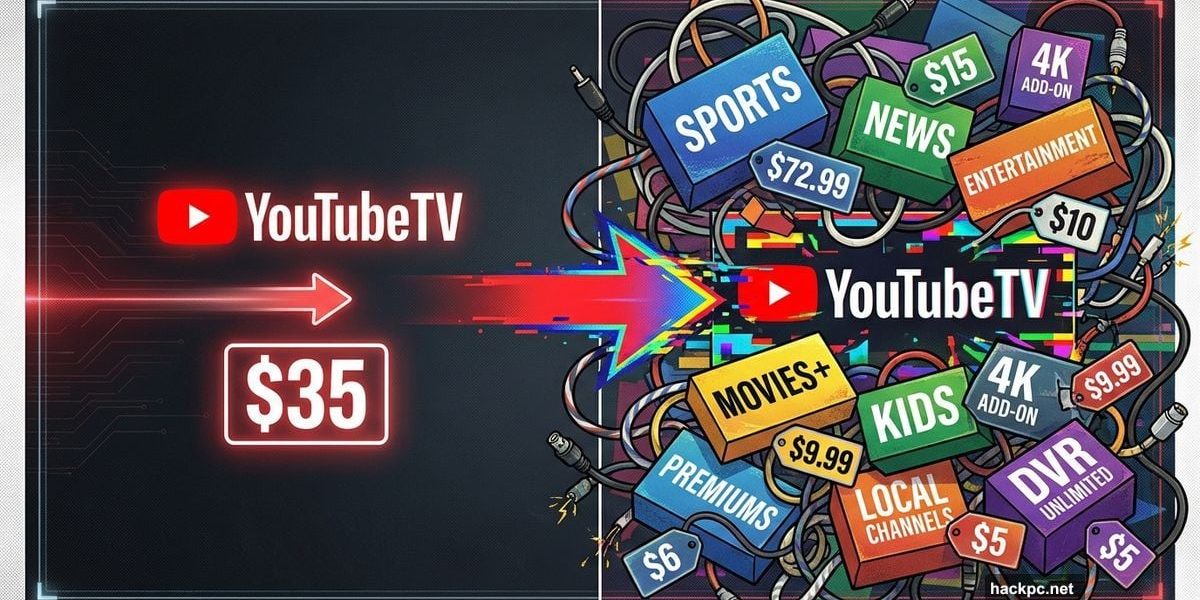
YouTube TV started simple in 2017. One price, one bundle, everything included. That version is dying.
The company just announced YouTube TV Plans launching early 2026. Instead of one package with all channels, you’ll pick genre-specific bundles. Sports lovers get sports channels. News junkies get news networks. Families get entertainment content.
Sounds flexible, right? But here’s the catch. This marks the final transformation of YouTube TV into exactly what it promised to replace: traditional cable with confusing tiers and add-on fees.
The Cable TV Playbook Returns
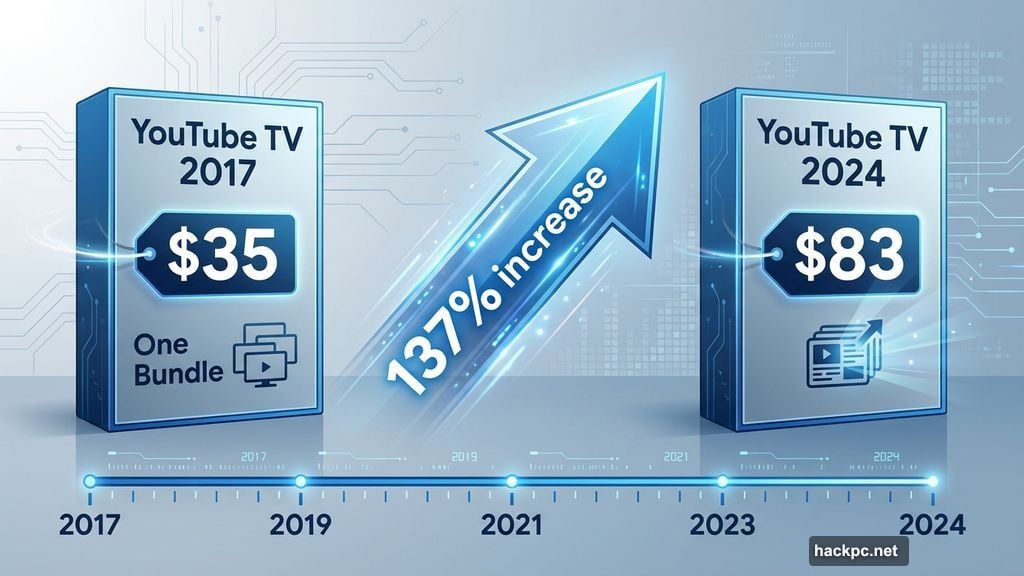
Remember when streaming was supposed to save us from cable’s complexity? YouTube TV launched at $35 monthly with everything included. No surprises. No hidden fees. Just one clean package.
Fast forward to today. The service now costs $83 per month. That’s a 137% increase in less than nine years. Plus, you’re about to lose the simplicity that made it attractive in the first place.
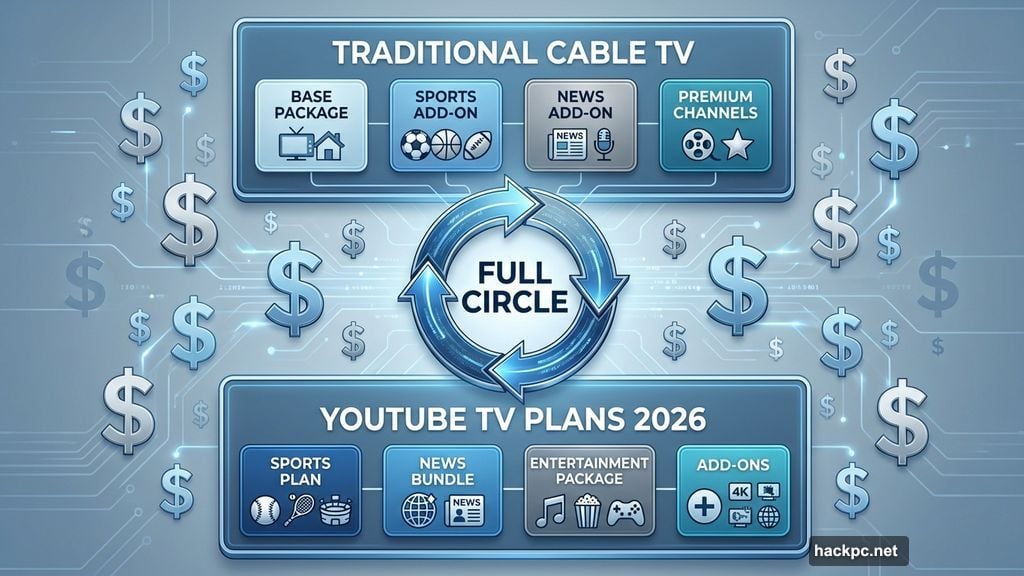
Now YouTube TV is introducing the same fragmented model cable used for decades. Want sports? Buy the sports package. Need news? Add the news bundle. Looking for family shows? That’ll be another package.
So we’ve come full circle. Streaming services started as cable alternatives. Then they became cable replacements. Now they’re just cable with different branding.
What Sports Fans Can Expect
YouTube TV revealed a few details about its Sports Plan. It’ll include all major broadcast channels plus several sports networks. Think ESPN (all of them), FS1, and NBC Sports Network.
This sounds familiar because it is. Fubo and DirecTV already offer similar sports-focused packages. YouTube TV is just joining the crowd.
But here’s what nobody’s saying yet. How much will this sports package actually cost? YouTube stayed silent on pricing. That’s rarely good news for consumers.
Moreover, sports content drives most of YouTube TV’s current $83 price tag. Broadcasting rights for NFL, NBA, and MLB games cost billions. So even the “cheaper” sports-only plan probably won’t be cheap.
Plus, you’ll likely need to add other packages for complete coverage. Regional sports networks might require different bundles. Playoff games on various networks could demand multiple subscriptions. The costs add up fast.
Mix and Match Sounds Good Until You Do Math
YouTube promises you can mix and match plans. Great for customization. Terrible for your budget.
Here’s how this typically works. Each package seems reasonably priced alone. Add two together, still not bad. But most households want sports AND news AND entertainment. Suddenly you’re paying close to (or more than) the current all-in-one price.
Cable companies perfected this strategy decades ago. Base package looks affordable. Then you add sports. And premium channels. And DVR service. Before you know it, your “cheap” cable bill hits $150 monthly.
YouTube TV is adopting the exact same approach. They’ll market lower entry prices to attract budget-conscious customers. But actual usage patterns will push most people toward multiple packages that cost as much as the current plan.
The $83 Plan Stays (For Now)
Good news for people who hate complexity. The current all-in-one model will remain available alongside the new plans.
Bad news? History suggests this won’t last forever. Companies typically phase out comprehensive packages once tiered options gain traction. They’ll claim “customer preference” while quietly pushing everyone toward more expensive combinations.
Also, don’t expect that $83 price to stay frozen. YouTube TV has raised rates consistently since launch. With new plan structures coming, another price hike seems inevitable. You might pay $90-100 for the full package while others pay slightly less for limited bundles.
So the “simple option” becomes the premium option. Classic bait and switch.
Who Actually Benefits Here?
Not most viewers. If you currently subscribe to YouTube TV, you’re probably watching content across multiple genres. Sports fans also watch news. Families also follow sports. Few people consume content in neat categorical boxes.
YouTube TV benefits most from this change. Tiered pricing lets them market lower entry points while maintaining (or increasing) revenue from existing subscribers. Plus, they can blame content costs and customer demand rather than corporate profit motives.
Content providers also win. They can negotiate better rates by threatening to withhold specific channels from certain packages. This gives networks more leverage in carriage disputes.
Maybe light users save money. If you genuinely only watch one genre, a smaller package might cost less. But YouTube hasn’t confirmed pricing, so even that remains uncertain.
Streaming Just Became Cable 2.0
This shift matters beyond YouTube TV. It represents where the entire streaming industry is heading.
We’ve watched streaming services adopt commercials, raise prices, crack down on password sharing, and bundle with competitors. Now they’re fragmenting content into multiple tiers just like cable did.
The cycle repeats. Disruptive technology promises to fix industry problems. Early adopters enjoy great deals. Service gains market share. Then executives optimize for profit instead of customer value. We end up with the same problems under different branding.
YouTube TV’s new plans prove streaming isn’t saving us from cable’s worst practices. It’s just repackaging them with better apps and more buzzwords.
Choose your packages carefully when they launch. Or better yet, remember that free over-the-air broadcasts still exist. They worked before cable. They’ll work after streaming collapses under its own complexity.



Comments (0)