

A group of YouTube creators just took Amazon to federal court. Their accusation? That Amazon secretly scraped millions of their videos to train its AI video system without asking permission.
The lawsuit, filed in Seattle, puts a spotlight on one of the most contested questions in tech right now. Can AI companies use your content to build their products without your consent?
Nova Reel and the Scraping Allegations
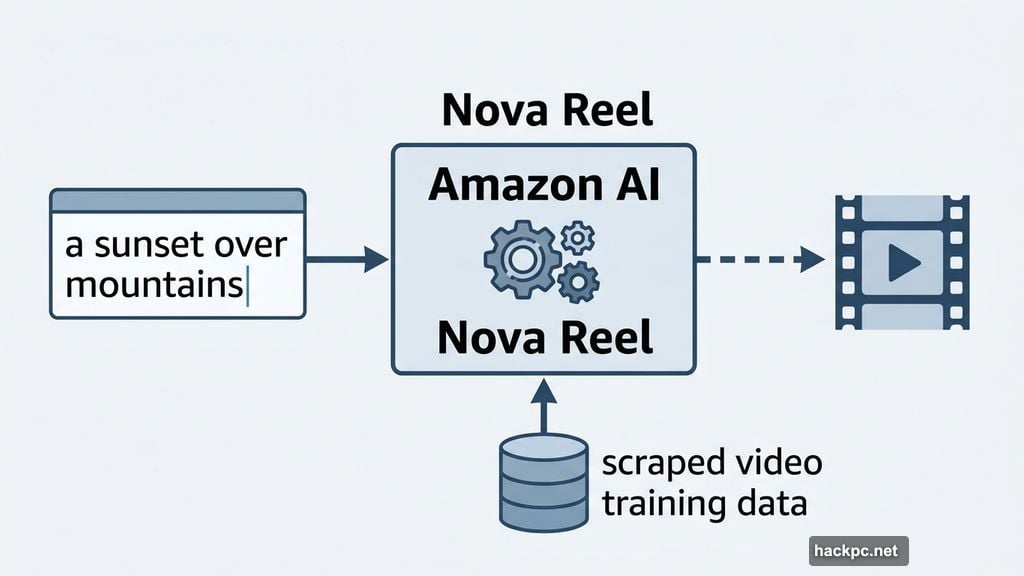
At the heart of this case is Amazon’s Nova Reel, a generative AI video system that creates short clips from text prompts and images. Think of it like a text-to-video machine. You type a description, and it generates a video.
To build something like that, you need enormous amounts of video data to train on. And that’s exactly what the plaintiffs say Amazon went hunting for.
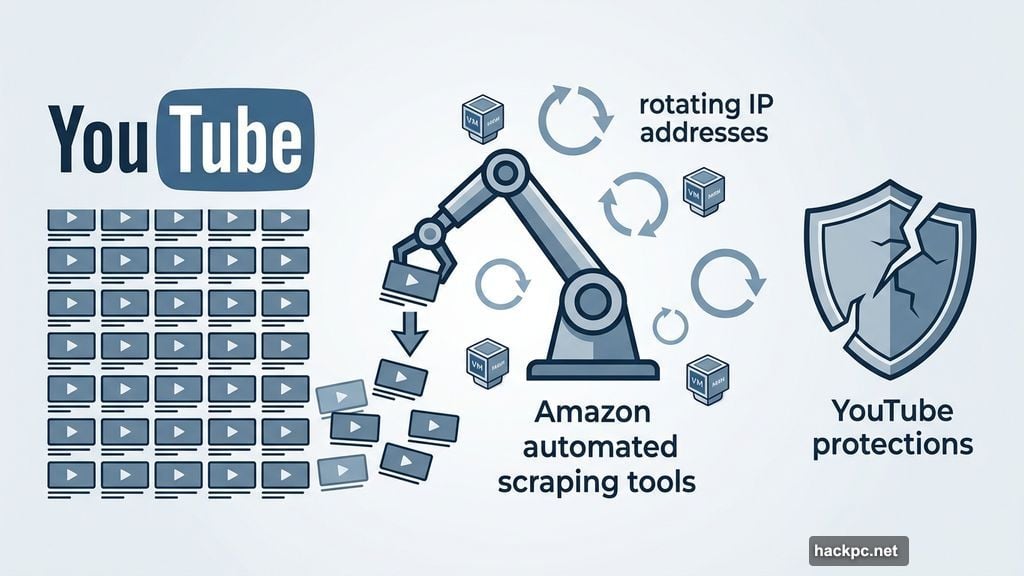
According to the lawsuit, Amazon used automated tools to download and extract data from millions of YouTube videos. But here’s where it gets interesting. The complaint doesn’t just allege scraping. It alleges that Amazon deliberately bypassed YouTube’s own protections to do it.
How Amazon Allegedly Dodged Detection
YouTube has safeguards in place to prevent bulk downloading of content. The lawsuit claims Amazon routed around those protections using virtual machines and rotating IP addresses. Rotating IP addresses means the system constantly switches its online identity, making it much harder to detect or block.
In other words, the plaintiffs aren’t just saying Amazon helped itself to their content. They’re saying Amazon actively worked to hide that it was doing so.
That distinction matters enormously in a legal context. It shifts the conversation from “was this fair use?” to “was this intentional circumvention of platform security?”
Who Is Suing and What They Want
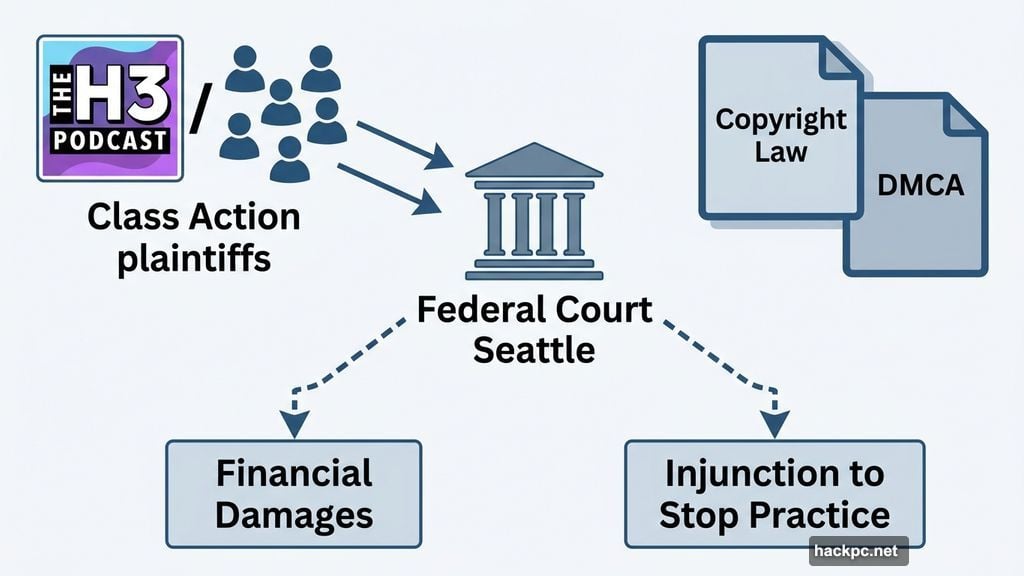
The case was brought by several creators, including Ted Entertainment, the company behind the popular H3 Podcast and h3h3 Productions. Individual YouTubers and channel operators also joined the proposed class action.
Together, they’re alleging violations of copyright law and the Digital Millennium Copyright Act, commonly known as the DMCA. They want financial damages and, critically, an injunction to stop Amazon from continuing the practice.
Amazon has not responded to requests for comment.
The Bigger Legal Battle Shaping AI
This lawsuit doesn’t exist in a vacuum. It’s one of dozens of cases currently testing where AI training rights begin and end.
For years, the AI copyright debate focused mostly on written content. Authors, journalists, and news organizations have sued OpenAI and Meta over similar allegations. The New York Times, for instance, filed a high-profile case claiming its articles were used without permission to train large language models.
AI video generators like OpenAI’s Sora and Google’s Veo have only emerged more recently. So the legal frameworks around video scraping are even less established than those around text. Courts are still working through the fundamental question at the core of all these cases: where does fair use end and infringement begin?
Why Creators Should Pay Attention
If you create content online, professionally or just as a side project, this case has real implications for you.
The creators in this lawsuit aren’t fringe voices. H3 Podcast alone has millions of subscribers. These are people who built substantial audiences through years of work, only to allegedly find that work stripped and fed into a competing commercial system without compensation or credit.
And if the scraping allegations hold up in court, it raises an uncomfortable truth about the internet. Simply posting your work publicly doesn’t mean you’ve handed it over for every possible use. But right now, the rules around AI training are murky enough that companies may be acting as if it does.
The outcome of this case, alongside the other AI copyright suits working their way through courts, will likely set the tone for how the entire industry handles creator content going forward. That’s worth watching closely, whether you’re a YouTube creator, a casual viewer, or anyone who puts work into the world online.




Comments (0)