

Adobe just made Photoshop a lot less intimidating for newcomers — and a lot faster for everyone else.
The company has officially launched its AI assistant for Photoshop on web and mobile apps. Think of it like having a knowledgeable friend sitting next to you while you edit. You just tell it what you want, and it handles the work.
Conversational Editing Comes to Photoshop
The idea is simple. Instead of hunting through menus and panels, you describe what you need in plain language. Want to change the color of a jacket? Ask the assistant. Need to remove a distracting background element? Just say so.
Adobe calls this approach “conversational, agentic” editing. Agentic means the AI doesn’t just suggest steps — it actually carries them out independently. So you stay focused on the creative decisions while the assistant handles the technical execution.
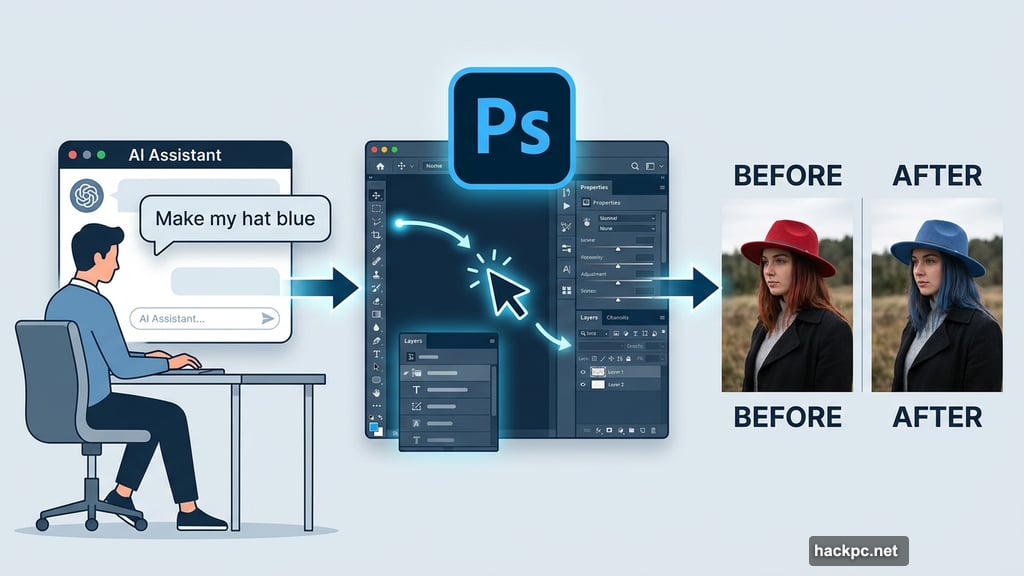
Mike Polner, VP of product marketing for Adobe Firefly, described the range of what this can look like. “One end of the spectrum is type in a prompt and say, ‘Make my hat blue.’ That’s very simplistic,” he explained. The more advanced end, represented by something Adobe calls Project Moonlight, can understand your full creative context, help you brainstorm ideas, and analyze content you’ve already created.
Who Benefits Most From This
Experienced Photoshop users will likely keep doing many edits manually. They already know the shortcuts and workflows. For them, the assistant is more of a time-saver on repetitive or straightforward tasks.
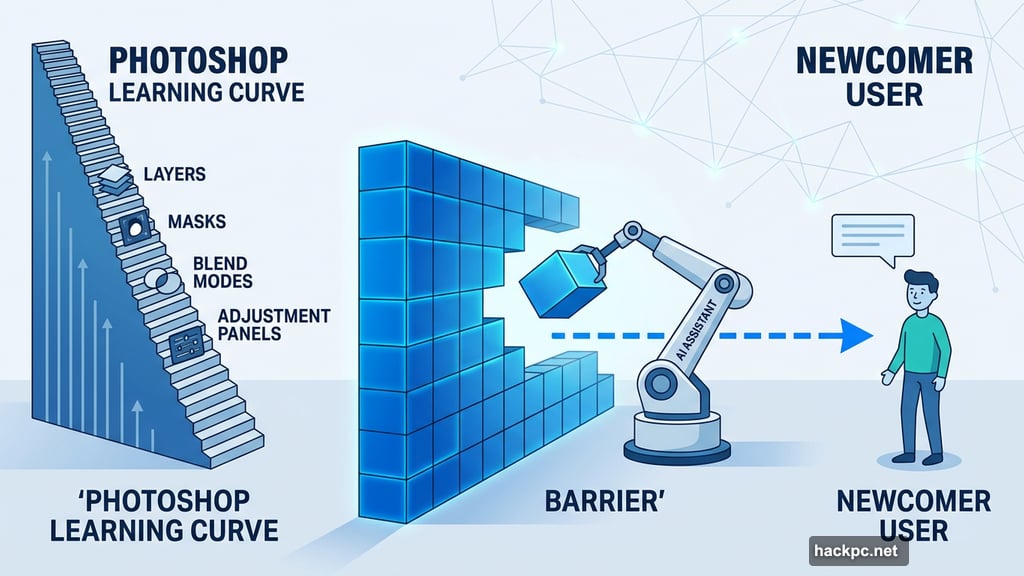
But the bigger shift is for newer users. Photoshop has always had a steep learning curve. Layers, masks, blend modes, adjustment panels — it’s a lot to absorb. An AI assistant that responds to plain English instructions removes a huge chunk of that barrier.
People working under tight deadlines also stand to gain. Instead of stopping to look up how to do something, they can just ask and keep moving.
Adobe Express, the company’s more beginner-friendly design tool and its answer to Canva, has carried a similar AI assistant in public beta for several months already. So this rollout to Photoshop is the next logical step in Adobe’s broader push toward AI-powered creative tools.
Adobe’s Bigger AI Push
This assistant launch is just one piece of a much larger strategy Adobe has been building for a while now.
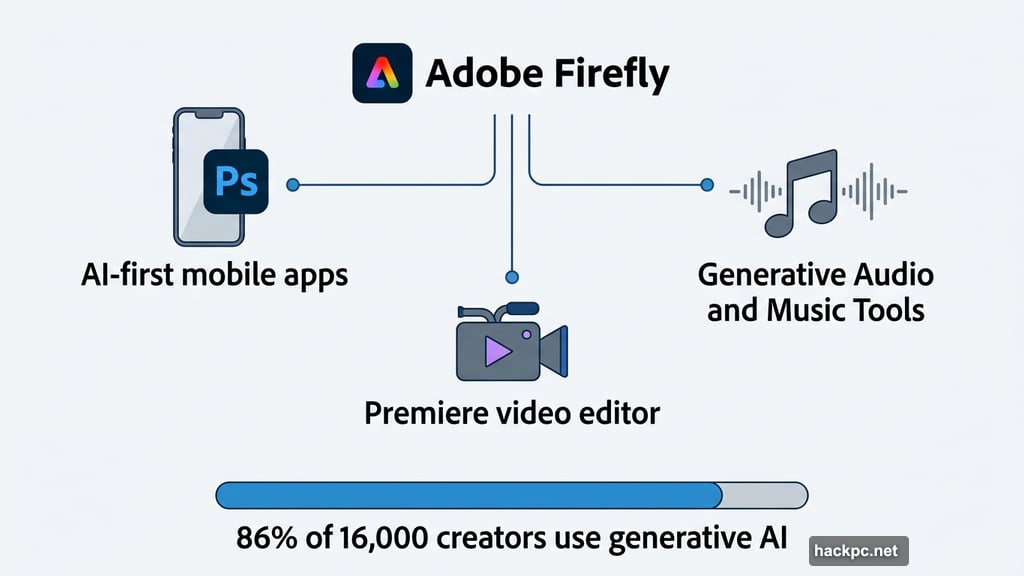
In 2025, Adobe rolled out AI-first mobile apps for Photoshop, Firefly, and a new video editor called Premiere. This week alone, the company also announced generative audio and music tools for Firefly, plus new photography AI research projects in the pipeline.
The numbers suggest creators are responding. In a recent Adobe survey of 16,000 global creators, 86% said they already use creative generative AI. Plus, 80% said it helped them create content they otherwise couldn’t have made on their own.
Still, not everyone in Adobe’s core user base is on board. Professional photographers, designers, and illustrators have raised real concerns about AI-generated content — touching on questions around copyright and legal ownership, energy consumption, and creative ethics. Those conversations are ongoing, and Adobe hasn’t fully resolved them to everyone’s satisfaction.
A Different Kind of AI Tool
It’s worth noting what this assistant isn’t. It’s not trying to be a general-purpose AI like ChatGPT or Gemini. You can’t ask it to write you an email or summarize a document.
Instead, it’s purpose-built for editing. Its focus stays on Photoshop tasks, which actually makes it more useful within that context. A specialized tool tends to perform better at its specific job than a generalist trying to do everything at once.
One correction worth noting: an earlier version of Adobe’s announcement suggested the assistant could rename layers in the mobile and desktop apps. That’s not currently possible, though Adobe has indicated it may come in a future update. The assistant is, however, available on web.
Adobe’s AI ambitions are clearly moving fast. Whether you’re a seasoned pro who wants to speed up your workflow or someone who’s always found Photoshop a bit overwhelming, this assistant offers something genuinely useful. The real question now is how far Adobe pushes the agentic capabilities from here — and whether its creative community comes along for the ride.


Comments (0)