

Most social media apps are designed with one goal in mind. Keep you scrolling. Forever.
Bond, a new platform that officially launched on April 21, 2026, is taking a completely different approach. Instead of feeding you an endless loop of content, it wants to push you back into the real world. And it’s using AI to do exactly that.
Doomscrolling Has a New Competitor
The timing makes sense. Burnout from traditional social media is real, and a growing number of companies are betting that users are ready for something different.
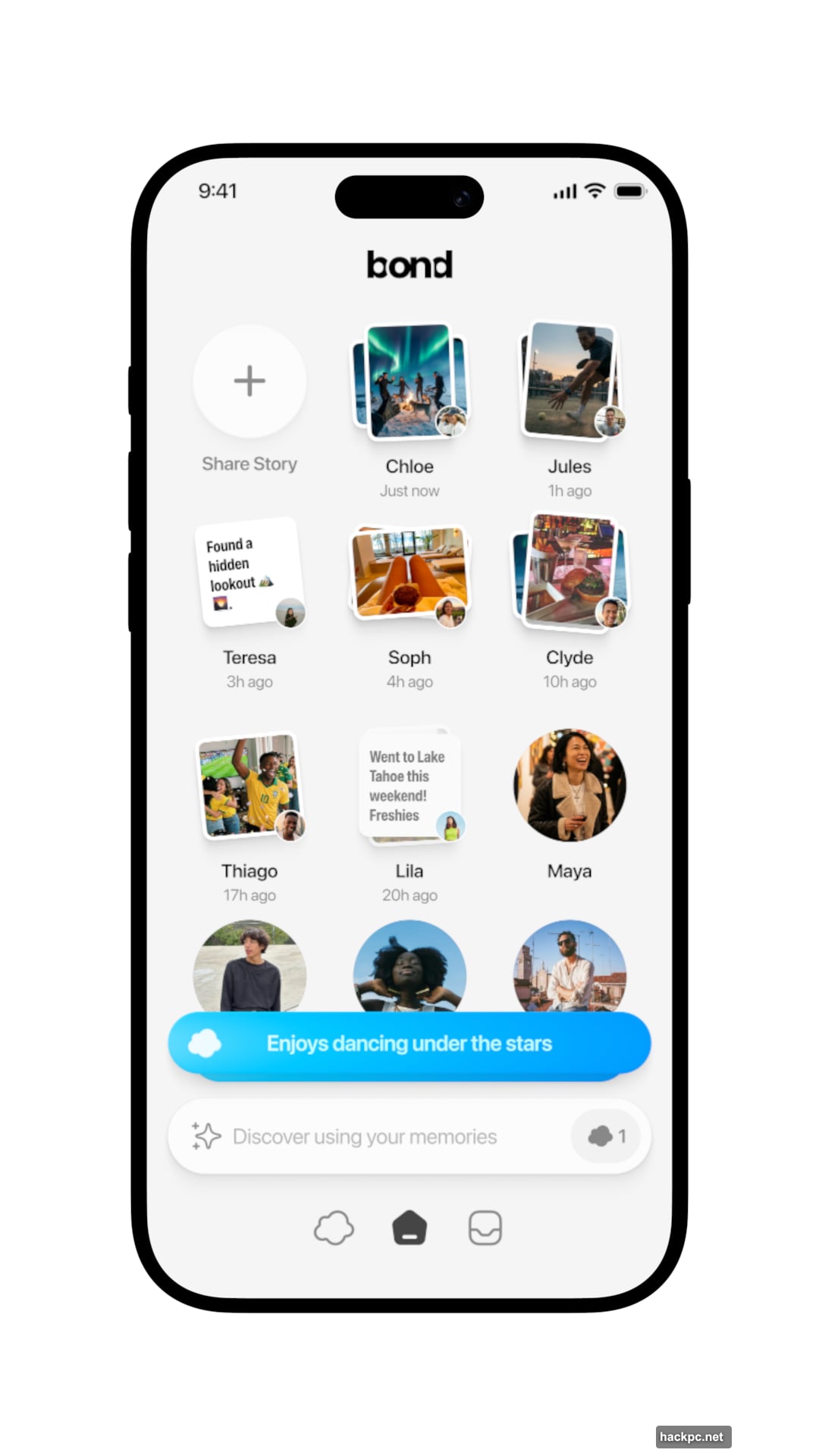
Bond fits squarely into that trend. CEO and co-founder Dino Becirovic built the platform around a simple premise: your past experiences should inspire your next ones, not trap you in a loop of watching other people live their lives.
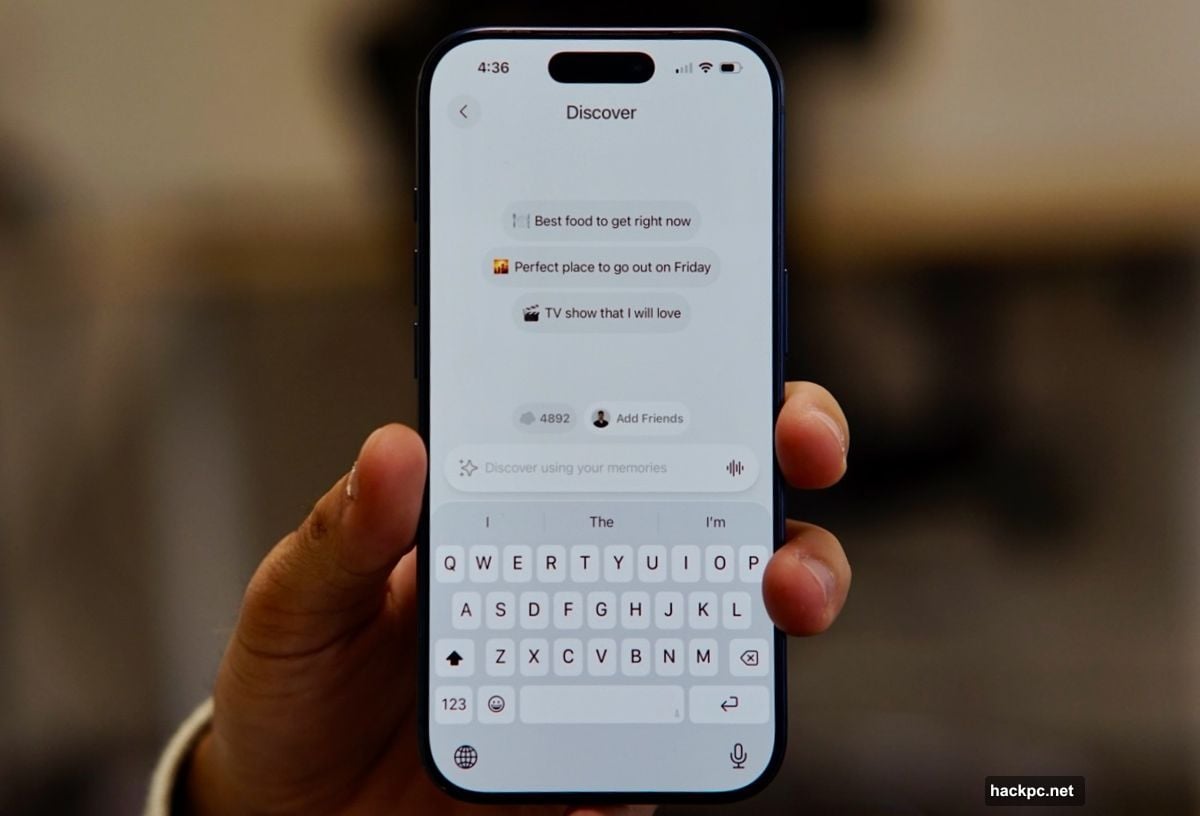
The idea is refreshingly straightforward. You post about things you’ve done, places you’ve been, food you’ve loved. Bond’s AI system learns from those posts and turns them into personalized, real-world recommendations.
Craving pho but haven’t had it in a while? Bond might spot a nearby Vietnamese restaurant with great recent reviews. Into heavy metal? It could flag that Iron Maiden is playing your city next week. The more you share, the smarter and more personal those suggestions get.
How the AI Memory System Works
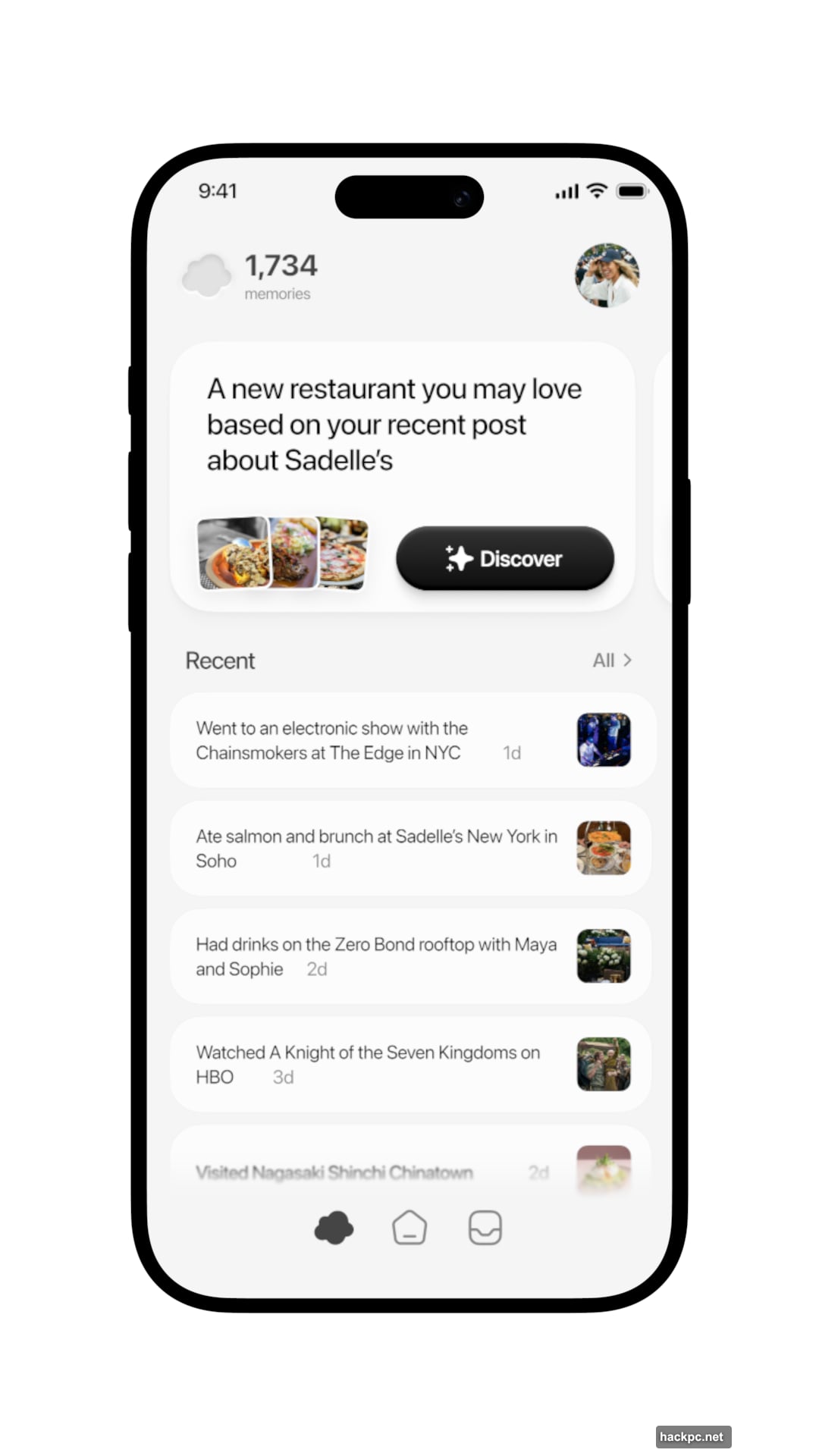
Bond calls your posts “memories,” and you can create them using photos, videos, or audio files. Think of it less like a traditional feed and more like a personal diary that actively works for you.
The layout has a loose resemblance to Instagram, though there is no scrollable feed. Instead, user profiles appear in a cluster format. Tap on someone’s profile and you see their current stories. Those stories disappear from your public profile after 24 hours but stay stored in your private archive, where you can search through them whenever you want.
So it functions more like a living personal record than a broadcast channel. Your memories fuel the AI, and the AI fuels your next adventure.
A Team That Knows Social Media Well
Bond’s team isn’t new to this world. The company says its people have previously built products at TikTok, Twitter, and Facebook.
Becirovic himself worked at Kleiner Perkins and Index Ventures before this. Bond’s founding researcher, Arthur Bražinskas, co-led the integration of user signals at Google Gemini. That’s a pretty strong pedigree for a startup trying to reshape how we think about social platforms.
The Revenue Model Is Genuinely Different
Here’s where Bond gets interesting from a business perspective. Most social media platforms survive on advertising. Bond doesn’t have ads. So how does it plan to make money?

Becirovic has outlined a couple of paths. The first involves letting users license their own data for AI training purposes. Companies building next-generation AI models need huge amounts of human-generated, real-world data. Bond’s archive of personal memories and experiences could become exactly that kind of training resource.
“If we become this platform with the right incentive structure to get billions of people to create about their daily lives, we will naturally become a really attractive place for people to want to train GPT six and seven,” Becirovic told TechCrunch.
Under this model, users would opt in and earn money from their data, with Bond taking a small licensing cut. That’s a meaningful shift from the traditional setup where platforms profit from your data while you get nothing.
The second path involves e-commerce. Bond could act as a product recommendation engine that integrates with online stores, earning a share of transactions it helps drive. Again, Becirovic says users would opt into this experience.
What About Privacy and Data Security?
This is a fair question for any platform built around personal memories. Becirovic says Bond will never sell user data for advertising purposes. Users can delete individual memories through the Memory tab, use natural language commands to remove content, or delete their profiles entirely.
On encryption, Becirovic is candid about where things stand right now. End-to-end encryption (E2EE) is on the roadmap but hasn’t landed yet. “E2EE encryption is a priority for us in the near-future after launch. In the meantime, we store all user data securely in our database,” he said.
It’s an honest answer, though users sharing personal memories will reasonably want to keep a close eye on how those privacy features develop. Becirovic acknowledges that more user controls are coming as the product grows.
Is This the Future of Social Apps?
Bond isn’t the first platform to bet against endless scroll culture, and it probably won’t be the last. But the combination of AI-powered real-world recommendations, an ad-free model, and a user-owned data vision does feel meaningfully different from what’s come before.
Whether it gains traction depends largely on whether people actually want this. There’s a gap between saying you’re tired of doomscrolling and genuinely changing your habits. Bond is asking users to trust an app with their personal memories in exchange for better real-life experiences. That’s a meaningful ask.
Becirovic is clear that monetization isn’t the short-term focus. Right now, making the platform genuinely useful is the priority. “Our initial focus is on creating an application users get more value from the more they capture their memories,” he said.
That’s a refreshingly honest starting point for a social media company. Whether Bond can scale that vision into something lasting is the real question worth watching.


Comments (0)