
Switzerland-based NymVPN just made its Windows app significantly more useful. The company rolled out split-tunneling support this week, giving Windows users real control over exactly which apps and websites route through the VPN.
And that’s not all. NymVPN also launched a brand-new key-exchange protocol designed to hold up against the coming wave of quantum computing threats. Both updates are worth paying attention to.
Split-Tunneling on Windows: What It Does
Split-tunneling is one of those features that sounds technical but makes total sense once you see it in action.
Basically, it lets you decide which apps use your VPN connection and which ones use your regular internet. Not everything needs VPN protection at the same time. So why slow down your whole connection for apps that don’t need it?
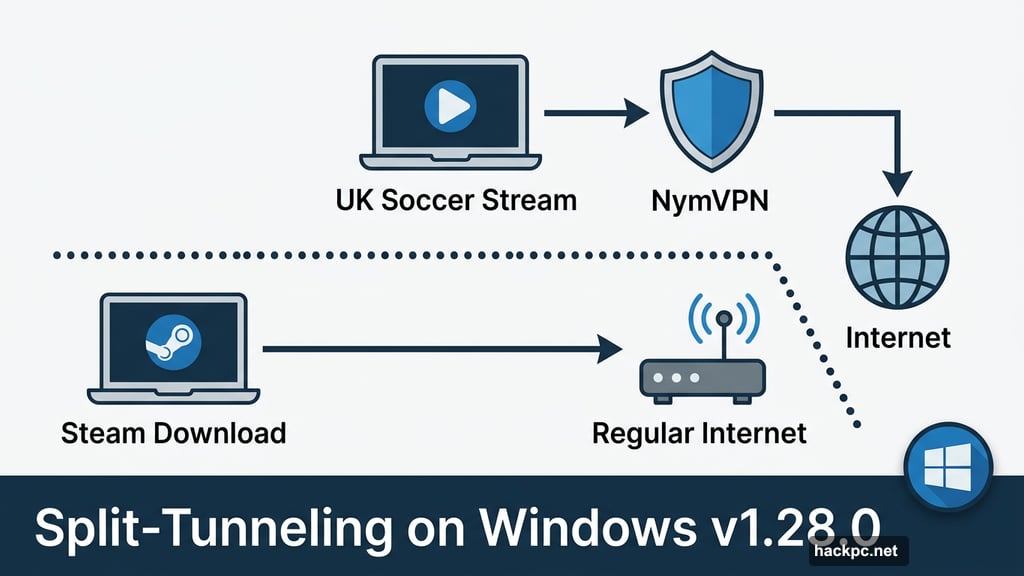
Here’s a classic example. Say you’re using NymVPN to stream a soccer match from a UK broadcaster. But you also want to download a game on Steam. Running that download through the VPN would slow it to a crawl. With split-tunneling, the stream goes through the VPN while Steam uses your normal connection. Both run at full speed.
The same logic applies to browsing. You might need the VPN to access a specific service or bypass geo-restrictions. But for everything else, your regular connection is faster. Split-tunneling lets you run both simultaneously without any friction.
Beta Now, More Platforms Coming Soon
The split-tunneling feature is available now in beta for Windows users running NymVPN version 1.28.0. NymVPN says iOS and Linux support are coming in future releases.
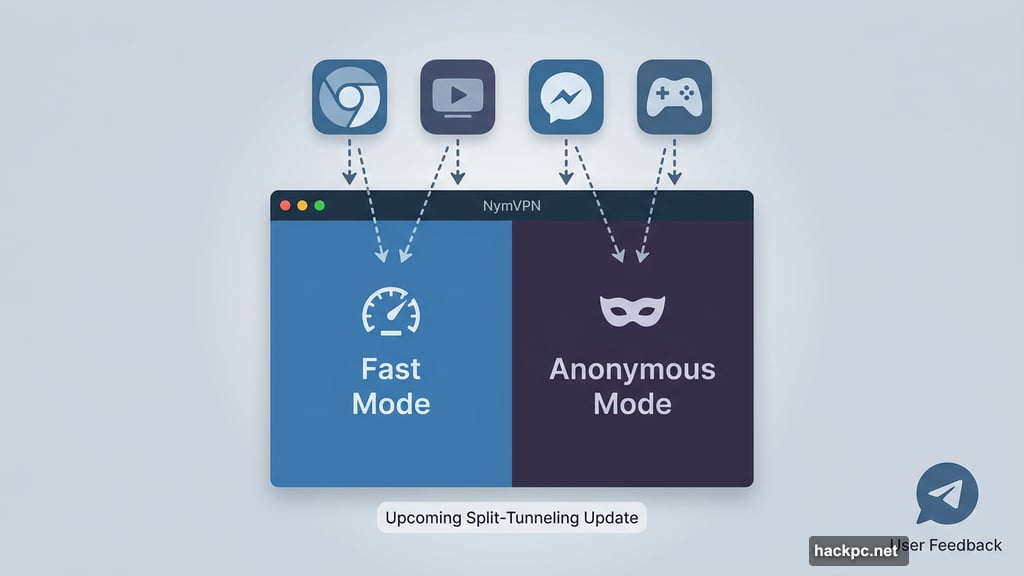
The company is also working on a more advanced version of split-tunneling. That future update would let you route specific apps through either NymVPN’s Fast Mode or its Anonymous Mode. That’s a meaningful distinction, since those two modes offer very different privacy profiles. Customers can share feedback and ideas through NymVPN’s Telegram group chat.
The Lewes Protocol Tackles Quantum Threats
The second major update is called the Lewes Protocol, and it addresses a security problem that most VPN users haven’t thought about yet.
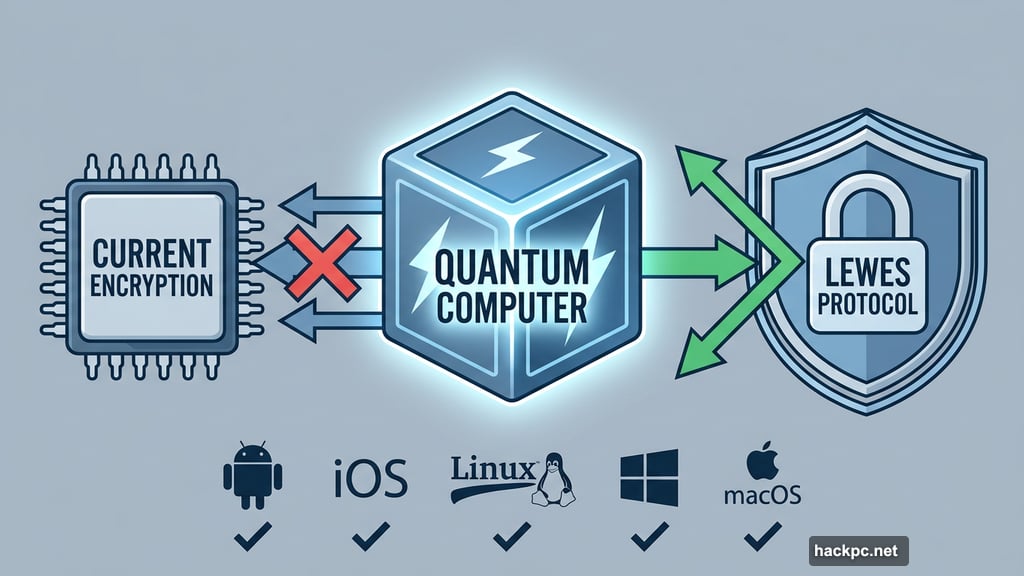
Quantum computing uses physics to solve problems dramatically faster than the laptops and phones we use every day. That raw speed becomes a problem for encryption. Current cryptographic methods could eventually be cracked by powerful enough quantum computers. Post-quantum encryption is designed to hold up against exactly that kind of attack.
The Lewes Protocol is NymVPN’s first step into post-quantum security. As a key-exchange protocol, it handles how two parties share cryptographic keys over an insecure channel. Even if someone intercepts those keys, they still can’t decipher the actual data. The protocol is available right now across all platforms — Android, iOS, Linux, Windows, and macOS.
NymVPN says the Lewes Protocol also improves connection times and startup speed, not just security. You can try it today by selecting it in the app settings. It’s currently designed for NymVPN’s Fast Mode.
CNET senior editor and VPN reviewer Moe Long called the post-quantum push “forward-thinking.” He noted it “can help protect against threats from really powerful computers, like the ability to break current encryption methods.”
What Makes NymVPN Different From Other VPNs
NymVPN operates as a decentralized VPN, which sets it apart from most competitors. Instead of routing your traffic through centralized servers, it runs through a distributed network of nodes. The company says this architecture means it can’t be “hacked, subpoenaed or coerced into handing over your data.”
That’s a bold claim. But NymVPN does back it up with third-party audits. CNET VPN analyst Attila Tomaschek noted that the company’s most recent audit in July 2024 “was pretty comprehensive” and covered infrastructure, apps, cryptography, and system architecture. Independent audits don’t guarantee perfection, but they do build meaningful trust and help surface potential vulnerabilities before bad actors do.
Should You Try These New Features?
If you’re already a NymVPN user on Windows, split-tunneling is worth enabling right away. It’s in beta, so expect a rough edge or two. But the core functionality works, and it genuinely makes day-to-day VPN use more flexible and faster.
The Lewes Protocol is even easier to try. Just go into settings and select it. You likely won’t notice anything dramatic — that’s the point. The upgrade happens quietly in the background, and your connections should actually feel a bit snappier.
Quantum computing threats aren’t knocking on anyone’s door today. But VPN providers who wait until quantum computers are mainstream to update their encryption will be too late. NymVPN is getting ahead of that problem now, and that’s a smart move worth acknowledging.



Comments (0)