
Most free VPNs are a trap. You sign up thinking you’re getting something for nothing, but somewhere behind the scenes, your browsing history is being packaged up and sold to the highest bidder.
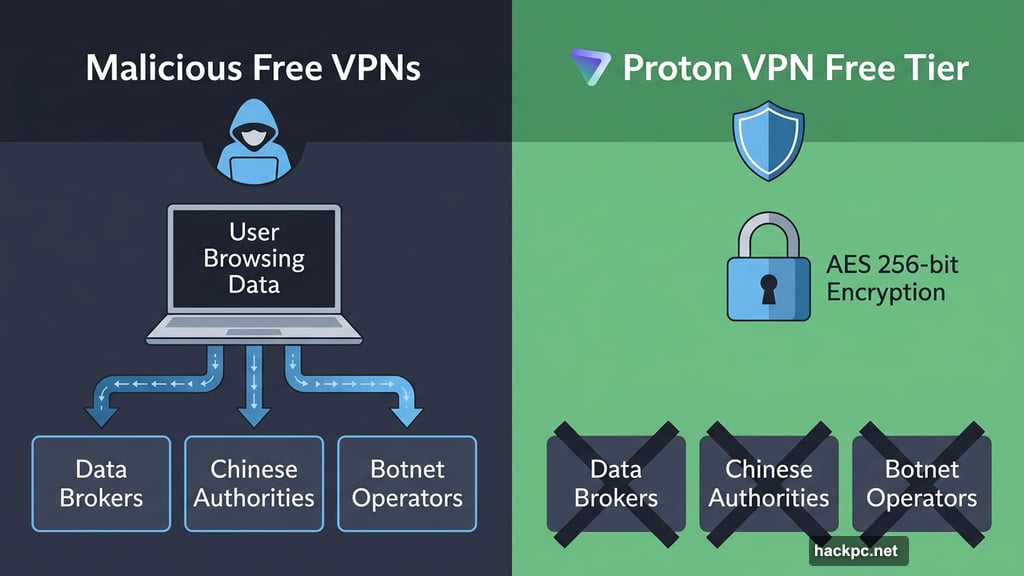
That’s not paranoia. A 2018 investigation by Top10VPN found that 86% of free iOS and Android VPN apps had unacceptable privacy policies. Some explicitly shared user data with Chinese authorities. Others quietly turned users’ devices into botnets. One popular service, Hola VPN, was caught selling users’ bandwidth to outside groups in 2015.
So yes, free VPNs can be genuinely dangerous. But not all of them. One option stands out as a legitimate exception, and a handful of paid services offer free trials worth knowing about.
Proton VPN’s Free Tier Doesn’t Have a Catch
Here’s the short version: Proton VPN is the only truly free VPN we recommend without hesitation.
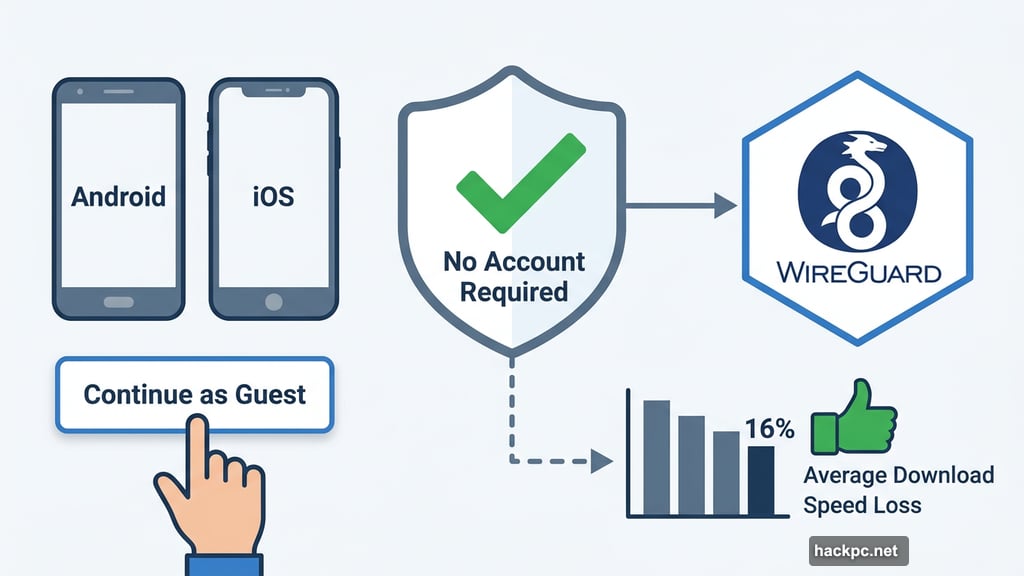
Most free VPNs throttle your speeds, cap your data, flood you with ads, or quietly harvest your browsing activity. Proton does none of that. You get unlimited data, no ads, no speed throttling, and the same AES 256-bit encryption and WireGuard protocol protections available on paid plans. In 2025 testing, Proton VPN clocked just a 16% average download speed loss on its free tier, which is genuinely impressive.
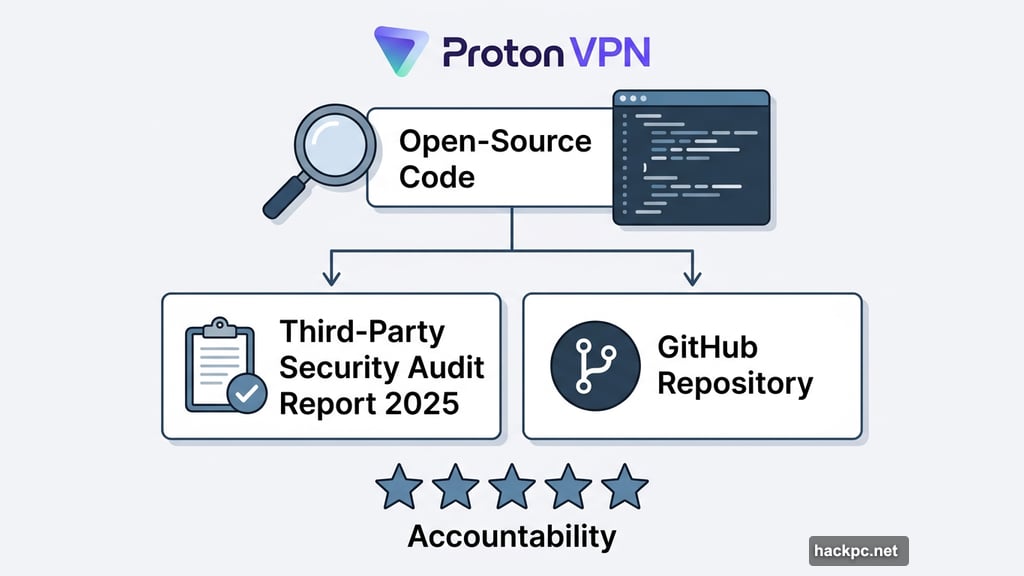
Plus, Proton’s apps are fully open-source. Anyone can inspect the code. The company also undergoes regular third-party security audits, which adds a layer of accountability most free VPN services simply don’t bother with.
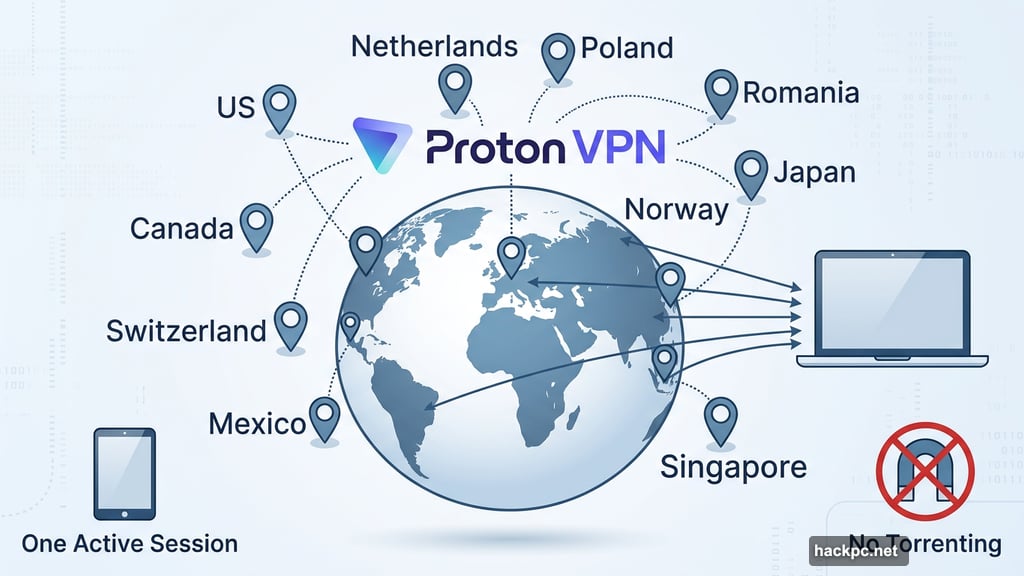
There are real limitations, though. The free plan locks you to 10 server locations: the US, Netherlands, Poland, Romania, Japan, Norway, Canada, Switzerland, Mexico, and Singapore. You can’t manually pick a server. Proton routes you automatically based on your location. And you can only run one active VPN session at a time, even if you’ve installed the app on multiple devices.
Torrenting isn’t supported on the free tier, and you won’t get access to Proton’s Secure Core servers or built-in ad and malware blocker. But for everyday browsing, basic privacy protection, and even some Netflix access, Proton’s free plan holds up well.
Android and iOS users get an extra bonus: you don’t even need to create an account. Just tap “continue as guest” and you’re connected.
Paid VPN Trials Worth Considering
If Proton’s free tier feels too restricted for what you need, several premium VPNs offer risk-free trials that give you full access before spending a cent.
, Surfshark, and ExpressVPN with speed loss and pricing data](image)
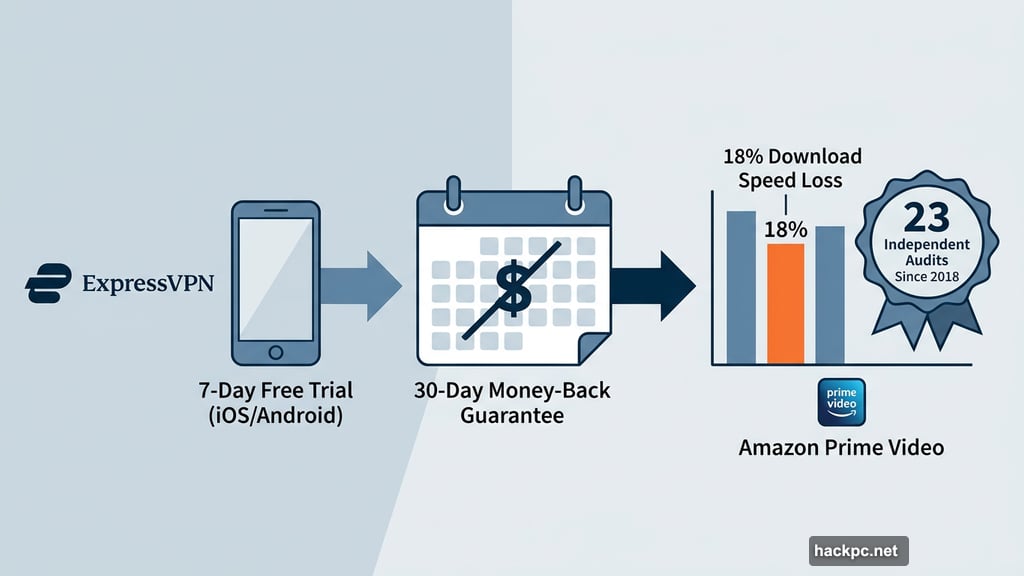
ExpressVPN offers a seven-day free trial on Android and iOS, followed by a 30-day money-back guarantee. It’s one of the most privacy-focused VPNs available, with 23 independent audits since 2018. Speed performance is excellent, averaging just 18% download speed loss in 2025 testing. ExpressVPN streams flawlessly across Amazon Prime Video, Disney Plus, Netflix, Hulu, and Max. The downside is cost: plans run $13 per month or $75 for the first 15 months.
Surfshark also offers a seven-day free trial through the Apple App Store and Google Play Store, plus a 30-day money-back guarantee. It supports unlimited simultaneous connections, which most VPNs don’t. The 2025 speed test clocked a 21% average download speed loss, which is fast enough for streaming without issue. Surfshark’s introductory pricing is reasonable, but watch out for renewal rates that can spike significantly after the first term ends.
NordVPN gives Android users a seven-day free trial and extends a 30-day money-back guarantee to everyone. It’s the fastest VPN tested by a significant margin, averaging just 3% download speed loss in 2025, making it the go-to choice for 4K streaming, gaming, or anything bandwidth-intensive. NordVPN also offers solid privacy features, including its NordWhisper obfuscation protocol that disguises VPN traffic as regular web traffic. Starting at $60 for the first year, it’s competitively priced, though renewal rates jump considerably.
Why Free VPNs Go Wrong
The core problem with most free VPNs comes down to simple economics. Running a VPN service is expensive. Servers cost money. Engineers cost money. Security audits cost money.
If you’re not paying a subscription fee, the service has to recoup those costs somewhere else. Usually, that means you.
Some free VPN services embed tracking libraries into their apps. Carnegie Mellon researchers found that HotSpot Shield, for instance, used five separate tracking libraries and secretly redirected user traffic to undisclosed servers. A 2021 Top10VPN study found that 85% of free VPN apps simply ignored iOS users’ requests to opt out of ad tracking.
Others go further. A CSIRO study found that 38% of free Android VPNs contain malware outright. That means roughly one in three free VPN apps carries the kind of code that can steal passwords, hijack sessions, or worse.
Even the less malicious free VPNs cause problems. Fewer servers means more congestion and slower connections. Streaming services like Netflix actively block IP addresses associated with free VPN services, since those addresses cycle through too many users. And some free VPNs cap your monthly data at levels too low to stream a single movie in 4K.
What Makes a Free VPN Worth Trusting
Before downloading any free VPN, run through a quick checklist.
First, look for a published no-logs policy backed by third-party audits. A privacy policy without an audit to verify it is just a promise. Second, check whether the app is open-source. Open-source code can be inspected by security researchers, which provides meaningful accountability. Third, research the company behind the app. Is it a recognized privacy-focused organization, or a shell company with no web presence?
Proton checks all three boxes. Most free VPN apps don’t check any of them.
Also pay attention to where the company is based. VPN providers headquartered in countries participating in Five Eyes, Nine Eyes, or 14 Eyes intelligence-sharing agreements may be legally required to hand over user data under certain circumstances. Proton operates from Switzerland, which has strong privacy protections independent of those arrangements.
Speed Comparison Across Top Options
Here’s how the download speed performance stacked up across the VPNs covered in 2025 testing:
| VPN | Average Speed Loss |
|---|---|
| NordVPN | 3% |
| Proton VPN | 16% |
| ExpressVPN | 18% |
| Surfshark | 21% |
For most users, anything below 25% speed loss won’t be noticeable during regular browsing or streaming. All four of these services fall well within that range.
The Honest Take on Free VPN Value
Proton VPN’s free tier is genuinely good. For someone who wants basic privacy protection while browsing on public Wi-Fi, checking email, or doing general web surfing, it does the job without compromising your security. The server selection is limited and you can’t manually pick a location, but those are reasonable trade-offs for a free service that doesn’t abuse you in return.
For anything more demanding, like streaming foreign Netflix libraries, torrenting, or protecting multiple devices simultaneously, a paid plan makes more sense. And here’s where the trial options become valuable. Between ExpressVPN’s seven-day trial, Surfshark’s seven-day trial, NordVPN’s seven-day Android trial, and all three services’ 30-day money-back guarantees, you can test the full premium experience across different platforms without committing to a subscription.
The bottom line: free VPN protection is possible, but only with the right choice. Stick with Proton for a no-cost option or use a trial period to test the premium services before deciding. Avoid anything outside that short list unless you’ve done serious homework on who’s behind the app and what they’re doing with your data.
Your privacy is worth more than whatever you’d save downloading a sketchy free app.


Comments (0)