

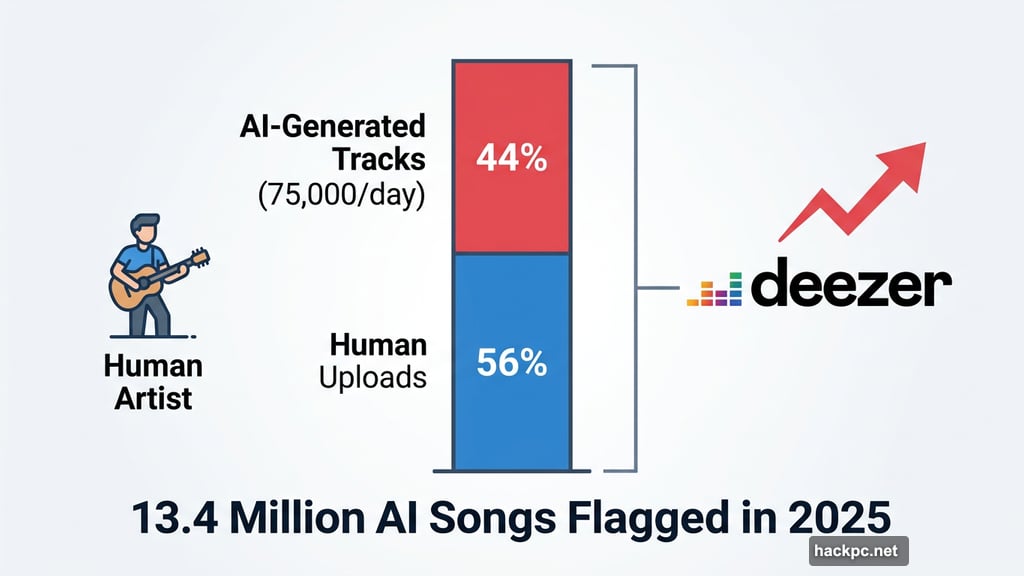
Nearly half of everything uploaded to Deezer right now isn’t made by a human. That’s not a projection or a worst-case scenario. That’s what’s happening today.
The Paris-based streaming service just released a report showing that 44 percent of its daily uploads are AI-generated songs. That works out to about 75,000 AI tracks landing on the platform every single day. Plus, over the course of 2025 so far, Deezer has flagged more than 13.4 million AI-generated songs total.
Let that sink in for a moment.
Deezer’s AI Detection Tool Caught a Flood
Back in January 2025, Deezer launched a patent-pending AI music detection tool. The results were immediate and eye-opening.
Just a few months after the tool went live, Deezer reported about 20,000 AI-generated tracks uploaded daily. That was roughly 18 percent of overall uploads at the time. Now that number has more than tripled. So we went from one-in-five uploads being AI-made to nearly one-in-two in just months.
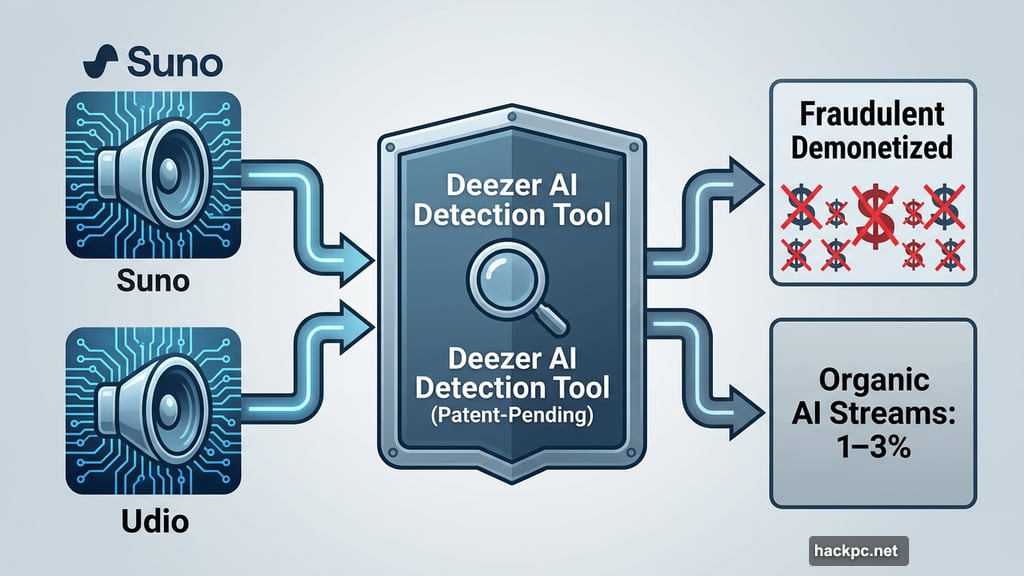
The detection tool specifically identifies music created by two of the biggest AI music generators right now: Suno and Udio. Both tools faced early legal trouble from major record labels. Interestingly, some of those same labels have since reversed course and struck deals with the startups.
Most AI Streams Are Flagged as Fraudulent
Here’s something that reframes the numbers a bit. Despite the enormous volume of AI uploads, Deezer reports that only 1 to 3 percent of total streams on the platform actually involve AI-generated music.
Moreover, the vast majority of those AI streams are flagged as fraudulent and demonetized. So the flood of uploads isn’t translating into a flood of AI music reaching listeners organically. Instead, it looks a lot like bot-driven manipulation rather than genuine audience interest.
Still, that doesn’t make the upload numbers any less striking. Someone is pushing all that content onto the platform, and the scale is relentless.
Other Platforms Are Building Their Own Defenses
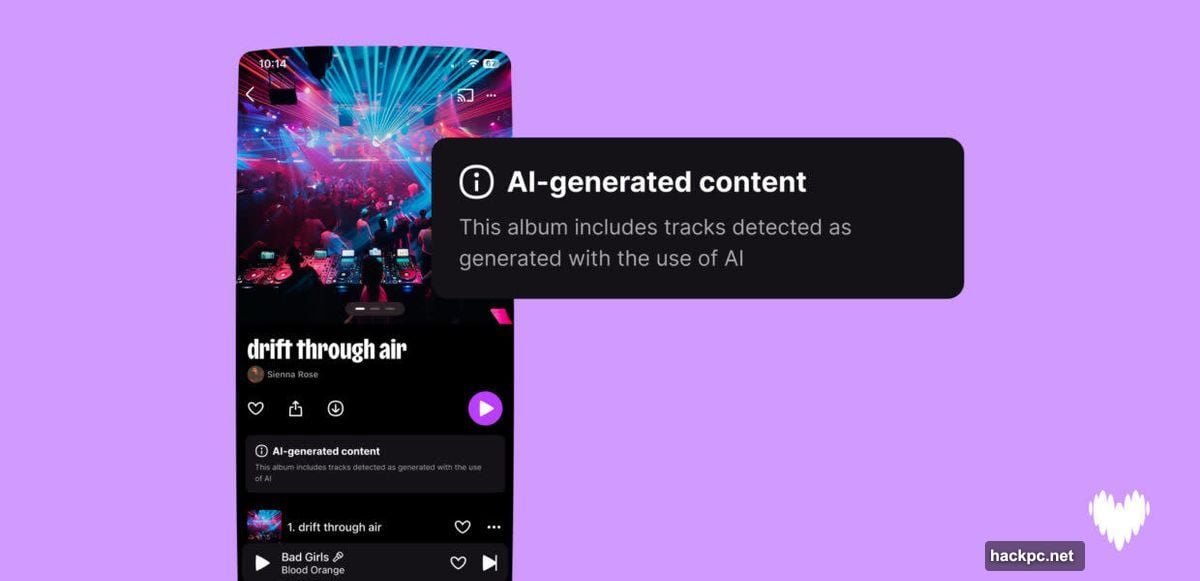
Deezer isn’t alone in fighting this battle. Coda Music has introduced “AI Artist” labels across its platform and even lets users flag artists they suspect are AI-generated. That community-driven approach adds a human layer of verification on top of automated tools.
The broader pattern is clear. Streaming platforms are treating AI music detection less like a nice-to-have feature and more like essential infrastructure. And given that Deezer’s own numbers nearly tripled within a few months of launching detection, the need for these tools is only growing.
What This Means for Independent Artists
The practical concern here isn’t really about listeners accidentally streaming AI music. As the data shows, those streams are minimal and mostly fraudulent anyway.
The real issue is what happens to the broader music ecosystem when platforms are drowning in synthetic content. Every AI track uploaded competes for catalog space, recommendation algorithms, and curatorial attention. Independent artists trying to get discovered are now swimming in a much noisier pool.
Deezer’s 2 million flagged songs per month figure is a useful anchor. That’s 2 million uploads a month that a human musician didn’t make and that almost nobody is genuinely choosing to hear. Yet they still clog the system.
The fact that detection tools are catching this content before it reaches listeners is genuinely reassuring. But the upload rates suggest that whoever is pushing AI music onto these platforms isn’t slowing down. If anything, they’re accelerating.
Platforms are going to need faster, smarter tools to keep pace. And the artists who depend on these platforms deserve to know their work isn’t getting buried under a mountain of machine-made noise.



Comments (0)