
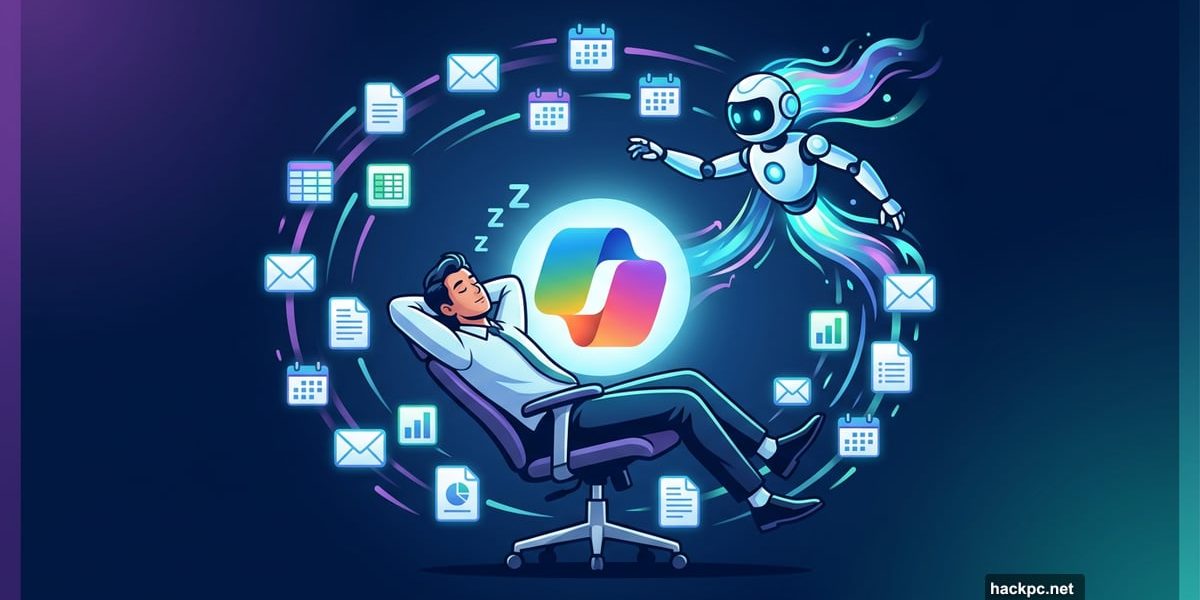
Forget chatting with AI. Microsoft wants you to just hand it your to-do list and walk away.
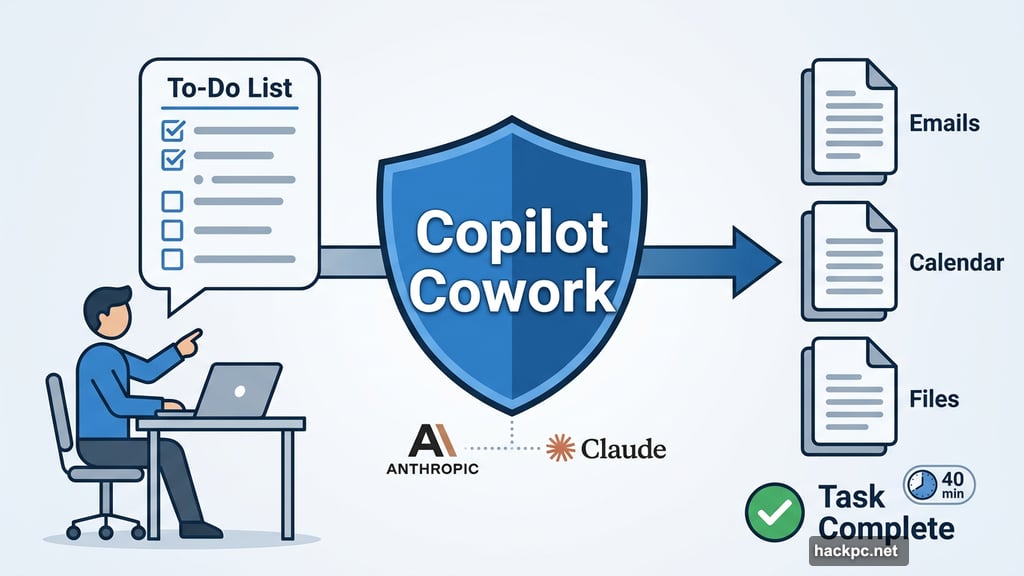
On Monday, Microsoft announced a wave of new agentic AI updates for Copilot, and the headline feature is something that sounds almost too good to be true. It’s called Copilot Cowork, and it’s built in collaboration with Anthropic, the company behind the Claude AI assistant. If you’ve already played with Claude Cowork, this will feel very familiar. But now it lives inside Microsoft’s ecosystem, right alongside your emails, calendars, and files.
“Fire and Forget” AI That Actually Gets Stuff Done
So what does Copilot Cowork actually do? In short, it handles your busywork without you watching over its shoulder.
The tool can dig through your files, emails, and calendar to complete tasks on its own. We’re talking spreadsheets, reports, research, meeting management. All without you babysitting every step.
Charles Lamanna, Microsoft’s president of business apps and agents, put it simply: “With chat, you’re babysitting every step — this is much more like ‘fire and forget’ with Cowork to get the job done.”
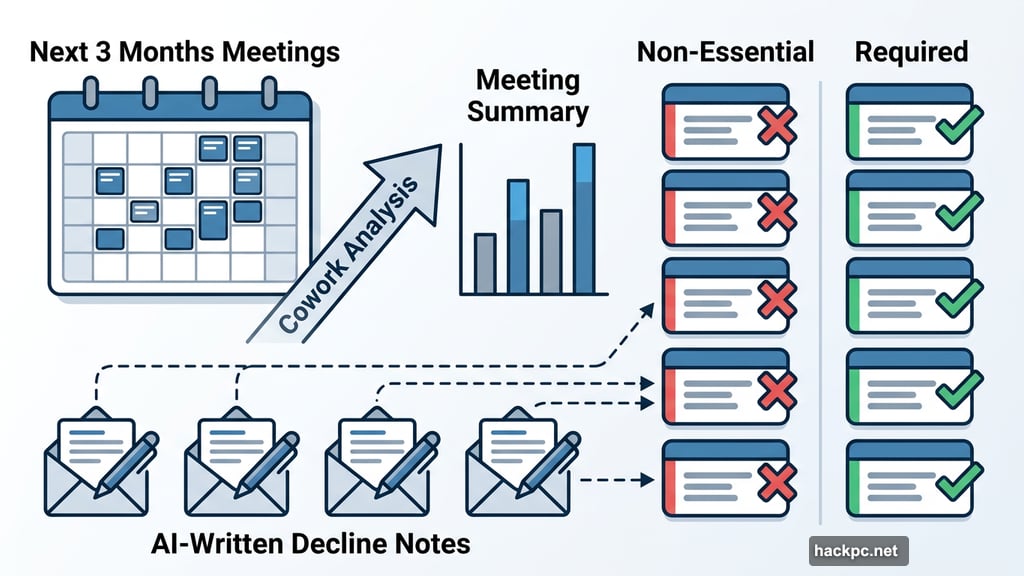
He used his own calendar as a real-world example. He asked Cowork to analyze his upcoming meetings for the next three months. The AI reviewed his email and calendar history, figured out which meetings weren’t essential for him to attend, and built a clean summary chart. After he gave it a thumbs up, Cowork declined those meetings automatically, complete with AI-written notes for each one.
The whole process took 40 minutes. It saved Lamanna and his executive assistant hours of work.
What Agentic AI Actually Means for Your Workday
The shift here is bigger than it sounds. Most AI tools we use today still require you to stay in the loop. You type a prompt, you review the output, you decide what happens next.
Agentic AI flips that model. Instead of using AI as a faster way to do your own tasks, you delegate the task entirely. The AI becomes less like a calculator and more like a junior colleague who handles assignments independently and reports back when they’re done.
Lamanna described it as entering a “new arc” in how we interact with AI. “The shape of what we do on a day-to-day basis will change,” he said, adding that the goal is to give people back time for higher-value work.
Copilot Cowork is currently rolling out in limited form as a research preview. So it’s not available to everyone just yet. But Microsoft clearly sees this as the future direction for Copilot.
Agent 365 Brings Order to the AI Agent Chaos
Alongside Cowork, Microsoft also announced that Agent 365, its AI agent management platform, will become generally available on May 1.
Think of Agent 365 as a control room for all the AI bots your company uses. As businesses deploy more and more AI agents across departments, keeping track of what they’re doing, who has access, and whether they’re actually working becomes its own full-time job. Agent 365 tries to solve that problem.
Microsoft itself has already built more than half a million AI agents using the platform, which gives you a sense of how seriously the company is betting on this technology.
Plus, new AI models from both Anthropic and OpenAI will be available inside Copilot going forward. Microsoft is clearly playing both sides of the AI startup rivalry rather than picking a favorite, which is probably the smart move.
The Worry Behind the Excitement
Here’s where things get complicated. Claude Cowork, the Anthropic version that inspired Microsoft’s offering, has already sparked real anxiety on Wall Street. Major tech stocks dropped sharply in late January as investors started asking hard questions about what increasingly capable AI agents mean for the future of work.
That’s not an unreasonable worry. Tools like Cowork, Claude Code, and OpenAI’s Codex are getting good enough to replace traditional software workflows, not just assist with them. And Microsoft, whose business is largely built on traditional software products, clearly understands the threat well enough to join the movement rather than resist it.
Workers are paying attention too. Many are worried about AI-driven job losses, a fear made more concrete by high-profile layoffs at companies like Amazon and Block that cited AI as a factor. One study even found that AI may actually make workdays longer and less enjoyable for employees who keep their jobs.
Lamanna’s optimistic framing, that AI gives time back and frees people for more meaningful work, is genuinely possible. But the history of workplace technology tells a messier story than that.
Whether Copilot Cowork ultimately helps you do better work or quietly chips away at your job security probably depends less on the technology itself and more on how the company you work for chooses to use it. That’s been true of every major workplace tech shift, and there’s no reason to think AI will be different.
The tool is impressive. What matters most is what happens next.



Comments (0)