
Online scams keep getting sneakier. Meta knows it, and now they’re fighting back with a fresh wave of protection tools across their biggest platforms.
Starting now, Facebook, WhatsApp, and Messenger users will see new alerts designed to catch suspicious activity before it causes real damage. The idea is simple: warn people early, before they accidentally hand a scammer the keys to their account.
WhatsApp Device Linking Gets a Safety Net
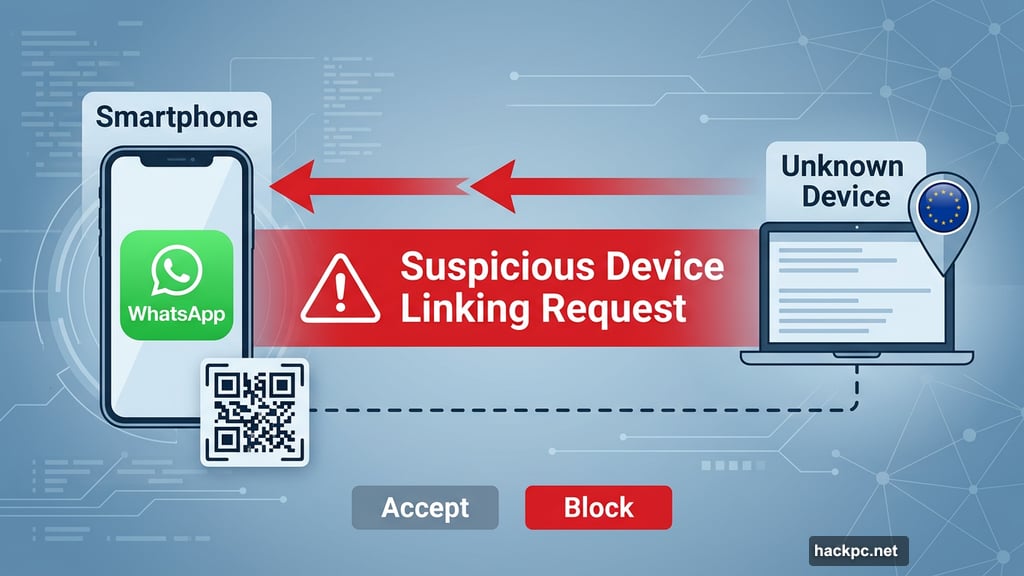
Here’s where things get clever. WhatsApp is rolling out behavioral signal detection for device linking requests.
In plain English? If someone tries to connect a suspicious device to your WhatsApp account, the app will now wave a red flag. You’ll see where the request is coming from, giving you a chance to think twice before tapping “accept.”
Meta gave a concrete example of how scammers pull this off. They might pose as a talent competition, asking you to vote by visiting a website and entering your phone number followed by a device linking code. Or they’ll try to get you to scan a fake QR code, quietly hooking their device to your account.
That kind of social engineering is surprisingly effective. So having a warning pop up at exactly the right moment could stop a lot of account takeovers before they start.
Facebook Friend Request Alerts Now in Testing

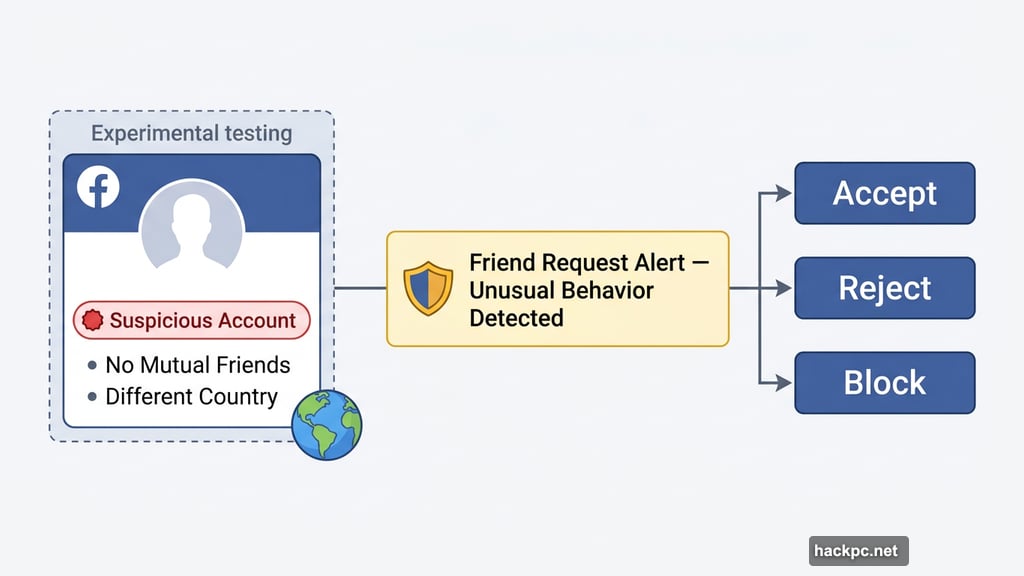
Suspicious friend requests are getting a closer look too. Meta is currently testing warning messages that appear when Facebook users send or receive requests from accounts showing signs of unusual behavior.
What counts as suspicious? Things like having no mutual friends, or the account being based in a completely different country. The warning gives users better context before deciding to accept, reject, or block the request.
It’s worth noting this is still experimental. But even in testing, it signals that Meta wants to add more friction to the scammer playbook before these tricks do harm.
Messenger’s AI Scam Review Reaches More Countries
Messenger already had some scam detection tools quietly running in the background. Now Meta is expanding that AI-powered review system to more countries, though the company hasn’t confirmed exactly which ones yet.
The system watches for patterns in conversations with new contacts. If it spots something that looks like a classic scam, such as a suspicious job offer or an unusual money request, it prompts you to share recent chat messages for a closer AI review.
If a potential scam is flagged, Messenger will encourage you to block or report the account. These tools have been in development for nearly a decade, so the latest expansion builds on a foundation Meta has been quietly refining for years.
Why Timing Matters So Much Here
Meta made an interesting admission in its announcement. The company acknowledges that scammers often avoid acting suspiciously right away, waiting until they’ve built a little trust before making their move.
That’s exactly why these early-warning tools matter. Catching a red flag during device linking or at the friend request stage is far more useful than detecting fraud after the damage is done.
Scams targeting everyday users on social platforms have exploded in recent years. Anything that gives people a clearer signal at the decision point, before they click or confirm, is genuinely useful protection.
These new features won’t catch everything. Scammers adapt fast, and no automated system is foolproof. But between the WhatsApp device linking alerts, the Facebook friend request warnings, and the expanded Messenger AI review, Meta is at least building a more visible line of defense where users need it most.




Comments (0)