
Tumblr just overhauled one of its most beloved features. And the response? Thousands of angry comments and counting.
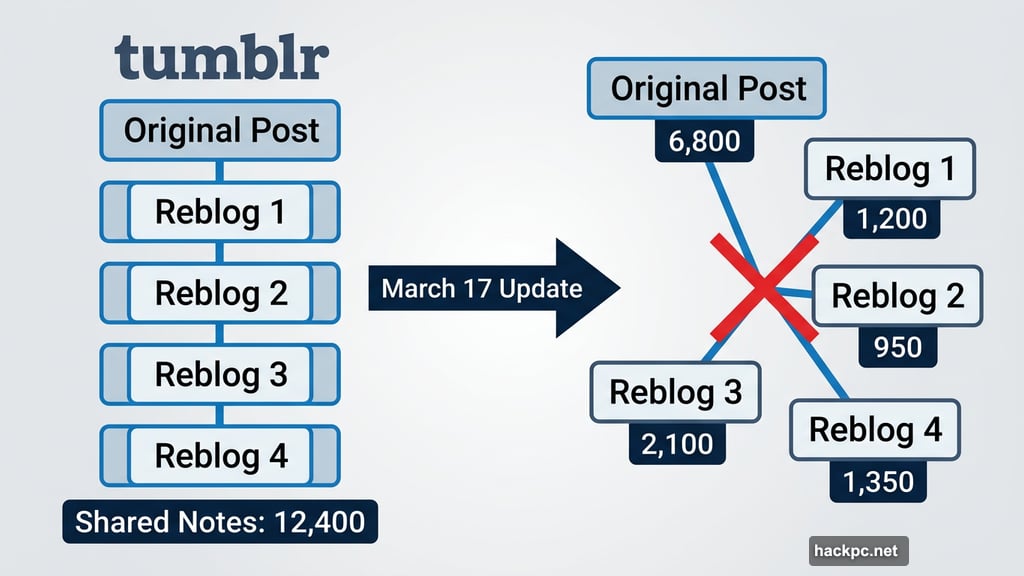
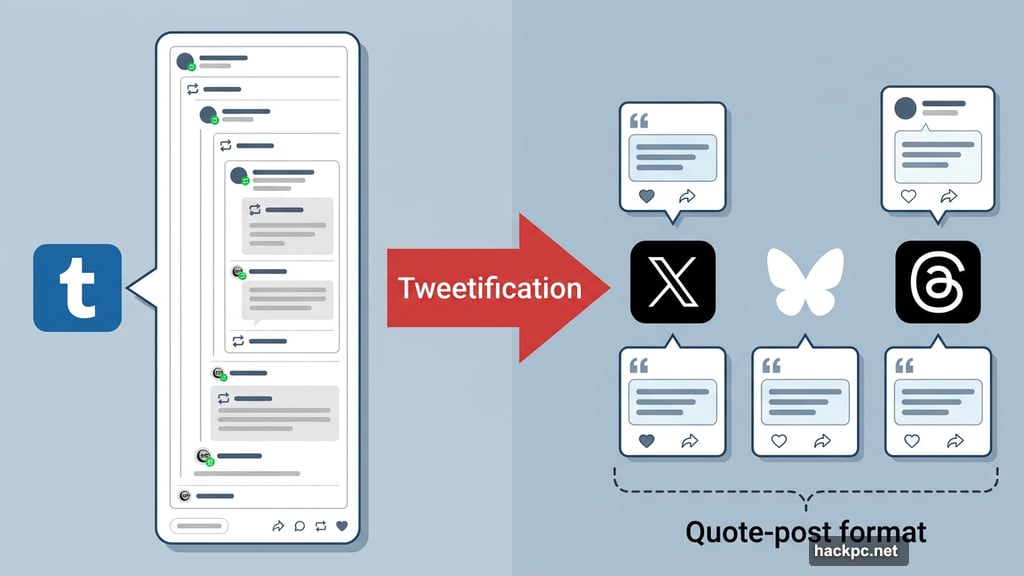
The platform rolled out a major update to its reblogging system on Monday, March 17th. Now, every post within a reblog chain can be liked, reblogged, and replied to individually. Each reblog also gets its own separate note count instead of one shared total for the whole chain. The result looks a lot less like classic Tumblr and a lot more like scrolling through X or Threads.
For a platform that built its entire identity around the reblog chain, that’s a pretty big deal.
Reblog Chains Were Tumblr’s Whole Thing
If you’ve never used Tumblr, here’s a quick explainer. When someone reblogs a post on Tumblr, the original content and every response stack together in a single scrollable chain. It’s part conversation, part performance art, and completely unlike anything else on social media.
That collapsed chain format became iconic. Users would discover posts mid-chain and scroll upward through layers of commentary, jokes, and tangents that built on each other. The whole experience felt distinctly, unmistakably Tumblr.
Even Tumblr itself acknowledged this in the announcement. The company wrote that “the reblog chain is one of the things that makes Tumblr unlike anywhere else.” Then it went ahead and broke it anyway.
Tweetification, Users Say
The new reblog format splits that familiar stacked chain into separate individual posts. Each one lives on its own, complete with its own engagement counts. Sound familiar? It should. That’s basically how quote-posts work on X, Bluesky, and Threads.
Tumblr users noticed immediately. Many are now pushing back hard against the platform becoming what they’re calling “another Twitter look-alike.” Beyond the visual shift, people are frustrated that the new format makes reblog chains harder to follow. The conversational thread that made Tumblr reblogs so fun to read gets fragmented when each post stands alone.
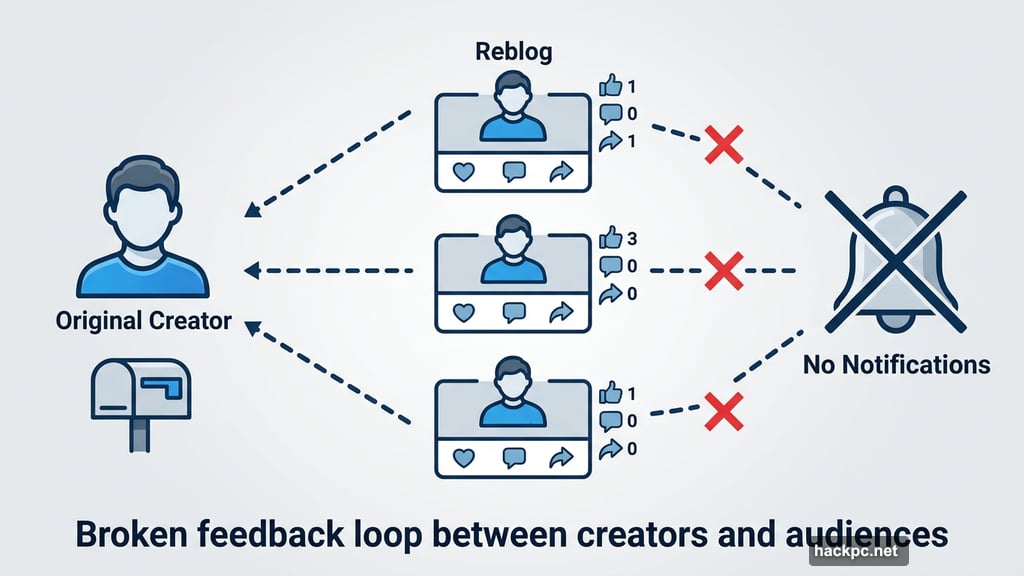
There’s also a practical problem for creators. Under the new system, original posters won’t receive notifications for likes, comments, or shares on reblogged versions of their content. That breaks a key feedback loop between creators and their audiences on the platform.
16 Years, and This Is the Worst Update Ever
The backlash has been loud and specific. One user on X put it bluntly: “I have been on Tumblr for 16 years and this may be the worst change you have ever introduced. It breaks a fundamental way the community works. Who asked for this?”
That sentiment echoed across Tumblr’s own announcement post, which quickly accumulated more than 35,000 overwhelmingly negative comments. Not a mixed response. Not a divided community. Just wall-to-wall criticism from people who genuinely love the platform and don’t want it remade in another site’s image.
Tumblr responded through its dedicated Changes account, acknowledging that it’s “very clear that you all have strong feelings” about the update. The platform says it will monitor user reactions as the rollout continues over the next few days.
But here’s the thing: despite the backlash, Tumblr still plans to push the update forward.
The Platform Identity Problem
This situation highlights something that keeps happening to social platforms. Companies look at what makes competitors successful and start copying their mechanics, often without asking whether those mechanics actually fit their own community.
Tumblr has survived years of corporate mismanagement, repeated near-death experiences, and platform shifts that would have killed most social networks. What kept users coming back wasn’t slick features or algorithmic recommendations. It was the weird, layered, deeply specific experience that reblog chains created. That’s the product. That’s what people showed up for.
Changing that format to look more like X doesn’t make Tumblr more competitive with X. It just makes Tumblr worse at being Tumblr. And a platform that’s bad at being itself doesn’t have much of a future.
The 35,000 negative comments aren’t just complaints about a UI change. They’re users saying: we know what this place is, and you’re dismantling it. Whether Tumblr listens is another question entirely.


Comments (0)