

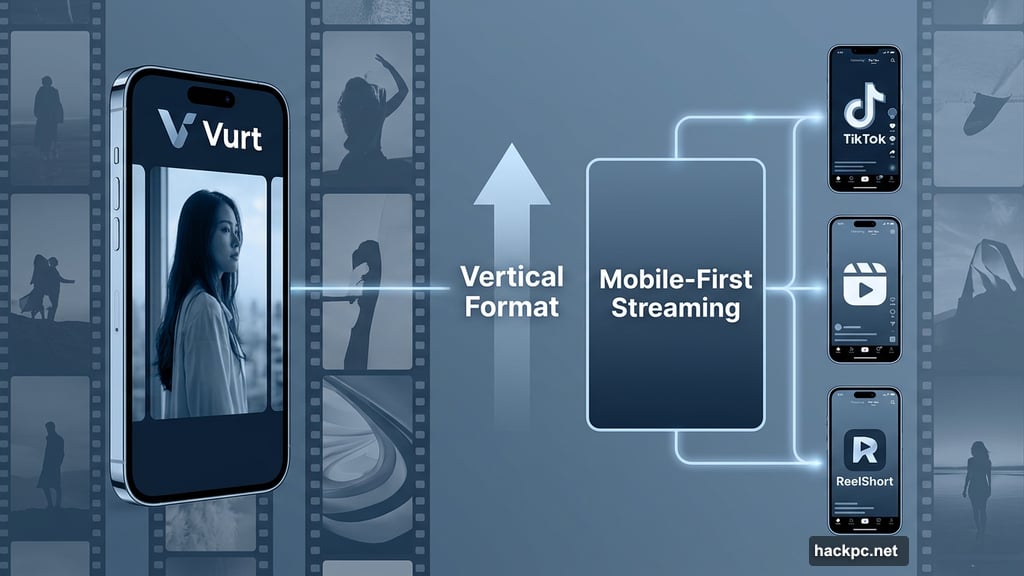
Vertical video has completely changed how people watch content. TikTok proved it. Reels confirmed it. And now, a brand-new streaming platform called Vurt is betting that the future of indie filmmaking points straight up.
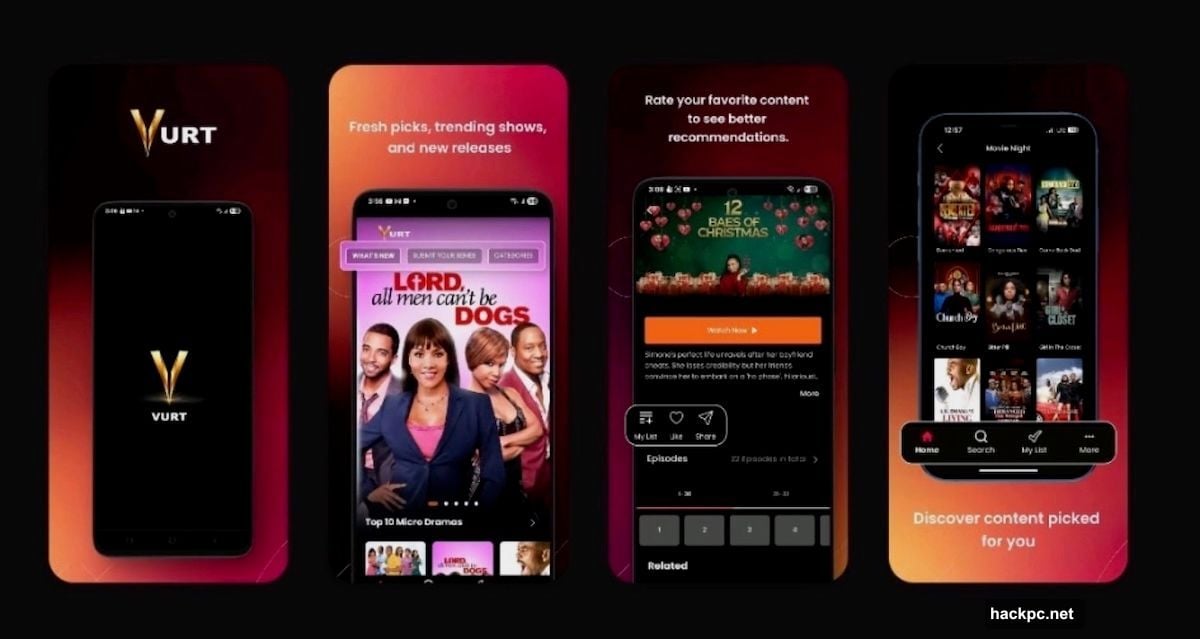
Launched in March 2026, Vurt is a mobile-first streaming service built specifically for independent filmmakers who want to create and distribute content in vertical format. Think full-length films, micro-series, and TV shows — all designed to be watched on your phone the way you actually hold it.
And yes, there are already films featuring Kevin Hart and Vivica A. Fox on there.
Vertical Video Streaming Finds Its Moment
The numbers behind this trend are hard to ignore. Micro-drama platforms have exploded from a niche curiosity into a genuinely massive industry.
ReelShort, one of the biggest names in the space, was projected to hit about $1.2 billion in gross consumer spending in 2025, according to Appfigures. DramaBox pulled in $276 million last year. Even TikTok jumped in, launching its own micro-drama app in January 2026.
Traditional streaming giants are paying attention too. Disney+, Peacock, and Netflix have all started exploring short-form vertical features. So the format isn’t just a trend anymore. It’s becoming a serious part of the content landscape.
Vurt enters this space with more than 100 episodes of original content already on the platform, spanning multiple genres. Plus, the company releases a new original title every single week.
Fast Distribution for Indie Creators
One of the most exciting things about Vurt is how it handles the often painful process of getting content in front of audiences.
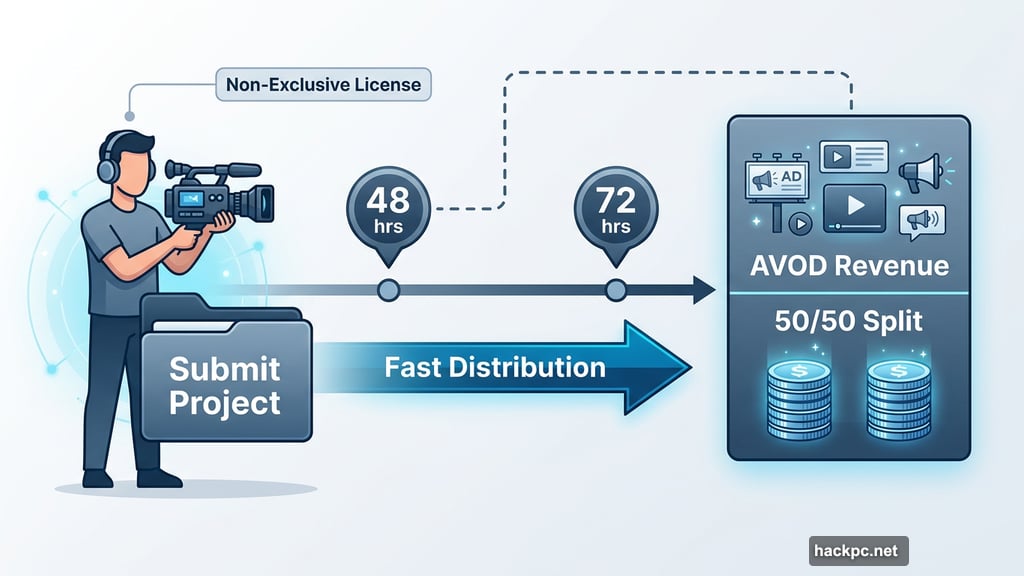
Traditional distribution can take months. Aggregators, licensing deals, and major company approvals all slow things down. Vurt skips most of that. Creators submit their projects directly to the platform, and once approved, their work goes live within 48 to 72 hours.
For independent filmmakers who have poured time and money into a project, that speed matters enormously.
On the money side, Vurt runs on an AVOD model — advertising-based video on demand — which means creators earn revenue through ads placed on their content. The platform also offers a non-exclusive licensing agreement with a 50/50 revenue split. That non-exclusive piece is key because it means filmmakers can distribute their work on Vurt without giving up the right to share it elsewhere.
The Team Behind the Platform
Vurt’s founder, Ted Lucas, knows a thing or two about building something from scratch in a creative industry. He founded Slip-N-Slide Records, which has sold millions of records for artists including Trick Daddy, Trina, Rick Ross, and Plies.
The idea for Vurt grew directly from his own frustrations. While distributing his documentary “Miami Kingpins,” Lucas ran into the same distribution walls that block so many independent filmmakers.
“Not every content creator and filmmaker has the resources and access to overcome these hurdles. I realized that it’s a problem that I could potentially fix,” Lucas told TechCrunch.
The founding team brings serious industry experience to back that vision. Eric Tomosunas founded Swirl Films. Mark A. Samuels is an established director and producer. Hilmon Sorey comes in as an angel investor. And Tarik Brooks, a former executive at BET and REVOLT, serves in an advisory role.
Who Else Is Playing in This Space
Vurt isn’t the only platform chasing this audience. Watch Club is a notable competitor, featuring micro-drama content created specifically by SAG-AFTRA and WGA writers and actors. That union-backed angle gives Watch Club a particular appeal for creators who prioritize guild involvement.
But Vurt’s combination of speed, direct creator access, and flexible revenue sharing gives it its own distinct identity in the crowded short-form video app market.
What This Means for the Future of Storytelling
The bigger question hanging over all of this is whether vertical storytelling will keep growing or hit a ceiling. Right now, the momentum feels real.
Young viewers are consuming the vast majority of content on mobile devices. Adapting traditional storytelling to fit that screen orientation feels less like a compromise and more like meeting your audience where they already are.
Could we eventually see full-length vertical original series on Netflix? Original vertical films on TikTok? It sounds unlikely today, but the vertical format has surprised skeptics before.
“The way people consume content has already changed, and we’re building something that fits that future,” Lucas said.
Vurt is available now for free on both the App Store and Google Play. There’s also a web version dedicated entirely to vertical content for anyone who wants to browse from a desktop.
For indie filmmakers who have been waiting for a platform that actually fits how audiences watch today, Vurt looks like a genuinely interesting place to start.



Comments (0)