

Presentation tool Gamma just made a serious move into visual design territory. The company launched Gamma Imagine, a new AI image-generation product designed to help everyday business professionals create polished marketing assets without needing a designer on speed dial.
This isn’t a small update. It signals that Gamma is coming for Canva and Adobe’s audience — and it has the funding to back up that ambition.
What Gamma Imagine Actually Does
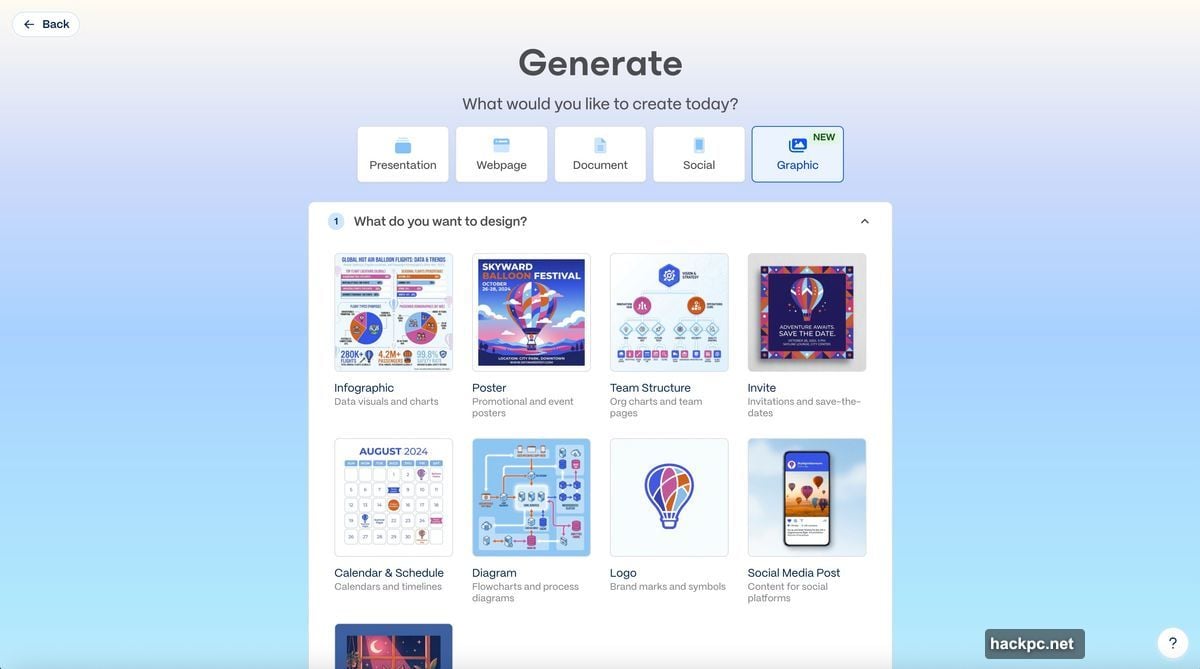
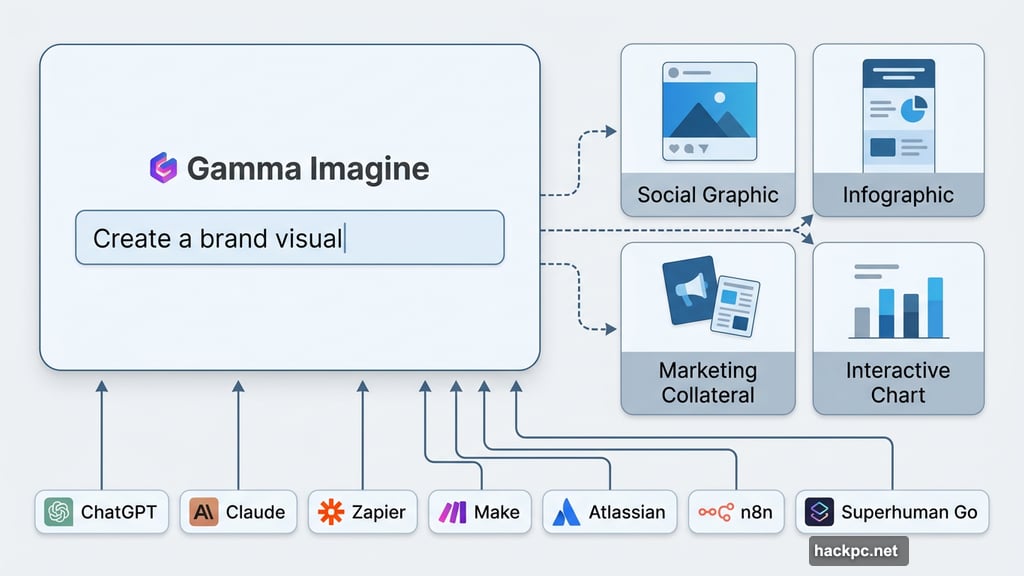
So what can you make with it? Quite a lot, actually. Gamma Imagine lets users type in a text prompt and generate brand-specific visuals from scratch. Think interactive charts, social graphics, marketing collateral, and infographics — all created through AI rather than manual design work.
The platform already offers more than 100 templates to work alongside these new tools. Plus, Gamma is plugging into a serious lineup of third-party integrations to power its data-driven features. The list includes ChatGPT, Claude, Zapier, Make, Atlassian, n8n, and Superhuman Go.
That’s a lot of connectivity for a single creative platform.
The Gap Gamma Is Trying to Fill
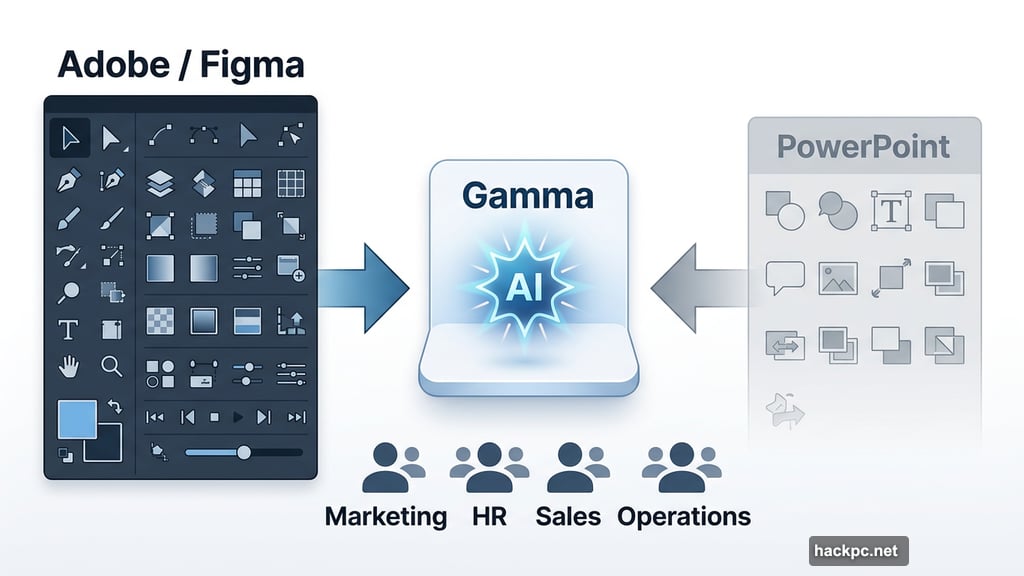
Gamma CEO and co-founder Grant Lee has a clear thesis about where the product fits. He told TechCrunch that the company sees itself sitting comfortably between two worlds: the professional-grade complexity of Adobe and Figma on one end, and the aging simplicity of Microsoft PowerPoint on the other.
“We think we can serve the very long tail of knowledge workers and business professionals whose demand for their job is to communicate visually, but they just don’t have the tools,” Lee said.
That middle ground is genuinely huge. Most people in marketing, operations, HR, and sales need to create good-looking visuals regularly. But they aren’t designers, and hiring one for every slide deck or social post isn’t realistic. Lee’s argument is that AI-native tools can bridge that gap in a way that legacy software never could.
It’s a compelling pitch. And Gamma has been building toward it since they started working closely with early users who kept running into the same problem — they needed more than just presentations.
70 Million Users and Growing Fast
Gamma isn’t a scrappy newcomer making bold claims from a garage. Last November, the company raised $68 million in a Series B round led by Andreessen Horowitz (a16z), landing a valuation of $2.1 billion. At that point, Gamma reported $100 million in annual recurring revenue and 70 million users.
Now? The company says it’s approaching 100 million users.
That growth rate matters here. Canva built its dominance by making design accessible to non-designers, and it’s done extraordinarily well. But Gamma is betting that an AI-first approach can outpace what Canva built with templates and drag-and-drop tools.
Why This Moment Makes Sense
The timing isn’t random. AI image generation has matured rapidly over the past two years. Tools that once produced blurry, off-brand results now handle precise branding requirements with impressive accuracy. Businesses that previously dismissed AI-generated visuals are taking another look.
For Gamma, launching Imagine right now means riding that shift at the right moment. The integrations with ChatGPT and Claude also hint at something bigger — AI agents that could theoretically generate a full marketing campaign, complete with copy and visuals, from a single brief.
That’s still aspirational. But the building blocks are clearly being put in place.
Can It Actually Challenge Canva and Adobe?
Canva has over 200 million users and a deeply embedded presence in teams around the world. Adobe has decades of professional trust and an ecosystem most agencies depend on. Neither is going to panic over one product launch.
But Gamma doesn’t need to replace either to win. It needs to own the middle — the business professional who wants something better than PowerPoint but has no interest in learning Illustrator. That’s a massive audience, and it’s one that both Canva and Adobe have historically underserved.
If Gamma Imagine delivers on its promise of fast, brand-accurate visuals through simple text prompts, it becomes genuinely useful for a lot of people who currently cobble together graphics from stock templates and hope for the best.
The product launch itself is just the starting point. What matters next is whether the output quality holds up at scale and whether teams actually build it into their workflows. With 100 million users already in the ecosystem and serious backing from a16z, Gamma has the runway to iterate fast. The design tool market is about to get a lot more competitive.




Comments (0)