

Mozilla just made a bold move. Starting with Firefox version 149, the browser will include a free VPN service baked right in — no separate app, no paid subscription required.
It sounds exciting. But before you ditch your current VPN, there are some important limits worth knowing about.
Firefox VPN Goes Free With Version 149
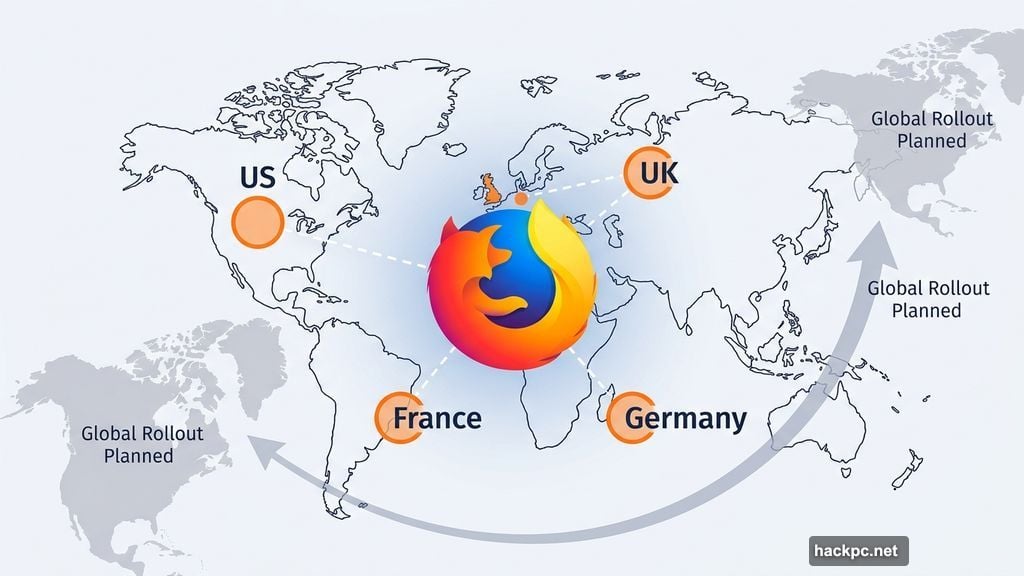
Mozilla’s Firefox VPN was previously a standalone paid product. Now it’s coming directly inside the browser itself, launching first in the US, UK, France, and Germany, with a wider global rollout planned down the road.
Users who opt in get 50GB of free monthly data. That’s a solid chunk for everyday browsing. The service masks your IP address and location while you surf the web through Firefox.
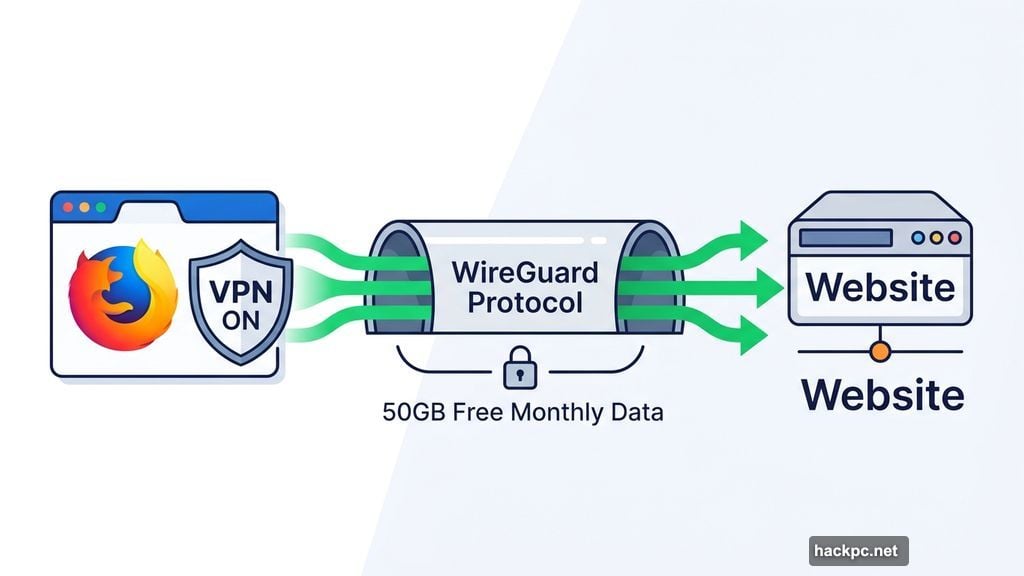
And it’s not built from scratch on shaky ground. Mozilla’s VPN technology has gone through independent security audits by Cure53, uses the WireGuard protocol, and has a track record of addressing security issues over time. WireGuard is well-regarded in the VPN world for being fast and lean without sacrificing security.
The Big Catch: Browser-Only Protection
Here’s where things get a little complicated, and it’s worth paying close attention.
The Firefox VPN only protects traffic running through the Firefox browser. Everything else on your device — other apps, system processes, background network activity — stays completely exposed.
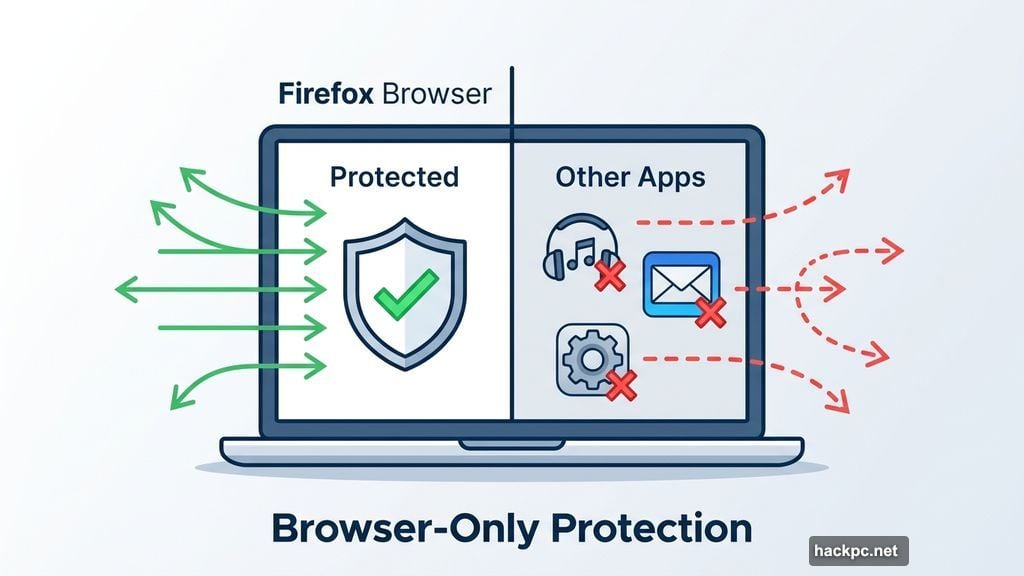
Jacob Kalvo, cybersecurity expert and CEO of Live Proxies, explained it clearly: “The fundamental limitation is scope. It only protects browser traffic, not apps, system processes or other network activity. That creates a false sense of ‘full protection’ for less technical users.”
So if you’re streaming music, checking email through a desktop app, or running anything outside Firefox, none of that traffic is covered. A standalone VPN app protects your entire device. This does not.
How Does It Stack Up Against Other Free VPNs?
Free VPNs have a rough reputation — and honestly, much of it is deserved. Sketchy providers have been caught logging user data, injecting ads, or leaving security holes wide open. Mozilla acknowledges this directly, noting in their Firefox 149 announcement that free VPNs can involve “sketchy arrangements that end up compromising your privacy.”
Their argument is that Firefox VPN is different because it’s built on Mozilla’s established data principles and existing privacy commitments.
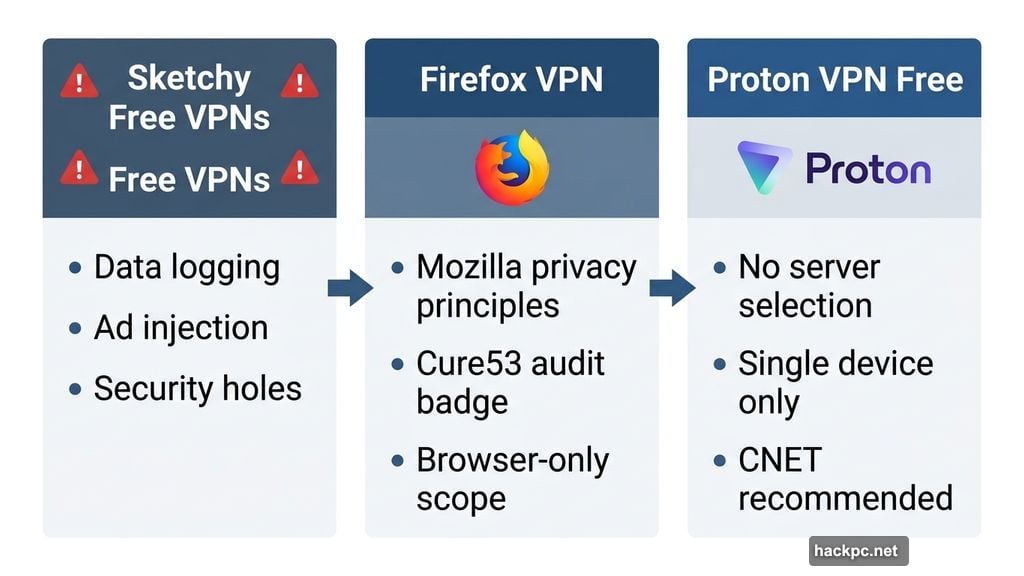
That’s a fair point. Mozilla does have a stronger privacy track record than most free VPN providers. Still, it’s unclear whether they plan to pursue any independent audit specifically for this browser-integrated version.
Currently, the only free VPN that CNET recommends is Proton VPN’s free tier. Even that comes with limitations — you can’t manually pick a server, and you can’t connect multiple devices at once. Firefox’s offering enters a competitive space with real trade-offs of its own.
Who Should Actually Use This
Kalvo says the 50GB monthly data allowance is genuinely generous for a browser-based VPN. For light, casual browsing — checking news, shopping, using public Wi-Fi at a coffee shop — this could be a perfectly reasonable layer of protection.
But for anything more serious, it’s a different story. Kalvo is clear that for “sensitive data, competitive intelligence, or large-scale operations,” this isn’t the right tool. His summary puts it well: “This is a controlled, limited-use product rather than a full privacy solution.”
Think of it like putting a lock on your front door while leaving the back windows open. Better than nothing, but not the complete security picture you might assume.
Worth Trying, Worth Understanding
Mozilla rolling a free VPN into Firefox is a genuinely interesting move, and the WireGuard foundation gives it more credibility than most free VPN offerings you’ll stumble across online. For users who don’t already use a VPN and mostly need protection while browsing, this is a low-friction way to get started.
Just go in with realistic expectations. If you work with sensitive information, use apps that need network protection, or want full-device coverage, a dedicated VPN service is still the smarter call. Firefox’s built-in option is a useful feature for the right person — but it’s not a complete replacement for a proper VPN.




Comments (0)