

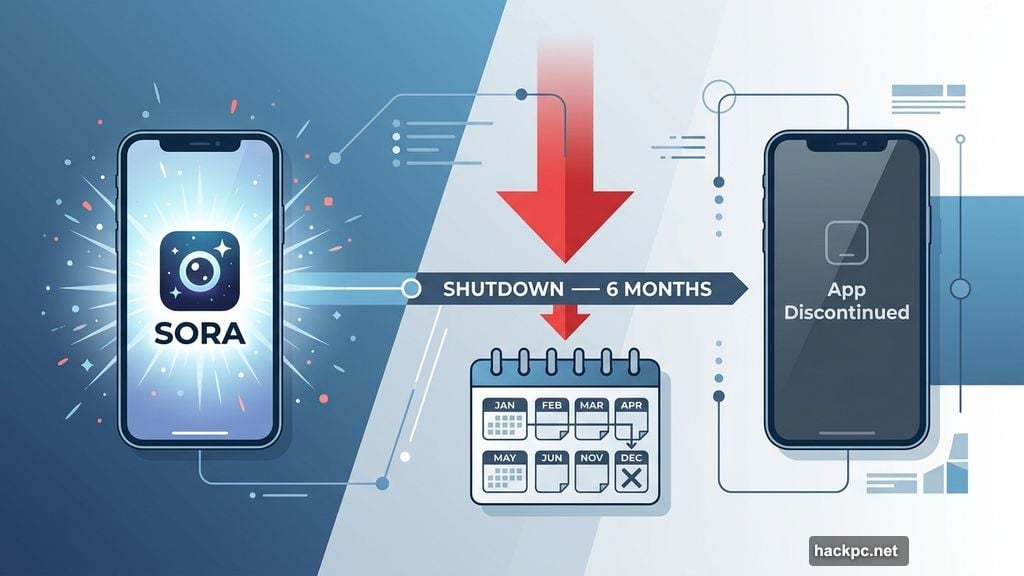
OpenAI just pulled the plug on Sora. Six months after launching the app, the company is shutting it down — and winding down most of its video AI work along with it.
That’s a fast exit for a product that arrived with serious fanfare. But the decision reveals a lot about where OpenAI is headed, and it raises some uncomfortable questions about the entire AI video industry.
Sora Was Never Really a Product People Needed
Let’s be honest about what Sora the app actually was. It was essentially a social network with no people in it — just AI-generated video clips filling your feed.
TechCrunch’s Anthony Ha described it bluntly on the Equity podcast as “nothing but slop.” That’s a harsh take, but it captures a real problem. A social experience only works when real humans bring meaning to it. Remove the people and you’re left with a very expensive screensaver.
But the shutdown goes deeper than just the app. According to the Wall Street Journal, which broke the story, OpenAI is broadly stepping back from video as it refocuses on enterprise tools, business software, and productivity products. A consumer social app built around AI-generated video simply doesn’t fit that roadmap — especially with a potential IPO on the horizon.
The ChatGPT Lightning Doesn’t Strike Twice
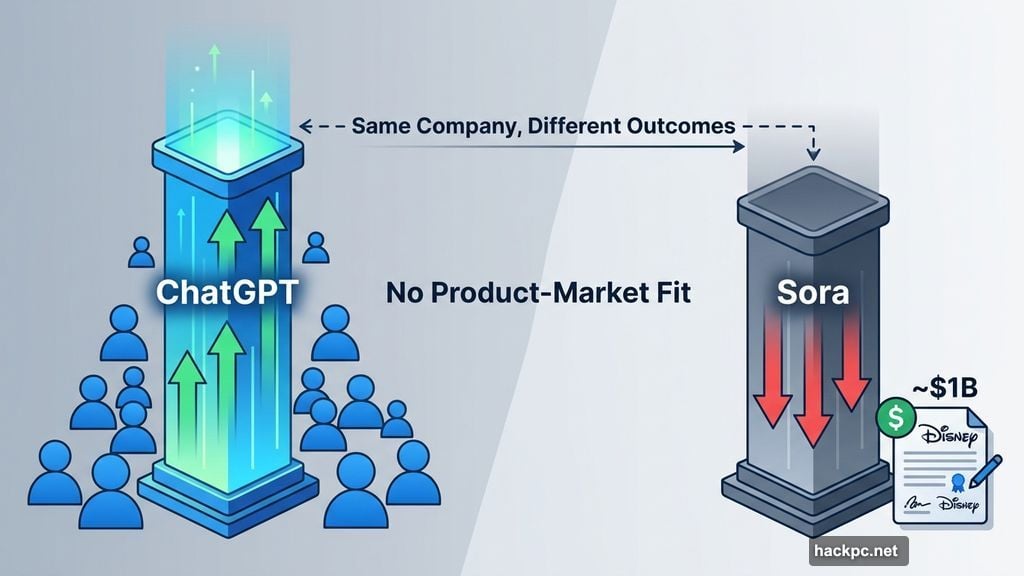
Sean O’Kane made a sharp observation on the podcast. OpenAI’s success with ChatGPT involved genuine product-market fit, yes — but also a significant element of timing and luck.
ChatGPT hit something real. People kept using it, kept coming back, and found genuine value in it over years of development. Sora never found that connection.
There was a swagger behind Sora’s launch that, in hindsight, looked a lot like overconfidence. The attitude seemed to be: “We built the most successful consumer product ever. Now we’re doing it again.” The Disney partnership, worth a reported billion dollars, amplified that energy. But deals and press releases don’t make users care.
So when Sora failed to generate the same kind of organic enthusiasm that ChatGPT did, the gap between expectation and reality became hard to ignore.
Generative Video Faces Bigger Walls Than Anyone Admitted
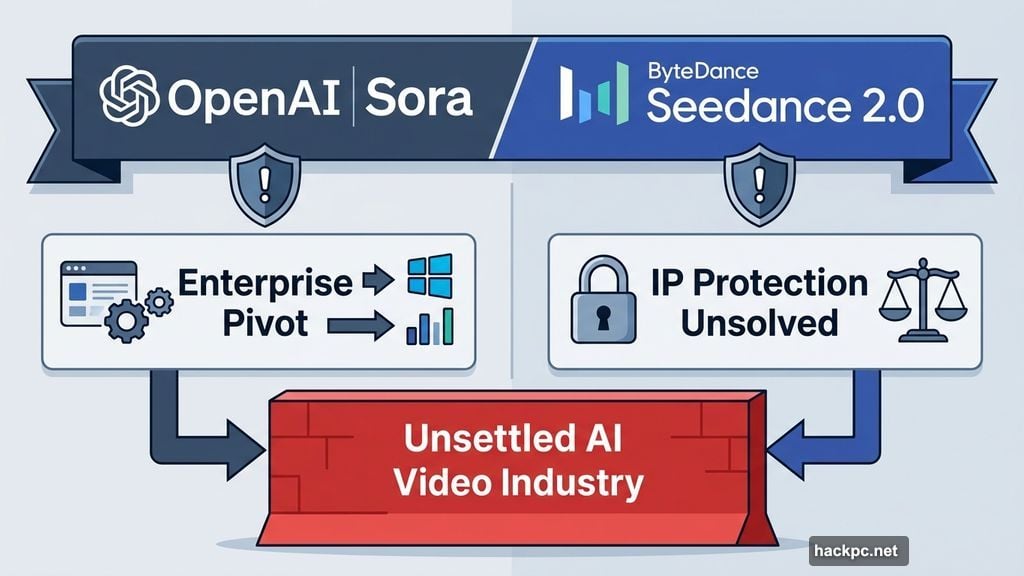
Sora’s exit isn’t happening in isolation. ByteDance reportedly delayed the worldwide launch of Seedance 2.0, its generative AI video model, over engineering and legal concerns. Specifically, the company is still figuring out how to build meaningful intellectual property protections into the system — something they apparently hadn’t prioritized earlier.
Together, these two stories form a pattern. The AI video space got ahead of itself. Technical limitations are real. Legal frameworks around IP, training data, and content rights remain genuinely unsettled. And consumer appetite for AI-generated video content hasn’t materialized the way boosters predicted.
Remember those claims from within Hollywood — that AI video would replace traditional filmmaking, that the future was just typing prompts to generate feature films? Those statements look very different now. As Ha put it on the podcast, “for all kinds of technical and legal reasons, it is not that easy and we are very, very far from that happening.”
That’s not a cynical take. It’s just an honest one.
Killing Sora Was Actually the Right Call
Here’s something worth saying clearly: OpenAI made a good decision.
Kirsten Korosec argued on the podcast that shutting down Sora showed “a sign of maturity that was nice to see in an AI lab.” She’s right. The tech industry talks a lot about moving fast and iterating, but many companies cling to failing products far longer than they should. Sunk cost thinking is everywhere.
OpenAI invested real money here. The Disney deal alone was enormous. Walking away from that isn’t easy. But continuing to pour resources into a product that doesn’t serve your core strategy just because you already spent the money? That’s how companies drift.
The decision also appears connected to broader changes inside OpenAI. Fidji Simo recently stepped in to run day-to-day operations, with significant influence over consumer products. Several notable decisions have followed since then. It’s still too early to fully assess what that leadership shift means, but Sora’s shutdown is clearly part of a larger pattern of strategic tightening.
What This Moment Actually Means for AI Video
The hype around AI video was always running ahead of the reality. That’s not unusual for emerging technology — overpromise, underdeliver, recalibrate.
But the Sora shutdown and the Seedance delay arriving at nearly the same time sends a clear signal. Building compelling, legally sound, technically reliable AI video tools is genuinely hard work. The era of breathless announcements needs to make room for boring, careful execution.
OpenAI is placing its bets on enterprise software and business tools. Other AI video companies will continue building. Some will find real use cases — professional video production, advertising, educational content — where AI video genuinely saves time and money without needing to replace Hollywood storytelling entirely.
The companies that survive this recalibration won’t be the ones that promised the most. They’ll be the ones that found something people actually need, built it with legal guardrails in place, and stuck around long enough to see it work.


Comments (0)