
Imagine posting a YouTube Short without ever touching a camera. No lighting setup, no reshooting awkward takes, no staring into a lens hoping you look okay. Just your digital twin doing the work while you sip coffee somewhere else.
That’s not science fiction anymore. YouTube just rolled out an AI avatar tool that lets creators build a digital clone of themselves, one that looks like you, sounds like you, and can star in your Shorts without you lifting a finger.
Your Digital Twin Is Ready for Its Close-Up
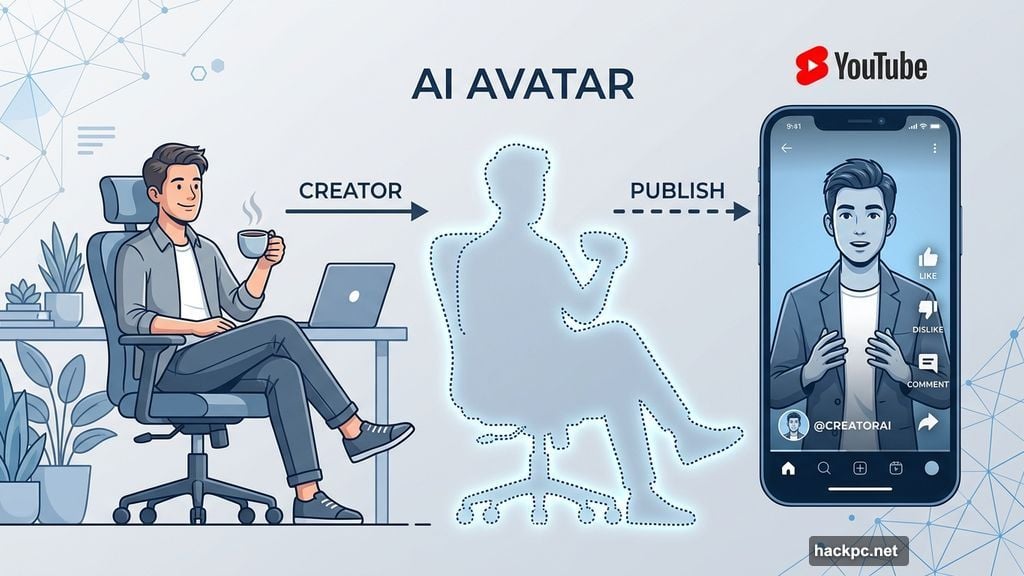
The feature works by creating what YouTube calls an avatar, essentially a digital version of you built from your likeness. Once set up, that avatar can appear in YouTube Shorts on your behalf.
Google describes it simply: “Avatars create a digital version of yourself so you can generate videos that look and sound like you, safely and securely.”
So if you’re a creator who’s camera-shy, busy, or just exhausted from production cycles, this tool hands you a surprisingly powerful shortcut. Plus, viewers still see a face that matches your brand. Your presence stays consistent even when you’re not actually present.
Who Controls the Clone?
This is the question most people ask first. And honestly, it’s the right one.
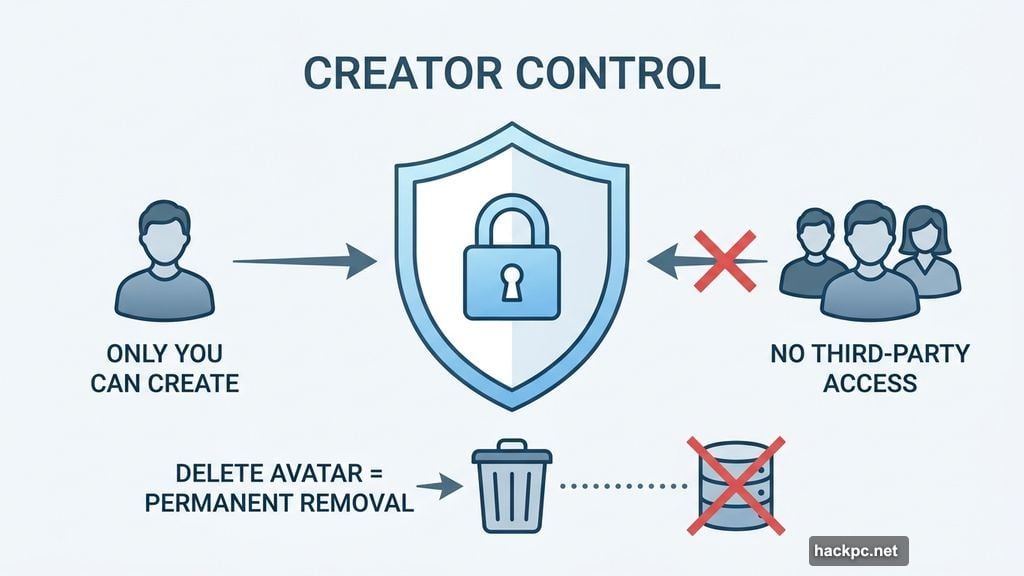
YouTube’s answer is pretty clear. Only you can create and use your avatar. Nobody else gets access to it. A Google spokesperson confirmed that “only the user themselves can create and control their avatar. No one else can use it.”
There’s one nuance worth knowing. If you opt your videos into YouTube’s remix feature, other users can remix content that includes your avatar. But here’s the key detail: they can remix the video, not control or alter the avatar itself. Your digital likeness stays yours.
And if you ever want out? Delete the avatar, and YouTube permanently removes both your selfie video and your voice recording data. No lingering copies sitting on a server somewhere.
AI Labels Keep Things Transparent
Every Short featuring an AI avatar gets labeled as AI-generated content. YouTube isn’t hiding the ball here.
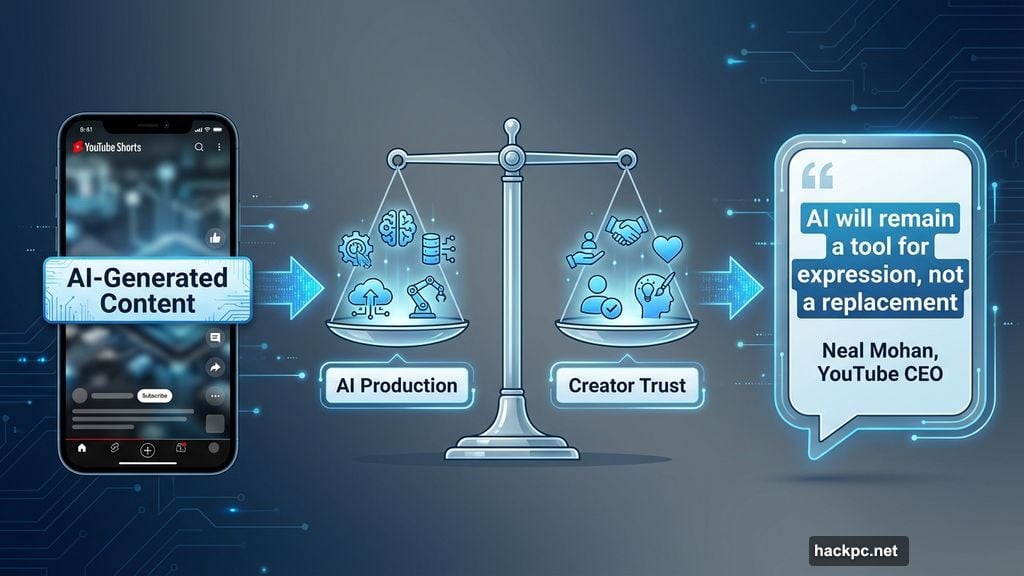
That matters more than it might seem. As AI-generated content spreads across social platforms, audiences are getting more skeptical about what’s real. Transparent labeling helps maintain trust between creators and their communities.
YouTube CEO Neal Mohan has previously stated that “AI will remain a tool for expression, not a replacement” on the platform. The avatar feature seems designed with that philosophy in mind. It’s still your voice, your face, your channel. The AI just handles some of the production heavy lifting.
YouTube’s Complicated Relationship With AI Content
Here’s where things get interesting. YouTube has been wrestling with AI-generated content for a while now, and not always successfully.
Deepfakes, AI-voiced commentary, synthetic music, generated thumbnails. The platform has struggled to keep pace with how fast this technology moves. Policing AI content at scale is genuinely hard, and YouTube has admitted as much.
Yet the platform keeps adding more AI tools anyway. That might sound contradictory, but there’s a logic to it. By building official, labeled, user-controlled AI features, YouTube creates a sanctioned lane for this kind of content. Creators who want to use AI do so through tools the platform can actually monitor and label.
It’s a strategy of managing AI proliferation rather than fighting it.
What This Actually Means for Creators
If you run a YouTube channel, this tool opens up some real possibilities. Creators who produce high volumes of content could dramatically reduce filming time. Non-native English speakers could use their avatar while their content gets translated. Creators with physical limitations that make frequent filming difficult now have a genuine alternative.
But the most interesting use case might be scale. A creator who currently posts twice a week could potentially push that cadence much higher without burning out. Consistency matters enormously on YouTube’s algorithm, and anything that helps maintain consistent output has real strategic value.
The flip side? Audiences may start wondering how much of their favorite creator they’re actually watching. That’s a conversation the broader creator community will need to have openly, and soon.
For now, YouTube’s avatar tool represents something genuinely new. A production workaround that keeps your face in the frame, even when you’re nowhere near a camera.

Comments (0)