
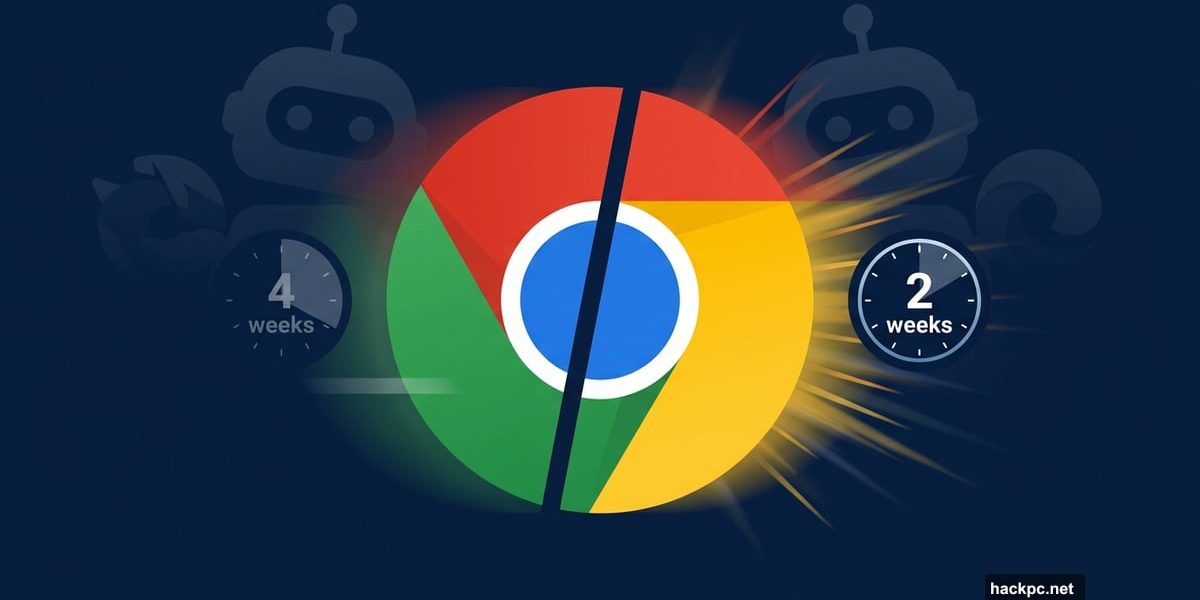
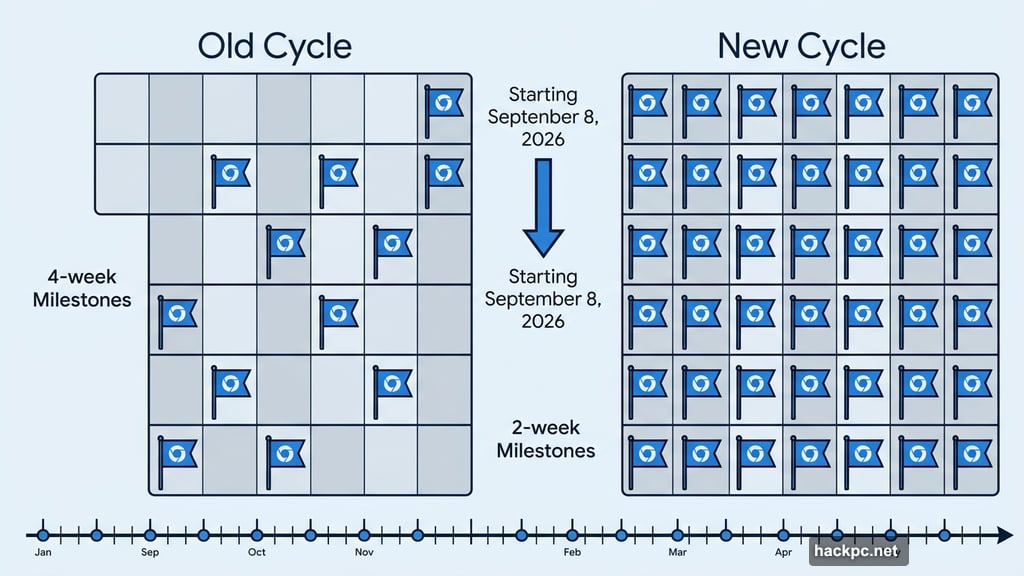
Google just announced a pretty big change to how Chrome ships updates. Starting September 8, 2026, Chrome moves from a four-week release cycle to a two-week cycle. That means new milestones in stability, speed, and ease of use will arrive twice as fast as they do today.
On paper, it sounds like a routine engineering decision. But the timing tells a more interesting story.
AI-Powered Browsers Are Knocking on Chrome’s Door
For years, Chrome sat comfortably at the top of the browser market. No serious challenger came close. Then AI companies started paying attention to the browser itself, not just the web.
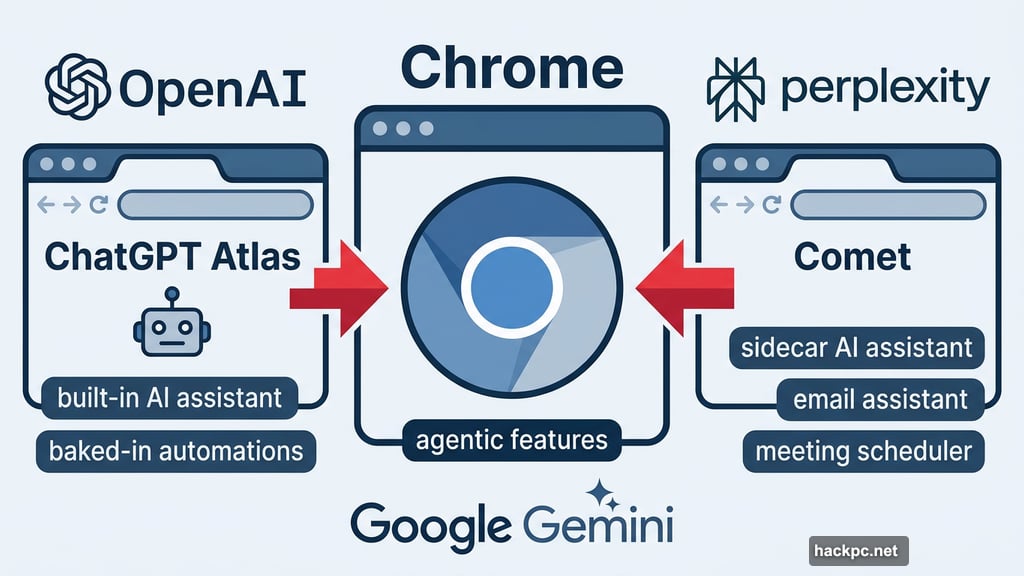
OpenAI’s ChatGPT Atlas browser ships with a built-in AI assistant and baked-in automations. Perplexity’s Comet browser goes a step further, offering a sidecar AI assistant for everyone, plus an email assistant and meeting scheduler for paid users. These aren’t just search tools bolted onto a browser. They’re trying to rebuild the whole browsing experience around agentic features that handle tasks on your behalf.
So Chrome suddenly has real competition for the first time in a long time. And the pressure is real.
Google Says It’s Not About AI. Sure.
Google told TechCrunch the faster release schedule reflects the “ever-changing web platform.” The company wants developers to access new tools and improvements faster. Totally reasonable explanation.
But it’s hard to ignore what’s happening around it. Google has been aggressively rolling Gemini deeper into Chrome, including its own set of agentic features for autonomous browsing. The company is clearly not standing still while OpenAI and Perplexity try to eat its lunch.
Also worth noting: Chrome already introduced weekly security updates back in 2023. So the infrastructure for faster shipping already existed. Moving milestone releases to two weeks feels like a natural next step, competitive pressure or not.
What This Means for Regular Users
For most people, this change is invisible. Chrome updates quietly in the background. You won’t feel a two-week cycle differently from a four-week one.
But the improvements will stack up faster. If Google ships a speed boost or a smoother tab management feature, you’ll see it two weeks sooner than you would have before. That’s genuinely nice, even if it’s hard to notice day to day.
Developers get the bigger benefit here. Faster access to new web platform tools means they can build and test against current Chrome features more quickly. Less waiting around for APIs and capabilities to officially land.
Who Gets Left Out of the Fast Lane
Not everyone moves to the new schedule. Google is keeping some tracks exactly as they are.
The Dev and Canary channels, which already run ahead of stable releases, stay unchanged. Enterprise admins and Chromium embedders keep their Extended Stable option on an eight-week cycle. That matters for large organizations that need extra time to test updates before deploying them across thousands of machines. Chromebook users also keep access to that slower track.
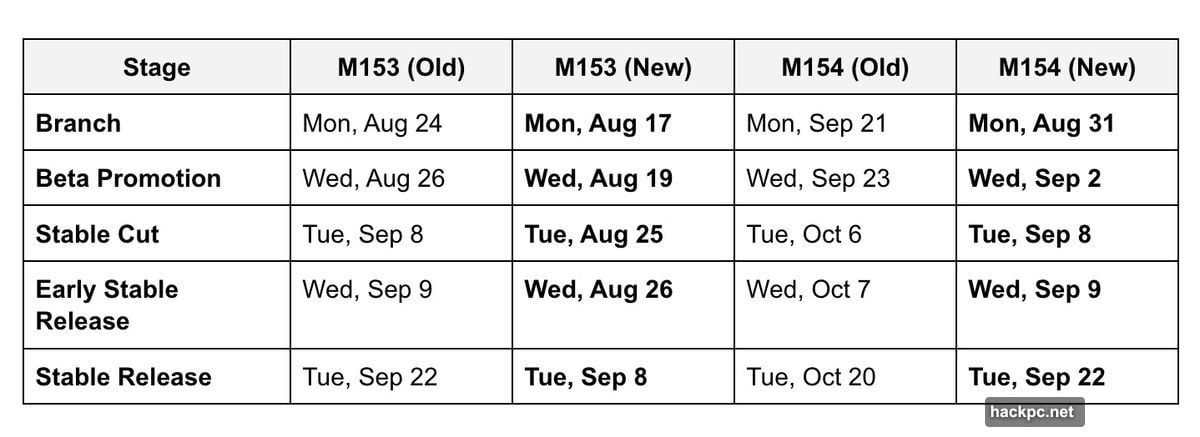
So the two-week cadence applies to beta and stable Chrome across desktop, Android, and iOS. Version 153 is the first to ship on the new schedule, dropping September 8.
The Browser Wars Just Got More Interesting
What’s fascinating about this moment is that Chrome’s dominance always seemed untouchable. It wasn’t. It just hadn’t met a serious challenger yet.
AI browsers from OpenAI and Perplexity are genuinely different products, not just Chrome clones with a chatbot tacked on. They’re built around the idea that your browser should do things for you, not just display pages. That’s a compelling pitch, and it’s clearly making Google move faster.
Whether faster Chrome releases translate into better Chrome features remains to be seen. Speed of shipping doesn’t automatically mean quality of shipping. But the competitive urgency is real, and frankly, users tend to benefit when big players feel the heat.
The browser market just got more fun to watch.




Comments (0)