
Identity theft is no longer a rare, dramatic crime. It’s happening constantly, quietly, and at massive scale.
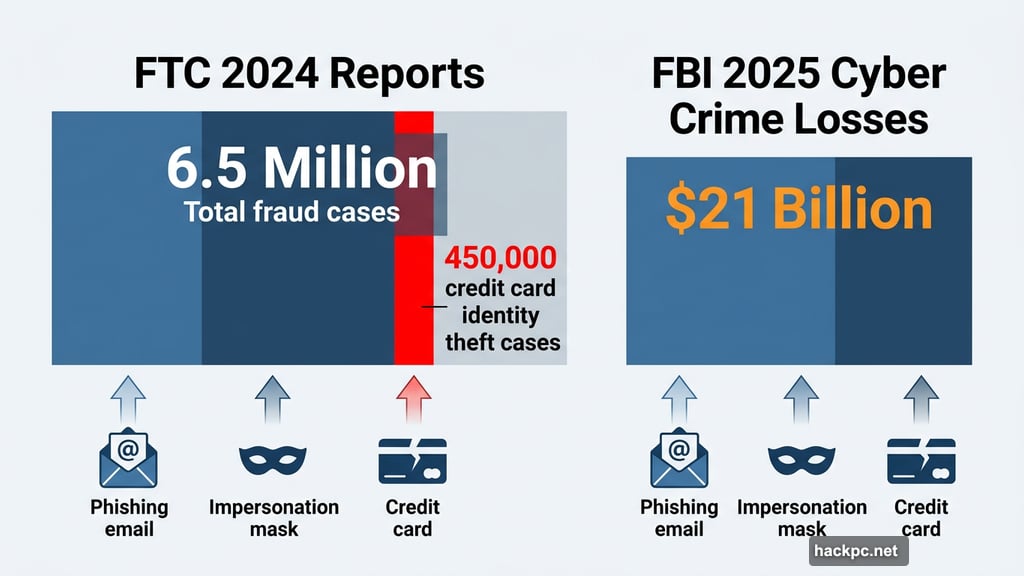
The FTC logged 6.5 million fraud and identity theft reports in 2024 alone, including nearly 450,000 cases of credit card identity theft. Meanwhile, the FBI reported that cyber-enabled crime losses in the US hit close to $21 billion in 2025, driven by phishing scams, impersonation attacks, and increasingly clever fraud tactics.
So the question isn’t really whether you need protection. It’s whether paying for a dedicated service is worth it, and if so, which one actually delivers.
We tested eight of the top identity theft protection services available in 2026 to help you figure that out.
What These Services Actually Do
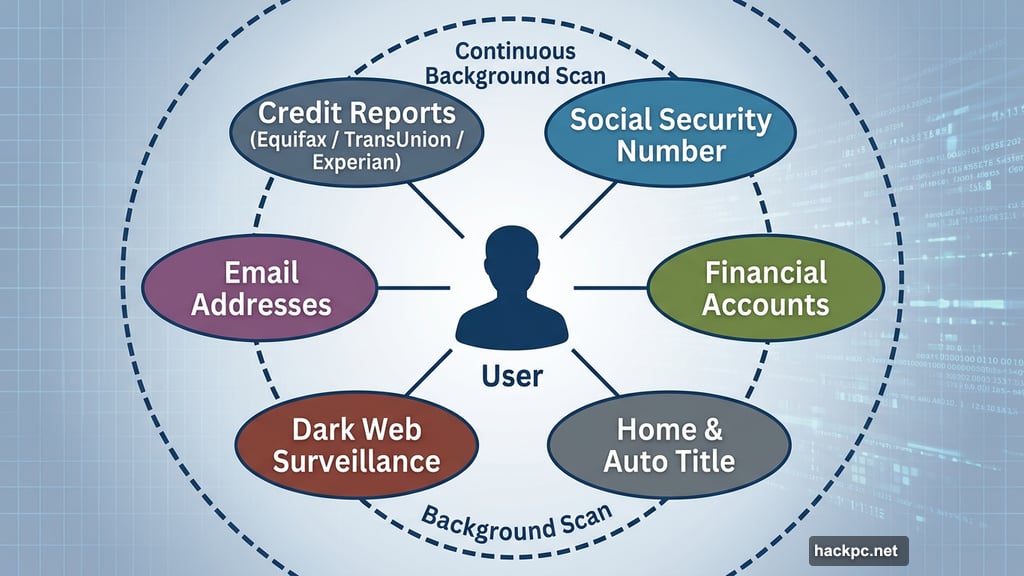
Think of identity theft protection as a continuous background scan for your personal data. These services monitor your credit reports, Social Security number, email addresses, financial accounts, and even the dark web for signs that your information is being misused.
When something suspicious turns up, such as a new account opened in your name or a leaked password appearing for sale online, you get an alert. Then the service helps you respond, either by guiding you through next steps or by doing the heavy lifting for you.
Cybersecurity expert Adam Levin puts it plainly: “ID theft is the third certainty in life after death and taxes. To an ID thief, we are their day job.”
That said, these services don’t prevent theft outright. What they offer is speed and support. They catch problems earlier and help you deal with them faster than you would on your own.
Aura: Best Overall Choice
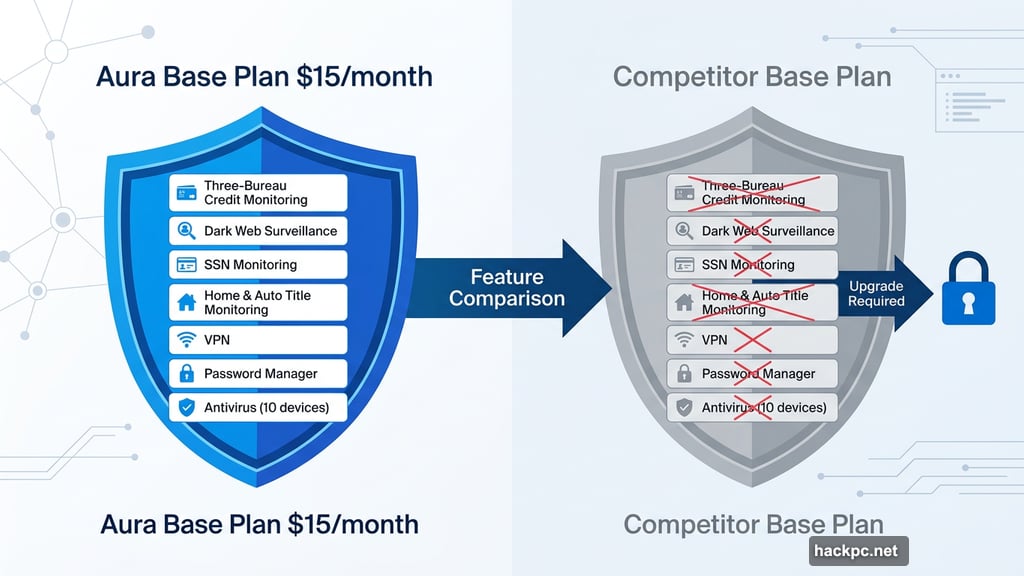
Aura earns our top spot because it packs more features into its base plans than most competitors. Starting at $15 a month for individuals, you get three-bureau credit monitoring (checking Equifax, TransUnion, and Experian), dark web surveillance, SSN monitoring, home and auto title monitoring, and a VPN, password manager, and antivirus for up to 10 devices per adult.
Most services make you upgrade to unlock those extras. Aura includes them from the start.
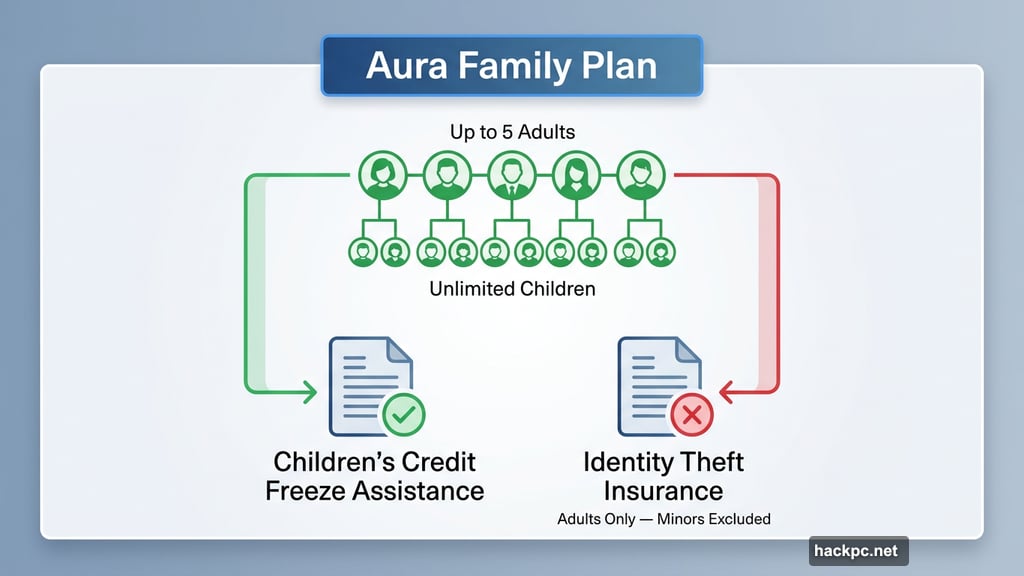
The family plan is especially strong, covering up to five adults and unlimited children. Parents can also get help freezing their children’s credit reports, which is a nice touch. However, identity theft insurance is only available for adults, not minors, so if coverage for your kids matters, keep reading.
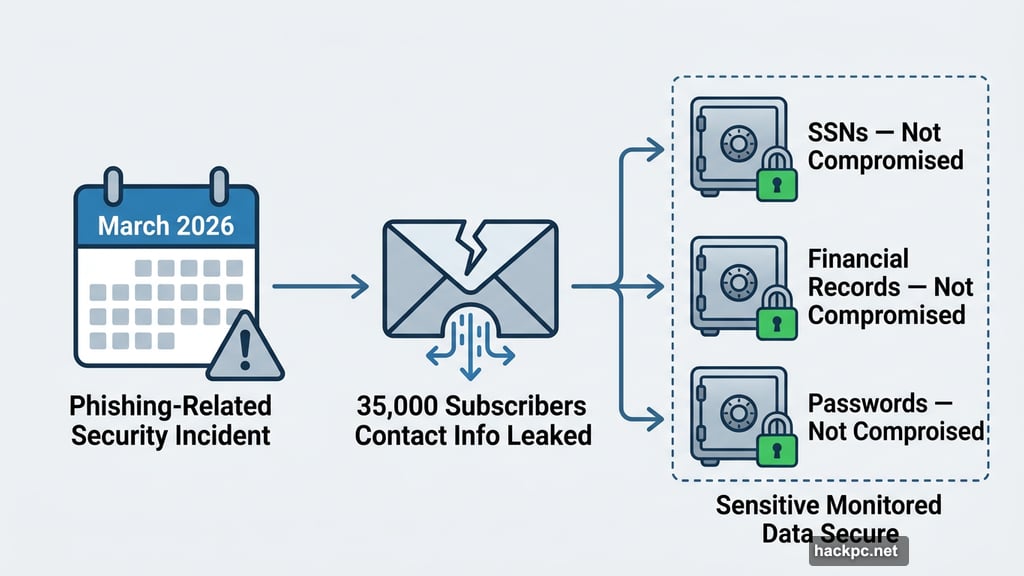
One important note: In March 2026, Aura disclosed a phishing-related security incident that leaked contact information for approximately 35,000 current and former subscribers. The company confirmed that no sensitive monitored data, such as SSNs, financial records, or passwords, was compromised. Given the limited scope, we’re maintaining our recommendation. But if you’d rather explore alternatives, LifeLock and IdentityForce are solid backup choices.
| Individual plans: $15/month | Couples: $29/month | Family: $50/month |
|---|
LifeLock: Most Feature-Rich
LifeLock feels like the premium, everything-included option, and in many ways it is. Beyond the standard dark web and SSN monitoring, you get alerts for Buy Now Pay Later transactions, payday loans, utility fraud, and phone takeover attempts. Some of these monitoring tools simply don’t exist at competing services.
All plans include at least $1 million in identity theft insurance, which is the industry standard. But what sets LifeLock apart for families is that this insurance coverage extends to children. Families can receive up to $25,000 for stolen funds and expenses per child, plus $1 million toward legal and expert fees to help restore a minor’s identity. Aura doesn’t offer this at all.
There’s a catch though. LifeLock doesn’t include a VPN, password manager, or antivirus in its standalone plans. You’ll need to bundle Norton 360 with LifeLock to get those, and that costs extra. For a service that’s already one of the priciest on our list, that feels like a frustrating gap.
| Individual plans: $12–$35/month | Family (2 adults): $36/month | Family (2 adults + 10 kids): $48/month |
|---|
IdentityForce: Best Value for the Middle Ground
If you’re torn between Aura’s value and LifeLock’s depth, IdentityForce sits right in between. Monthly fees land closer to Aura’s pricing, but the feature set leans toward LifeLock territory.
You get up to $2 million in identity theft insurance, which beats both Aura and LifeLock’s standard coverage. IdentityForce also generates a personalized identity safety score and builds a custom action plan based on your specific risk profile. Quarterly credit report summaries are a nice bonus, too, and genuinely useful for catching slow-moving fraud.
The catch? Three-bureau credit monitoring is only available on the pricier UltraSecure Plus Credit tier. The base UltraSecure plan skips credit monitoring entirely, which is a meaningful limitation. Family plans also only cover two adults, compared to Aura’s five.
| Individual plans: $20–$35/month | Family: $25–$40/month |
|---|
IDShield: Best for Identity Recovery Support
IDShield leads the pack on two specific fronts: insurance coverage and recovery support. All plans include up to $3 million in identity theft insurance, the highest figure on our entire list. And if your identity is ever compromised, IDShield assigns a licensed private investigator to your case personally. That’s a meaningful difference from services that hand you a checklist and wish you luck.
The service also monitors medical data and payday loans taken out in your name, which most competitors skip entirely. VPN, antivirus, and a password manager are all included.
The downsides? Family plans only cover people who physically live in your home, which limits flexibility. There are no annual plan discounts, and some cheaper alternatives exist if budget is the priority.
| Individual plans: $15–$20/month | Family (2 adults + unlimited kids): $30–$35/month |
|---|
IdentityIQ: Best for Customization
IdentityIQ works differently than most services. Instead of fixed bundles, you build your own coverage. Every plan lets you add dependents, and you can bolt on antivirus protection, a VPN, credit score tools, and AI finance features for additional fees.
Base plans start as low as $6 per month, and all tiers include some level of credit bureau monitoring plus dark web surveillance and up to $1 million in stolen funds reimbursement. The top Secure Max plan adds $25,000 in identity theft insurance for up to four dependents, making IdentityIQ one of only two services (alongside LifeLock) that offers insurance coverage for minors.
That flexibility is genuinely useful if your needs don’t match a pre-packaged plan. But it can get expensive quickly if you add several features, and the lack of advertised family plans makes pricing harder to compare upfront.
| Individual plans: $8.49–$31.49/month | Annual plans: $87–$321 |
|---|
Identity Guard: Best Value for Large Families
Identity Guard is owned by Aura, and it shows. It’s a more streamlined version of the parent company, with a stronger focus on value for families.
What makes it stand out is coverage width. Even the cheapest family plan, at just $15 a month, covers five adults and unlimited children. Most competing family plans top out at two adults. The Ultra family plan at $40 per month is also significantly cheaper than comparable tiers from Aura and LifeLock.
The tradeoffs are real, though. White glove restoration, the service where a fraud specialist handles recovery for you, is only available on the Ultra tier. Most advanced monitoring features are similarly gated. And unlike Aura, there’s no VPN or antivirus available.
| Individual plans: $8–$30/month | Family: $15–$40/month |
|---|
Zander: Best Budget Option
Zander keeps things simple and affordable. Individual plans start at $7 per month and cover what we’d call the three essential pillars: SSN monitoring, dark web monitoring, and up to $1 million in identity theft insurance. Family plans go up to $22 per month and cover up to 10 children.
The Elite Bundle adds Experian credit lock, bank and investment account monitoring, a VPN, password manager, and antivirus. For the price, that’s a solid package.
The major gap is credit bureau monitoring. Zander doesn’t offer it at any tier. You’ll need to check your credit reports yourself, which is manageable, but it’s a genuine limitation compared to services that handle this automatically. For about $1 more per month, IdentityIQ’s base plan monitors one credit bureau for you, which may make more sense for some people.
| Individual plans: $7–$12/month | Family: $13–$22/month |
|---|
Experian IdentityWorks: Best Free Option
If you want zero-cost protection, Experian IdentityWorks Basic is genuinely useful. The free tier includes an Experian credit report, a one-time dark web surveillance report, a personal privacy scan that checks people-finder sites for your exposed information, and FICO score monitoring. That’s more than most people realize is available for free.
Paid plans add continuous dark web monitoring, three-bureau credit monitoring, SSN tracing, social media monitoring, and up to $1 million in identity theft insurance with white glove restoration.
However, we wouldn’t recommend paying for Experian IdentityWorks. The user interface is cluttered with ads from financial partners, and the paid tiers lack VPN, antivirus, and password manager tools. For similar money, you can get better coverage with fewer interruptions elsewhere.
| Free | Paid individual: Up to $25/month | Family: $35/month |
|---|
How to Choose the Right Plan
Before picking a service, think through a few questions. Do you need coverage for just yourself, or your whole family? How many adults need to be included? Do you want the service to monitor your credit automatically, or are you fine checking it yourself? And how important is identity theft insurance for your children?
Here’s a simple breakdown based on what you’re looking for:
- Best all-around value: Aura
- Most robust features: LifeLock
- Middle ground pricing: IdentityForce
- Best recovery support: IDShield
- Most flexible plans: IdentityIQ
- Best for large families: Identity Guard
- Tightest budget: Zander
- Cost is zero: Experian IdentityWorks Basic
What Every Good Plan Should Include
Whatever service you choose, three features matter most. First, three-bureau credit monitoring catches fraud that single-bureau monitoring might miss entirely. Second, white glove restoration means a fraud specialist actually does the work of recovering your identity, rather than handing you a list of steps to follow on your own. Third, identity theft insurance covers legal fees, lost wages, and recovery costs when things go seriously wrong.
Beyond those, look at the extras that match your life. If you have kids, check whether minors are covered. If you already use a VPN or password manager, find out whether they’re included in the plan or come at extra cost. And if recovering from identity theft sounds overwhelming, prioritize services like IDShield that assign actual human investigators to your case.
Common Types of Identity Theft to Know About
Understanding what you’re protecting against makes the choice easier. Financial identity theft happens when someone uses your SSN to open accounts or take out loans in your name. Medical identity theft occurs when a thief uses your details to receive medical treatment. Synthetic identity theft, perhaps the most insidious type, stitches together a child’s real SSN with fake information to create an entirely new fake identity used to borrow and default on credit.
Criminal identity theft is exactly as alarming as it sounds: someone commits a crime using your identity, leaving you to explain the record.
These aren’t edge cases. One in five people has experienced some form of identity theft in their lifetime, according to the Bureau of Justice Statistics. Protecting yourself costs far less time and money than recovering without help.
No service eliminates every risk. But the right one catches problems faster, responds smarter, and keeps you from facing the cleanup alone.




Comments (0)