
Anthropic quietly stepped into new territory this week. The AI company behind Claude just launched its first-ever design tool — and it’s not another image generator.
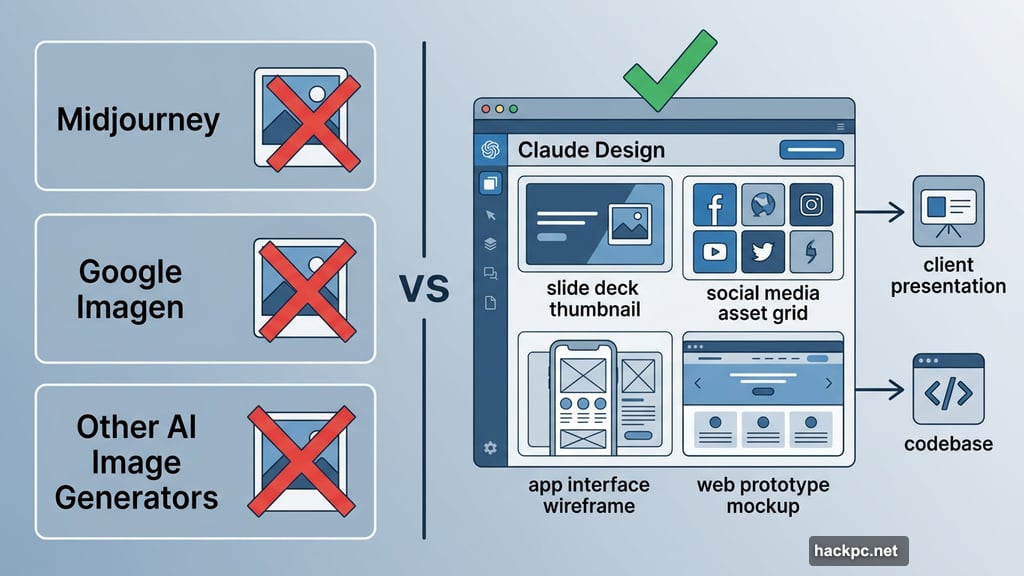
Claude Design arrived Friday, and it’s a genuinely different take on AI-assisted creativity. Rather than generating pictures from text prompts, it helps you build actual work products. Think slide decks, social media assets, app interfaces, and web prototypes. Basically, the stuff you actually need on a Tuesday afternoon at work.
Slide Decks and Brand Kits, Not Anime Art
Claude Design sits in a different category than tools like Midjourney or Google’s Imagen. Those generate standalone images. Claude Design builds functional visual deliverables you can actually put in front of a client or push into a codebase.
The editing controls are practical rather than granular. You can adjust spacing, colors, and layout. You can also leave comments for collaborators — or for Claude itself, which will then make those edits on your behalf. So instead of wrestling with layers and bezier curves, you’re directing an AI assistant through feedback.
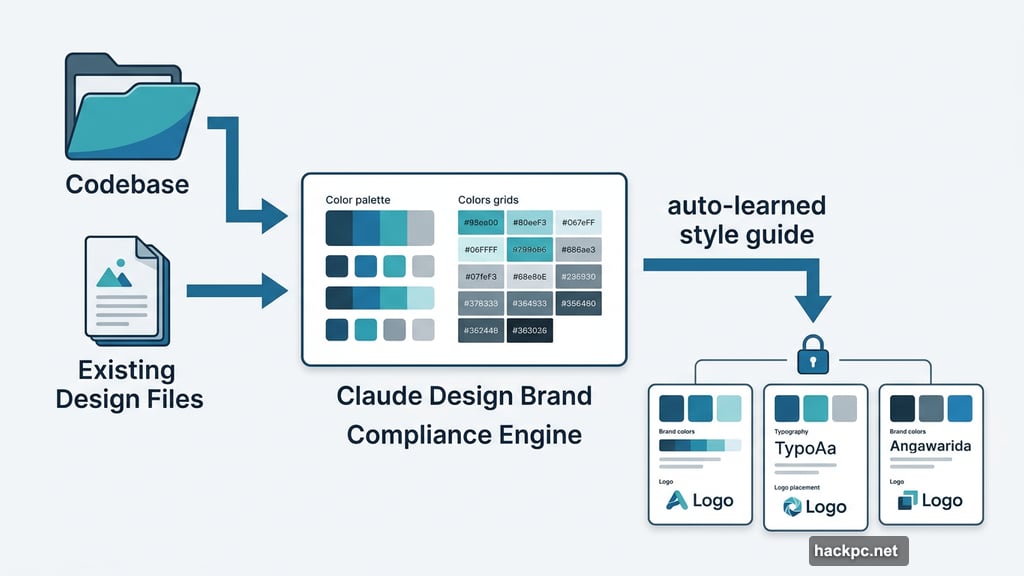
The brand compliance feature stands out as especially useful for teams. Point Claude Design at your codebase and existing design files, and it learns your brand’s style guide automatically. Every asset it creates after that stays on-brand without you micromanaging every color hex code.
Opus 4.7 Powers the Visual Intelligence
Claude Design runs on Opus 4.7, a new model Anthropic released just a day earlier. The key upgrade is stronger visual intelligence — meaning the model does a better job understanding and interpreting images rather than just generating them.
That distinction matters here. Claude Design needs to read your existing design files, understand visual relationships, and produce outputs that fit within established systems. That requires comprehension, not just creation. Opus 4.7 was built with exactly that in mind.
The tool is currently a research preview, so expect rough edges. Anthropic is rolling it out to Pro, Max, Team, and Enterprise subscribers first. It’s experimental by design — the company wants feedback before locking anything in.
Adobe’s Claude Integration Is a Separate Story
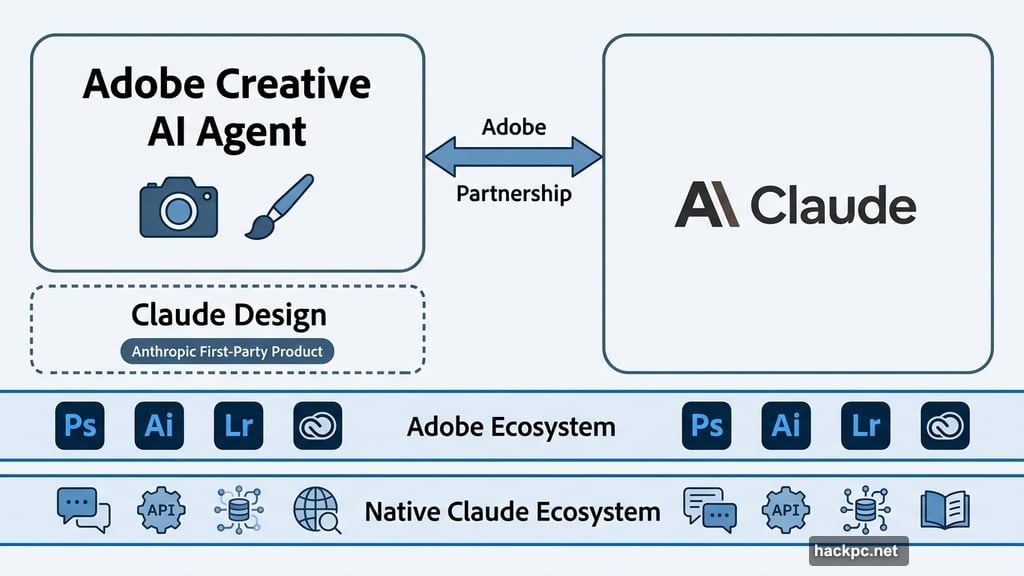
You might have also seen headlines this week about Adobe bringing its creative AI agent to Claude. That’s real, but it’s completely separate from Claude Design.
Adobe’s partnership connects their existing creative AI tools with Claude’s reasoning capabilities. Claude Design, on the other hand, is Anthropic’s own first-party product. The two can coexist without overlap — one comes from Adobe’s ecosystem, the other is native to Claude’s.
Why Workplace Design Makes Sense for Anthropic
Anthropic has always positioned Claude as a professional and technical tool. It’s the AI assistant that coders, analysts, and business teams reach for. Claude Code already lets developers generate and manage entire codebases through conversation.
So a design tool focused on slide decks and web interfaces fits that identity perfectly. It extends Claude’s usefulness further into the daily workflow of knowledge workers. It’s not chasing the consumer creative market that Midjourney and DALL-E occupy.
That positioning also sidesteps some of the messier conversations around AI and creative work. Artists have serious concerns about how image generation models were trained and what happens to their livelihoods when anyone can produce polished visuals instantly. Anthropic isn’t trying to replace illustrators or photographers here. The target user is a product manager who needs a mockup by 3 p.m., not a creative director building a campaign.
Whether Claude Design delivers on that promise depends on how the research preview evolves. But for anyone already living inside Claude’s ecosystem for coding and analysis, having design capabilities baked in feels like a natural next step rather than a stretch into unfamiliar territory.


Comments (0)