
Encrypted email on your phone sounds like a dream. For some Gmail users, it just became reality.
Google has rolled out end-to-end encryption (E2EE) directly inside the Gmail app on both iOS and Android. No extra apps. No third-party portals. Just open Gmail, hit compose, and send an encrypted message straight from your pocket.
But here’s the thing — not everyone gets access. And the subscription tier required puts this firmly in corporate territory.
Mobile E2EE Encryption Arrives in Gmail
Until now, Gmail’s end-to-end encryption only worked on desktop. If you needed to send a sensitive message from your phone, you were out of luck without workarounds.
That changes now. Google confirmed the new feature lets users compose and read encrypted emails entirely within the Gmail mobile app. The announcement specifically highlighted “no need to download extra apps or use mail portals,” which is a genuinely welcome shift for anyone who has wrestled with clunky email encryption workarounds before.
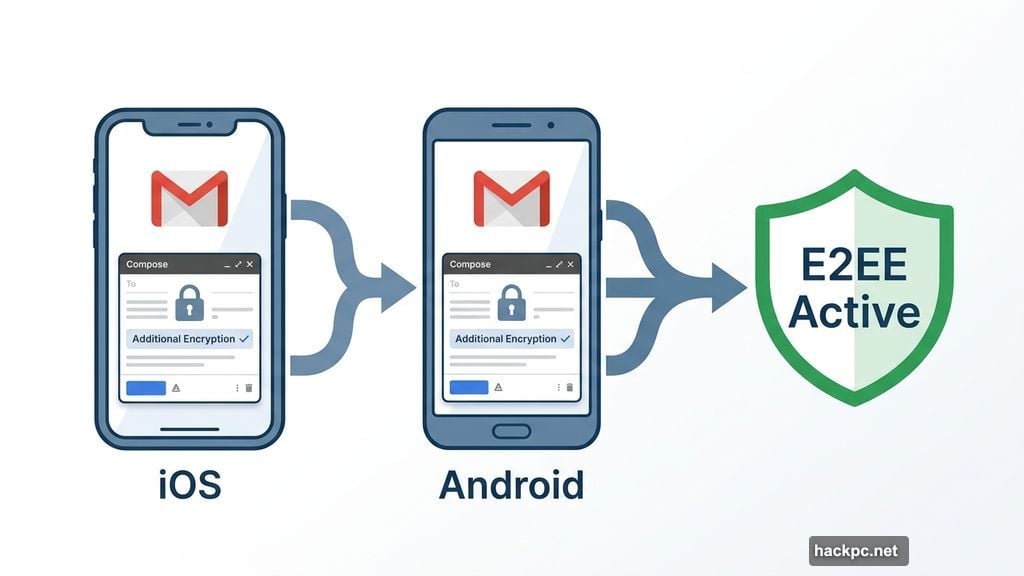
Plus, the encryption works across platforms. If the person you’re emailing also uses Gmail, the encrypted message lands in their inbox looking completely normal. And if they use a different email client entirely — say, the native iPhone Mail app — they can still open, read, and reply to your encrypted message through their browser, with the full conversation staying encrypted throughout.
That cross-platform flexibility matters a lot. Encryption that only works between two Gmail users isn’t all that useful in the real world.
Enterprise Plus Subscribers Only
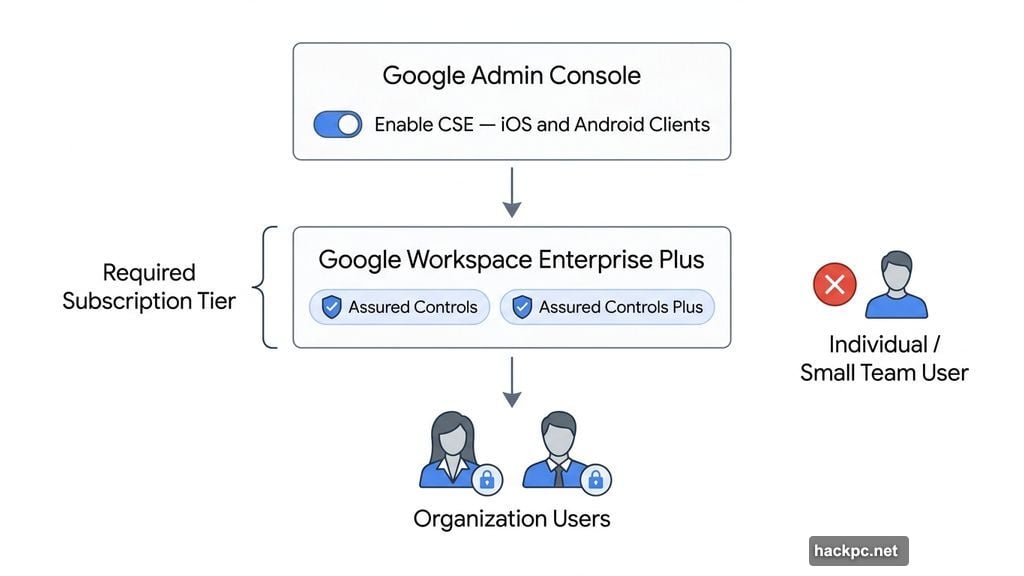
So who actually gets this feature? Right now, it’s limited to Google Workspace Enterprise Plus subscribers who also carry either the Assured Controls or Assured Controls Plus add-on.
Enterprise Plus sits at the top of Google’s Workspace subscription ladder. It’s built for large organizations that need tighter data security and client-side encryption (CSE) — capabilities that the cheaper Enterprise Standard plan simply doesn’t offer. Assured Controls and Assured Controls Plus layer on additional tools for digital sovereignty, data residency, and regulatory compliance.
In plain terms: this is a feature for big companies handling sensitive data, not individual Gmail users or small teams on budget plans.
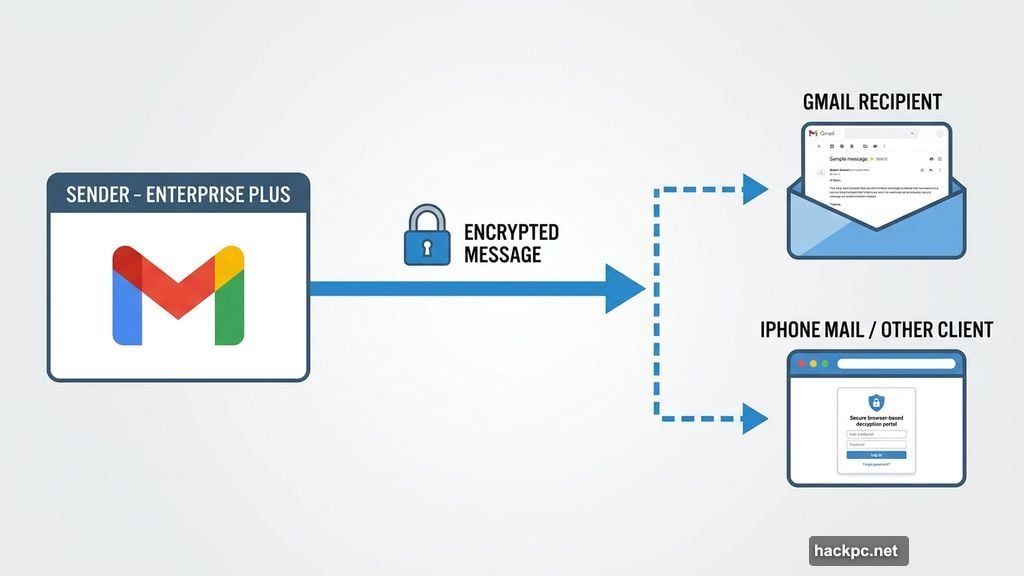
Google framed it that way too, describing the feature as allowing users to “engage with your organization’s most sensitive data from anywhere on their mobile devices while ensuring data remains compliant.”
How to Turn It On
If your organization qualifies, getting started is straightforward. Administrators need to enable Android and iOS clients through the CSE admin interface inside the Admin Console first. That step unlocks access for their Gmail users.
Once enabled, sending an encrypted email is simple. Open a new message, tap the lock icon, select additional encryption, and write your email. The feature works whether you’re on a Rapid Release or Scheduled Release domain.
Proton Mail Offers an Alternative Route
For businesses and individuals who want E2EE email without the Enterprise Plus price tag, Proton is worth a look. Proton Workspace, which launched just last month, offers end-to-end encrypted email with a European home base in Switzerland.
One important caveat: Proton does have to comply with the US CLOUD Act, which means it can be required to hand data over to the US government under certain legal conditions. That’s worth knowing if true data sovereignty is a priority.
For individual users, Proton Mail offers E2EE email encryption on a free plan, with paid tiers that bundle in extras like a VPN and password manager. It’s a solid option if you want encrypted email without being locked into a corporate Google Workspace contract.
Worth the Upgrade?
If your organization already sits on Enterprise Plus with Assured Controls, this is a genuinely useful addition. Secure email from a phone — without juggling extra apps — is the kind of quality-of-life improvement that actually changes how people work.
For everyone else, this feature stays out of reach for now. Google hasn’t signaled plans to bring mobile E2EE to lower-tier plans. So if encrypted mobile email is a priority and Enterprise Plus isn’t in your budget, Proton Mail remains the most practical path forward.
The good news is that options exist. Encrypted email on your phone is no longer a pipe dream — it just depends on which door you walk through to get there.


Comments (0)