

Meta didn’t just hire a few AI engineers last year. The company spent billions assembling one of the most expensive AI teams in the industry. Now, that team has something to show for it.
On Wednesday, Meta unveiled Muse Spark, the first AI model to come out of Meta Superintelligence Labs. And if this is just the opening act, the sequel promises to be a big deal.
Alexandr Wang Leads the Charge
The story behind Muse Spark starts with a massive money move. Meta made a $14.3 billion investment in Scale AI last year. As part of that deal, Scale AI co-founder and CEO Alexandr Wang came aboard to lead the new superintelligence team.
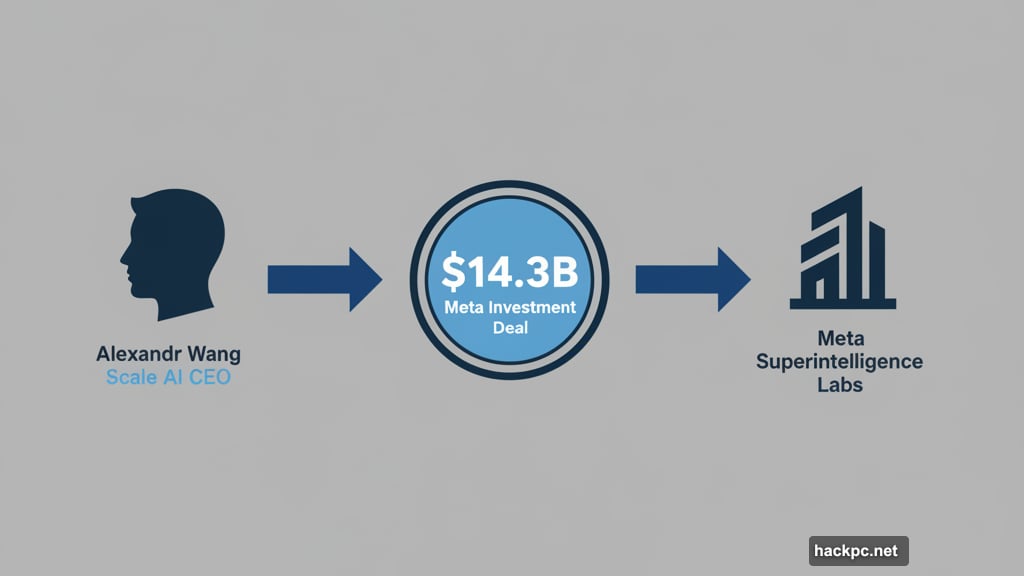
Wang didn’t come alone, either. Meta assembled a roster of high-profile AI developers and researchers, many poached directly from competing firms. Building this team cost a fortune. But Meta clearly decided that staying competitive in AI was worth every dollar.
The result is Meta Superintelligence Labs, a group laser-focused on pushing toward artificial general intelligence, or AGI. Muse Spark is their first public product.
Small Model, Big Ambitions
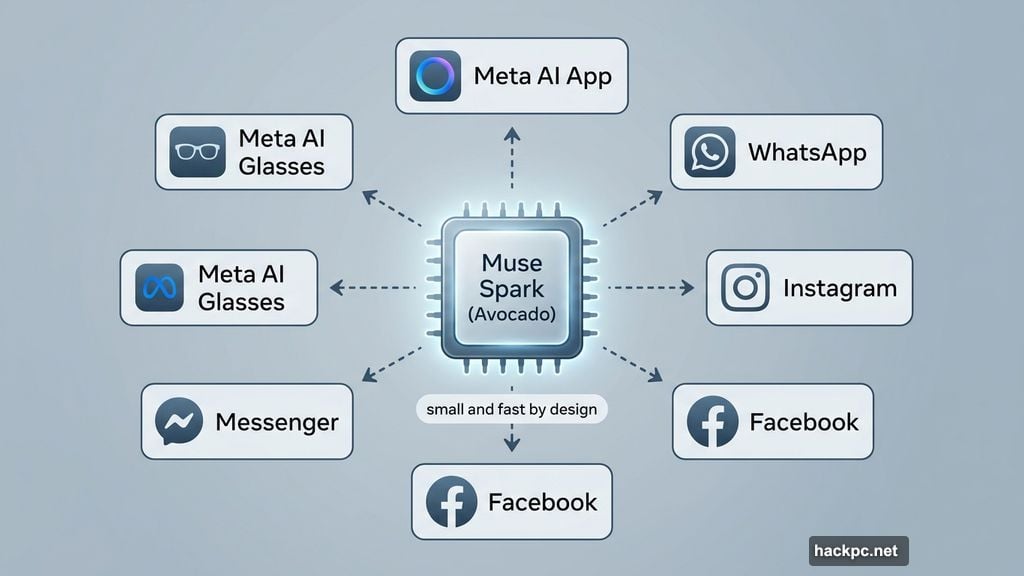
Internally nicknamed Avocado, Muse Spark is already powering the Meta AI app and Meta AI website. Soon it will roll out across WhatsApp, Instagram, Facebook, Messenger, and even Meta’s AI glasses.
Meta was refreshingly honest about where Muse Spark sits in the bigger picture. The company called it “an early data point on our trajectory.” So don’t expect this to be the final word.
“This initial model is small and fast by design, yet capable enough to reason through complex questions in science, math and health,” Meta said in its announcement. Bigger models are already in development behind the scenes.
That framing matters. Meta isn’t claiming to have won the AI race. Instead, the company is signaling that it finally has the team, the tools, and the momentum to be a serious contender.
Playing Catch-Up in a Crowded Field
Meta needed this win. Last year’s Llama model releases landed with less impact than the company hoped. Meanwhile, rivals kept sprinting ahead.
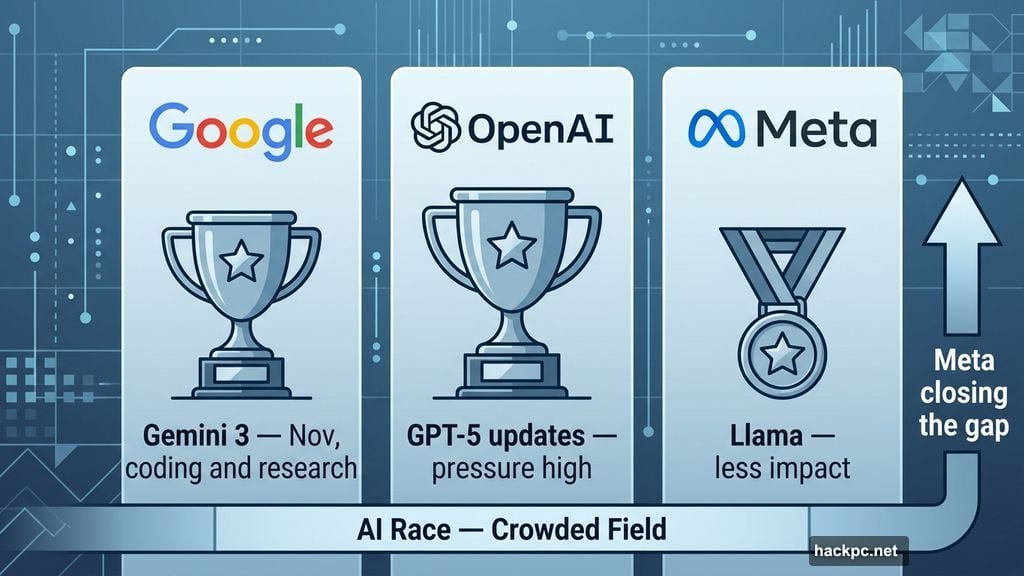
Google made a major splash in November with Gemini 3, wowing the industry with its coding and research capabilities. OpenAI followed quickly with GPT-5 updates, keeping the pressure high. Both moves left Meta scrambling to close the gap.
Muse Spark represents Meta’s answer to that pressure. It’s not just a model release. It’s proof that the superintelligence team can actually deliver, and a foundation for whatever comes next.
The AI landscape moves fast, and no lead stays permanent for long. Meta is betting that a well-funded, talent-dense lab can help them close the distance with Google and OpenAI. Muse Spark is the first evidence that bet might pay off.
Whether Muse Spark truly signals a turning point for Meta or just a promising first step depends entirely on what those “larger models in development” actually look like. For now, the company finally has something new and competitive to put in front of users across its biggest platforms. That’s not nothing. In a race this competitive, even small wins build momentum.




Comments (0)